How Does Nigeria Lose ₦40 Trillion Every Year to Power Outages, And Still Live in Darkness?
How does Nigeria lose over ₦40 trillion every year to power outages, despite decades of reforms, privatization, and billions invested in the sector, and why do businesses and households still struggle with unreliable electricity?
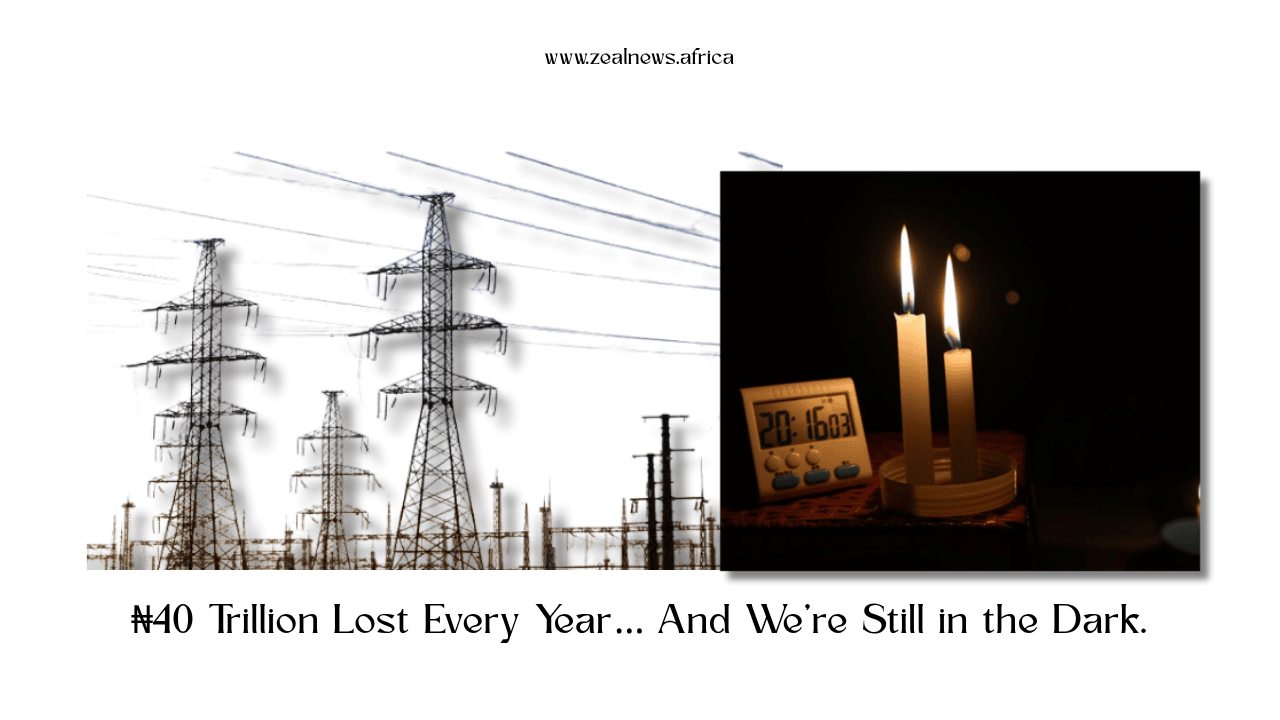
There’s a particular kind of silence that falls when electricity suddenly disappears.
It is not peaceful, neither is it calm. It is the silence of paused work, interrupted plans, and a country forced, once again, to wait. Your fan stops mid-spin, your laptop screen dims if you’re unlucky. Somewhere, a generator coughs to life. Somewhere else, nothing comes on at all.
Now stretch that moment across millions of homes, shops, offices, and factories.
That is what Nigeria experiences daily.
Oh, but of course, this darkness is clearly a mystery no one could have predicted.
According to the Minister of Power, Adebayo Adelabu, the causes of everything going on are by factors beyond his control — well, maybe things in the spiritual realm.
A power sector starved of gas, a transmission grid that collapses at the slightest pressure, distribution companies that can barely stay afloat, and a liquidity crisis ballooning past ₦6 trillion(or ₦2.8 trillion, depending on which version of reality you prefer). And somehow, we’re all still expected to act surprised when the lights go out.
Naturally, none of this has anything to do with years of neglect, endless delays, misplaced priorities, or the quiet efficiency of corruption. No, it must be something far more elusive.
And then comes the now-familiar promise: “Give us two weeks.” Nigerians have heard this before, so often it might as well be part of the national grid. Deadlines arrive, expire, and quietly disappear into the same darkness they were meant to fix.
Even the people making these promises sound like they’re reciting lines from a script they no longer believe.But yes, two weeks. That should do it.
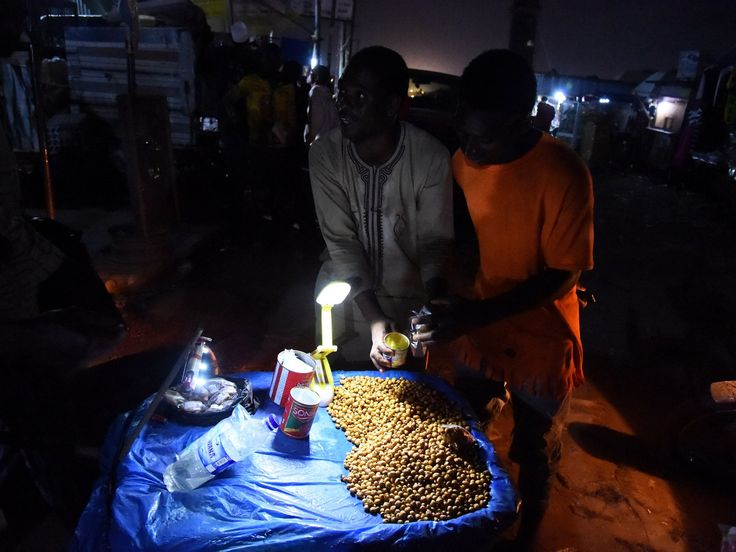
And according to the Nigerian Independent System Operator, it is costing the country an estimated N40 trillion every year.
This is not just about inconvenience. It is about a system that quietly drains money, slows growth, and forces an entire population to build workarounds just to survive.
The Hidden Cost of “No Light”
When experts say Nigeria loses about $29 billion annually to unreliable electricity, the number sounds distant. It feels like something that belongs in reports and conferences, not in everyday life.
But the truth is simpler and closer.
That money shows up in the generator humming outside your window. It shows up in the extra amount businesses add to prices to cover fuel costs. It shows up in the fact that many small businesses cannot afford to stay open all day because power is never guaranteed.
Nigeria has, over time, built an unofficial second power system. The national grid exists, but it is unreliable. So individuals and businesses have created their own alternatives. Generators have become a necessity, not a backup.
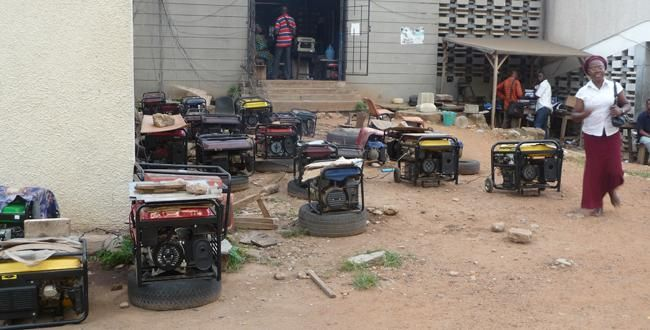
The problem is that this alternative is expensive. Running a generator costs far more than using grid electricity. Fuel prices fluctuate, maintenance is constant, and the cost is always passed down. What looks like a personal solution is, in reality, a national economic burden.
Multiply that cost across millions of Nigerians and thousands of businesses, and the figure begins to make sense. The country is not just losing electricity. It is losing money at a massive scale.
The Strange Reality: Nigeria Has Power, But You Don’t Get It

One of the most revealing parts of the report is not the loss itself, but the contradiction behind it.
Nigeria generates between 45,000 and 50,000 megawatts of electricity daily. On paper, that is not insignificant. It suggests capacity. It suggests potential.
But only about 5,000 megawatts actually make it to consumers through the national grid.
That gap is where the real problem lies.
It means that the issue is not simply about producing electricity. It is about moving it. It is about delivering it. It is about a system that breaks down between creation and consumption.
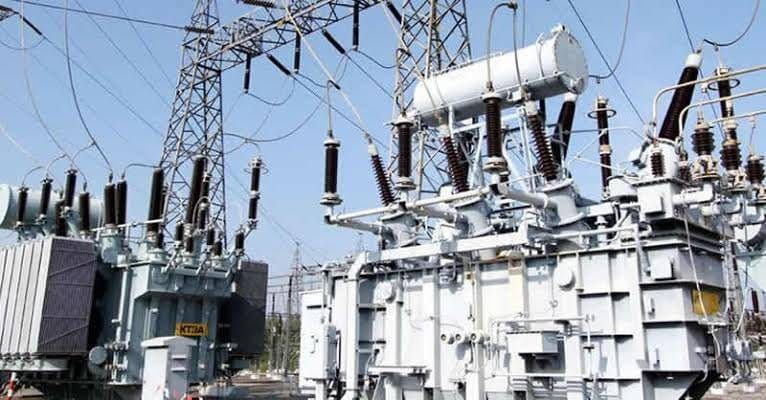
So when people say “there is no light,” what they are often experiencing is not a total absence of electricity, but a failure of infrastructure.
The power exists, but it cannot travel far enough, fast enough, or efficiently enough to reach them.
Where the System Breaks
To understand why this happens, you have to follow the journey electricity takes.
It starts at power plants, many of which rely heavily on gas. From there, it moves through transmission lines that carry it across long distances. Finally, distribution companies are responsible for delivering it into homes and businesses.
At every stage, something goes wrong.
The transmission network struggles to carry large volumes of electricity. It is not strong enough, not modern enough, and not extensive enough to handle the country’s needs. Even when power is generated, it often cannot be moved efficiently across regions.
By the time electricity gets closer to consumers, the distribution network presents another challenge. Infrastructure at this level is also limited, which means even available power cannot always be delivered consistently.
Then there is the issue of fuel. Nigeria depends largely on gas-fired plants, and gas supply has become increasingly unstable. According to the Minister of Power, about 75 percent of these plants are affected by gas shortages, and only a handful operate with guaranteed supply.
This creates a fragile system where generation itself can drop suddenly. In recent months, power generation has fallen below 4,000 megawatts, with distribution figures dipping even lower at certain points. For a country of over 200 million people, that level of supply is severely inadequate.
Progress That Doesn’t Quite Reach People
There have been efforts to improve the situation, and they are not insignificant.
New transformers have been installed. Transmission capacity has increased. Projects aimed at strengthening the grid have been completed. There has even been investment in digital systems designed to monitor and manage electricity flow in real time.
On paper, these developments suggest movement in the right direction. They show that the system is not entirely stagnant.
But the lived experience of Nigerians tells a different story.
The improvements are not yet enough to create consistent, reliable electricity across the country. The gaps remain too wide, and the pace of change is too slow compared to the scale of the problem.
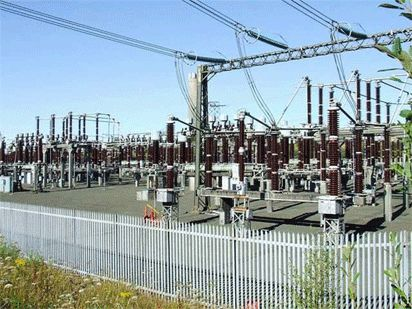
This disconnect between reported progress and everyday reality is part of what makes the electricity crisis so frustrating. There are visible efforts, but the impact is not widely felt.
Conclusion
Solving Nigeria’s electricity problem is not about a single fix. It requires a system that works from beginning to end.
Electricity must be generated consistently, transmitted efficiently, and distributed reliably. Fuel supply must be stable. Infrastructure must be upgraded. Systems must be properly managed and coordinated.
Until all of these pieces align, the situation is unlikely to change in any meaningful way.
For now, Nigerians continue to adapt. Generators remain part of daily life. Businesses adjust. Households cope.
But adaptation comes at a cost. And that cost, as the numbers show, is enormous.