From ‘Narco‑State’ to Oil Stakes: How the Story of Venezuela Changed
Venezuela’s story shifted from narco-state claims to oil concerns, revealing how power, politics, and selective justice shape global headlines.
For months, the story sounded simple enough.
U.S. officials said Venezuela’s President, Nicolás Maduro, was not just a political strongman but the head of a drug cartel, flooding the United States with narcotics.
The claim was repeated across press briefings and headlines until it became familiar.
And as we all know, in today's world, familiarity often passes for fact,
Especially when it comes from those in Power.
“Venezuela is a narco-state, the government is corrupt, drugs are spilling across borders, and the U.S. is here to save the day.”
Moral clarity, right? Simple good versus evil.
Easy to understand. Easy to get outraged about.
Then something interesting happened.
The story changed.
Suddenly, the loud accusations about drugs grew quieter.
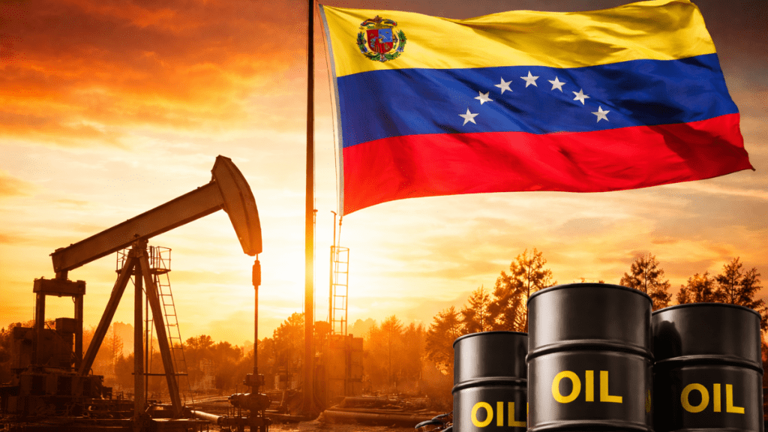
It's now all about Oil,
The story has shifted from “Venezuela is a narco-state” to “Venezuela’s oil is a global concern,”
Now let’s try to understand this,
Remember all those dramatic headlines about Maduro’s supposed cartel connections?
Well, it turns out the “Cartel de los Soles” might not actually be a cartel in the organized‑crime sense at all.
The name itself originated in Venezuelan media decades ago as slang for corruption among some military officials, not a pyramid‑style drug syndicate run by the president himself.
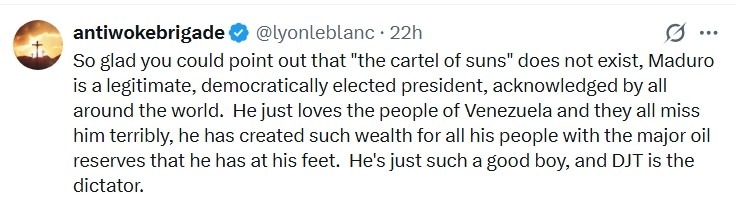
Well, some persons online say it’s the rich that are being referred to as that:


While the drug story made great headlines, the real reason the U.S. was interested in Venezuela is oil.
The country has the largest proven oil reserves in the world.
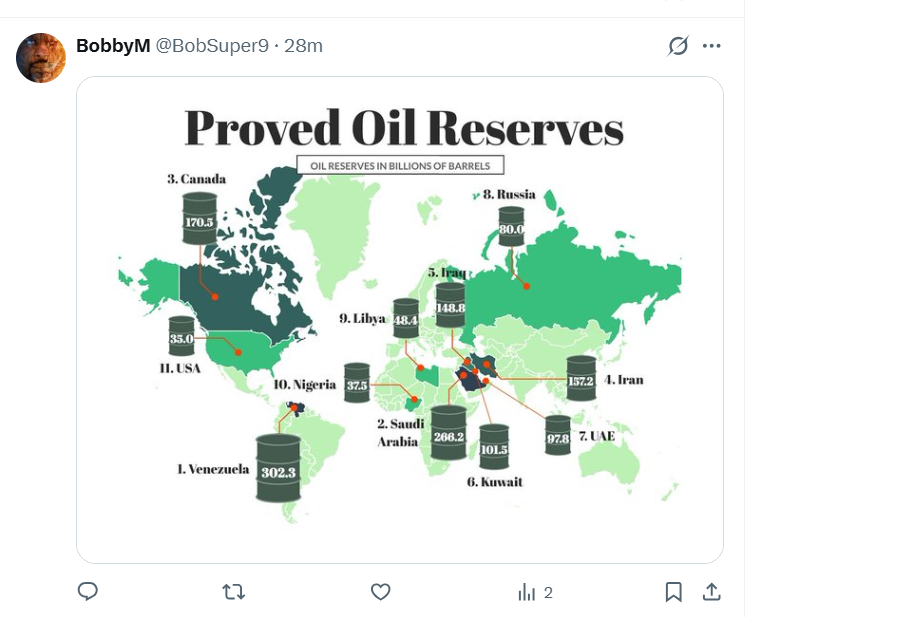
Controlling that oil isn’t just a business move, it’s a strategic power play.
The “drug kingpin” story was convenient; it made intervention sound like a fight for justice rather than a grab for resources.
Think about it this way: it’s like accusing your neighbor of stealing cookies so you can justify borrowing all their chocolate chips.
Dramatic, morally framed, and a lot easier for people to accept than, “We just want their oil.”
That’s a bold pivot for a story that began with drugs.
This isn’t just speculation. Even presidents of neighbouring countries have openly argued that U.S. policy is driven by oil interests more than drug control.
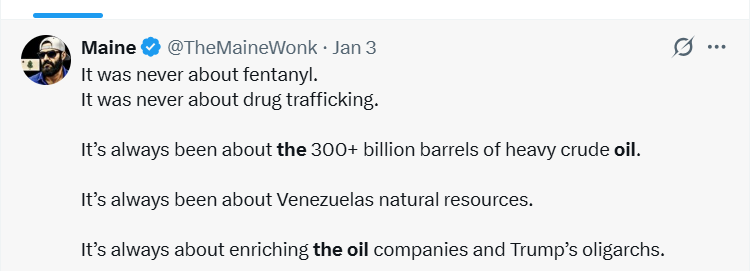

Meanwhile, Trump’s critics were busy calling him a dictator, pointing to aggressive actions that seemed to bypass normal checks and balances.
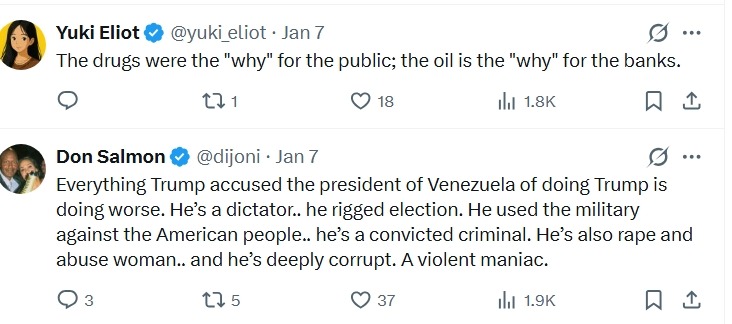
His moves are bold, having daylight kidnapping carried out with little explanation.
The question is: can any country just take a sitting head of state? If yes, under what legal or moral authority?
If Maduro really was running a huge drug operation, why weren’t international courts involved?
If not, were the drug allegations just a political cover story for what was really about oil?
“If drugs were the main issue, why did oil suddenly take center stage?”
This question alone, asked by majority doesn’t prove wrongdoing, but it does expose a crack in the narrative.
When the justification for major international actions changes so quickly, skepticism becomes not just reasonable, but necessary.
This isn’t just Venezuela’s story.
People are saying that's what Trump does as they referred to the recent incident that happened in Nigeria: bandit attacks, religious tensions, and allegations of foreign interference are sometimes framed in ways that serve the interests of powerful nations, often tied to natural resources.
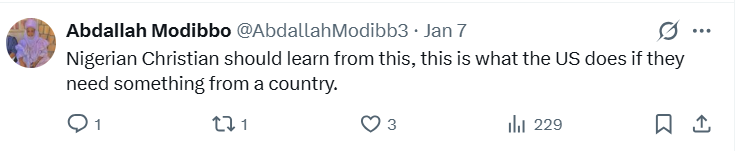
Patterns like these make you question who really decides what is “justice” on the global stage.
Honestly, Justice seems selective.
Some countries face intense scrutiny, while others with similar problems get little attention.
It’s not always about law or morality, it’s about power, influence, and resources.
So, what’s the truth? Is the U.S. defending justice, or is it shaping stories to suit its goals?
Are we seeing real accountability, or just a global game where the rules change depending on who holds power?
The world is messy.
Things aren’t black and white.
Headlines can mislead, stories can shift, and powerful nations often control the narrative.
Our job is to look closer, question more, and notice when power is bending the “truth” to its will.
Because when politics feels like smoke and mirrors, asking questions might be the clearest way to see what’s really going on.
And when stories change overnight,
When accusations rise and vanish without explanation,
it leaves ordinary people wondering: are we seeing justice, or are we just watching a story written by those in power?
If you are interested in a deeper look at how official narratives around Venezuela have evolved over time, from drug allegations to strategic concerns over oil, you can watch this analysis here.