Carbon Capture Technology: Can It Really Work at Scale, and Is It Relevant to Africa?
Can carbon capture work at scale? Learn how CCUS works, its global challenges, and whether it is a realistic climate solution for Africa.
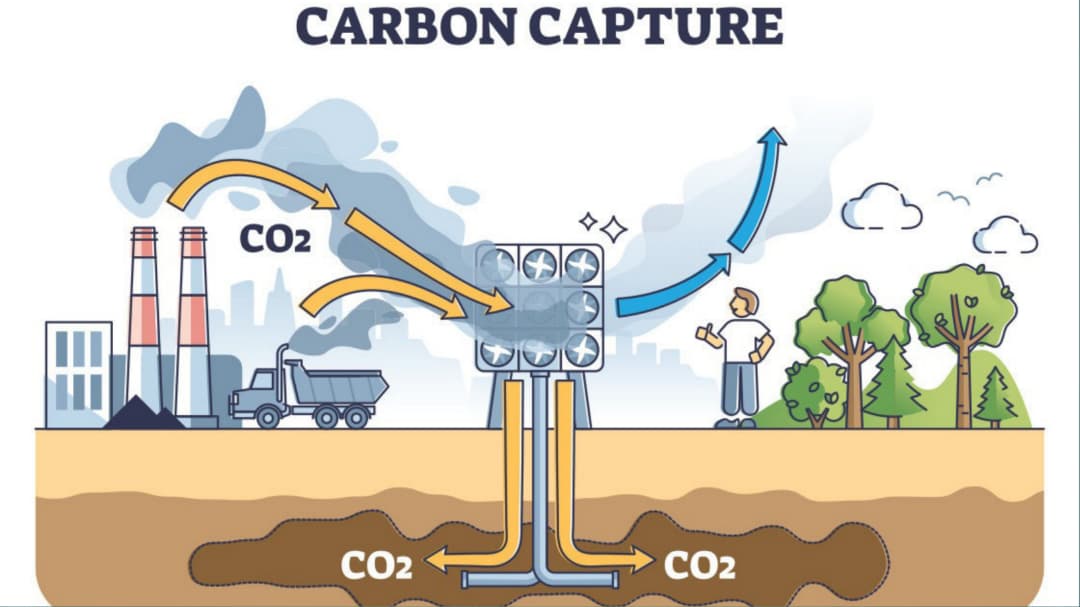
Climate change is driven mainly by the buildup of carbon dioxide (CO₂) in the atmosphere. Most of this CO₂ comes from burning fossil fuels such as coal, oil, and gas, as well as from heavy industries like cement and steel production. While renewable energy is expanding quickly, global emissions remain high.
This has led to growing interest in carbon capture technology. But can it really work at scale? And is it relevant to Africa?
What Is Carbon Capture?
Carbon Capture, Utilization and Storage (CCUS) refers to technologies that capture CO₂ before it enters the atmosphere. The CO₂ can be captured from power plants, factories, or even directly from the air.
Once captured, it is either stored underground in deep geological formations or used in certain industrial processes.
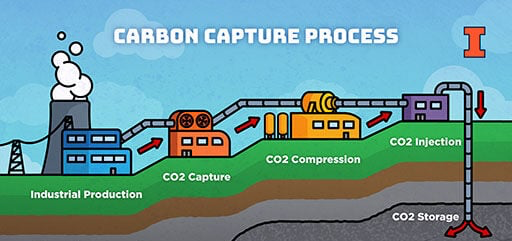
There are three main types of carbon capture. The first is post-combustion capture, where CO₂ is removed from exhaust gases after fuel is burned. The second is pre-combustion capture, where carbon is removed before fuel is burned, often in industrial settings. The third is Direct Air Capture (DAC), which removes CO₂ directly from the air.
According to the International Energy Agency (IEA), there are more than 40 commercial-scale carbon capture facilities operating worldwide, with many more under development.
However, the total amount of CO₂ captured each year is still very small compared to global emissions. The world emits over 35 billion tonnes of energy-related CO₂ annually, while carbon capture facilities remove only a small fraction of that amount.
Can Carbon Capture Work at Scale?
Technically, carbon capture has been proven to work. CO₂ can be captured, transported through pipelines, and stored deep underground in rock formations. In some cases, it has been used for enhanced oil recovery, where CO₂ is injected into oil fields to increase production.
However, scaling up carbon capture faces serious challenges.
First, the cost is high. Capturing CO₂ can cost between $40 and $150 per tonne, depending on the technology and the source of emissions. Direct Air Capture is usually even more expensive. For many countries and companies, these costs are a major barrier.
Second, carbon capture requires significant energy. Running the capture systems reduces the overall efficiency of power plants and industrial facilities. If the energy used to power carbon capture comes from fossil fuels, the overall climate benefit may be reduced.
Third, infrastructure is limited. Large-scale carbon capture requires pipelines to transport CO₂ and secure underground storage sites. Many countries do not yet have this infrastructure.
Despite these challenges, the Intergovernmental Panel on Climate Change (IPCC) includes carbon capture in many of its scenarios for limiting global warming to 1.5°C or 2°C.
The IPCC suggests that carbon capture is especially important for “hard-to-abate” sectors like cement, steel, and chemicals, where emissions are difficult to eliminate completely.
Most experts agree that carbon capture is not a replacement for renewable energy or energy efficiency. Instead, it is seen as a complementary tool, particularly for industries that cannot easily switch to clean energy.
Is Carbon Capture Relevant to Africa?
Africa contributes only about 3–4 percent of global CO₂ emissions.
Many African countries have low emissions per person compared to industrialized nations. However, emissions are expected to grow as economies expand and populations increase.
The relevance of carbon capture in Africa depends on the country and its economic structure.
In oil and gas-producing countries such as Nigeria, Angola, and Algeria, carbon capture may be more relevant. These countries already have experience with underground reservoirs and drilling technologies. Algeria, for example, has operated one of the earlier carbon storage projects in the developing world.

South Africa is another important case. It is the largest emitter on the continent because it relies heavily on coal for electricity and has a large industrial sector.
Carbon capture could also play a role in future hydrogen production. Some African countries are exploring the production of “blue hydrogen,” which is made from natural gas combined with carbon capture. This could create export opportunities while reducing emissions.
Challenges in the African Context
Despite its potential, carbon capture faces major barriers in Africa.
The most significant is cost. Many African countries face urgent challenges such as poverty reduction, healthcare, infrastructure development, and expanding electricity access. Investing billions of dollars in carbon capture may not be the highest priority.
Access to climate finance is another issue. Carbon capture projects require strong regulatory systems, technical expertise, and long-term monitoring. Many countries may lack the institutional capacity to manage such projects safely.
In addition, renewable energy is often cheaper and more practical for many African countries. Africa has strong solar and wind resources. Expanding renewable energy can both increase energy access and reduce emissions without the complexity of carbon capture systems.
Conclusion
In summary, carbon capture technology is technically proven and is likely to play a supporting role in global efforts to reduce emissions, especially in heavy industries that are difficult to decarbonize; however, it remains costly, energy-intensive, and dependent on strong policy and infrastructure.