Everybody Owes Somebody: The Deep Economics of Nigerian Entitlement
Making money in Nigeria isn’t just about you. What happens when everyone expects a share?

In Nigeria, money does not belong to the person who earns it. It only pauses there.
The moment income rises, the circle widens. Family members reappear, old friendships warm up, emergencies multiply, and bills arrive with emotional footnotes. Your success becomes public property, discussed, audited, and emotionally allocated by people who never saw your balance sheet.
This reality is often explained away as culture, generosity, or African communalism. But those explanations are incomplete. What Nigerians experience is not just cultural expectation. It is an informal economic system, one that replaces broken institutions with human obligation.
And like all systems built on pressure instead of design, it extracts a cost.
When the State Fails, People Become the Economy
In functioning economies, welfare is boring, healthcare is dull, and retirement is predictable. People do not crowdsource survival from family WhatsApp groups or beg friends for hospital deposits.
Nigeria skipped that stage. Healthcare barely works, education is expensive and unreliable, pensions are weak, and unemployment is widespread and undercounted. Even social safety nets are either thin or non-existent. What the Nigerian economy has effectively done is privatise welfare. Every relationship is a financial instrument.
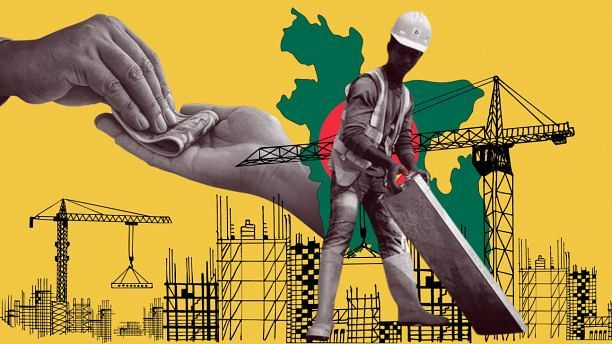
This is why entitlement feels normal. It is not entitlement in a vacuum, it is a response to systemic abandonment. When institutions fail, people attach themselves to whoever looks stable.
So when someone says, “I can’t help,” it does not sound like a boundary. It sounds like betrayal and sometimes it sounds like opting out of a system everyone else is trapped inside.
This is the foundation of Nigerian entitlement. Not greed, not wickedness, but the quiet transfer of state responsibility to individuals who never consented to carry it.
Why Success Is Never Personal in a Poor Economy
One of the most revealing truths from lived Nigerian experience is that people do not just feel entitled to success. They feel invested in it.
Families sacrifice heavily to push one person ahead. Loans are taken; other children are deprioritised. Resources are pooled and one child is sent to private school, while another drops out. One is protected; another waits.
Economically, this is rational behaviour in a low-opportunity environment. It is portfolio thinking. If only one person can realistically escape poverty, that person becomes the family’s long-term asset.
Modern Nigerian income cannot sustain historical Nigerian expectations. Inflation has hollowed out purchasing power. Housing costs have exploded. Transport, food, healthcare, and education now consume income at alarming rates. A salary that looks impressive on paper often barely stretches in reality.
Yet expectations are anchored to outdated assumptions of what “earning well” means.
So the successful person is not selfish. They are over-leveraged. Emotionally, financially, psychologically. They are carrying responsibilities designed for a state, not a salary.
Diaspora Money, Black Tax, and the Illusion of Endless Capacity
The moment someone relocates abroad, reality splits into two versions. One version is the truth: visa costs, rent shock, unstable jobs, debt, loneliness, and survival anxiety. The other version is what people back home see: airport pictures, foreign skylines, new accents, and imagined abundance.

Remittances deepen this illusion.
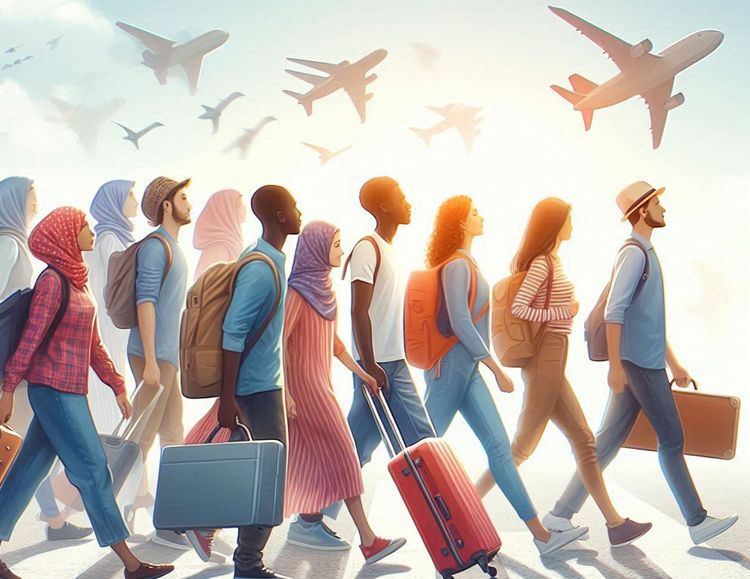
Nigeria consistently ranks among the world’s top remittance-receiving countries, pulling in tens of billions of dollars annually. That money pays for food, rent, tuition, healthcare, weddings, funerals, and daily survival. It props up households and quietly stabilises the economy.
But it also distorts perception.
Foreign income is treated as surplus, not income under pressure. Exchange rates become emotional weapons. “It’s just £200” stops being a number and becomes a moral argument.
This same logic plays out locally through black tax.
Black tax prevents savings. It delays investment and punishes upward mobility. Many Nigerians earning above-average incomes cannot build emergency funds, retirement plans, or investment portfolios because money flows outward before it compounds inward.
Spending becomes socially monitored, travel looks suspicious, even comfort attracts scrutiny. Your personal choices are reclassified as available funds.
The accounting is never neutral. Givers feel drained. Receivers feel justified. Nobody feels secure. The system survives because guilt is cheaper than confrontation.
When Scarcity Monetises Love, Faith, and Friendship
Entitlement does not stop at family, it spreads horizontally.
Friendships recalibrate when income gaps widen. What starts as generosity hardens into expectation.
Romantic relationships absorb even more pressure. In a struggling economy, money becomes proof of love. Survival turns into a love language no one agreed to speak.
In many Nigerian religious spaces, giving is moralised. Scripture is deployed strategically. Prosperity is framed as communal evidence of divine favour.
Once money becomes moral, boundaries become sinful. Saying no feels like rejecting God, not managing finances.
Scarcity rewires intimacy. It monetises affection. It turns relationships into informal safety nets that were never built to carry sustained economic pressure.
Entitlement Is the Symptom. Fragility Is the Disease
Entitlement is not the disease. Poverty is.
People who are stable do not feel entitled to other people’s income. People who are desperate do. You cannot lecture someone earning ₦500 a day about independence when survival itself is collaborative.
This is why entitlement feels rational, even justified.
But this is the long-term cost Nigerians rarely confront.
When income is constantly redistributed informally, wealth never forms. When wealth never forms, the economy stays fragile. When the economy stays fragile, people cling harder to each other.
Entitlement keeps people alive today while quietly sabotaging tomorrow. Everyone is busy saving each other from drowning, so nobody builds a boat.
No society can indefinitely run on guilt, obligation, and sacrifice without burning out its most productive members. No economy grows when success is punished by extraction.
Generosity should be a choice, not a tax.
Support should be sustainable, not compulsory.
Community should not mean self-erasure.
Until Nigeria rebuilds institutions that carry people collectively, entitlement will remain rational, painful, and unavoidable.
And until then, success will continue to feel less like freedom and more like a debt that never clears.