Color Effects on Short-Term Emotional Mood
Color has a measurable short-term impact on mood, shaping emotions, behavior, and perception. Read about the science, psychology, and cultural meaning behind color.
Color Is Never Just Color
Color is one of the first things we notice, yet one of the least questioned because it is heavily embedded in our daily life and we can't express the image we see without first understanding the colors .
We wake up and choose what to wear, scroll through brightly designed apps, sit in offices, classrooms, hospitals, cinemas—spaces carefully painted and lit—without stopping to ask why they feel the way they do.
But colors are never neutral. It works quietly, influencing how we feel, think, and react, often without our awareness.
Scientific research shows that color has a measurable short-term effect on emotional mood, triggering immediate psychological and physiological responses. These effects are often subtle and temporary, but they are real.
Warm colors like red and orange tend to stimulate the body, while cool colors like blue and green are more calming. That quick shift in feeling when you walk into a blue-painted room or wear a bright outfit on a dull day is not accidental, it is biology meeting with your perception.
As psychologist Rachel Goldman, PhD, puts it and as I saw it on the verywellmind website:
“Many times, it’s the small things that can have the largest impact.” Color is one of those small things that quietly shapes our emotional environment.
The Science of Color, Perception, and Human Psychology
At the very basis of this conversation about color psychology is perception. When light hits an object, it reflects wavelengths that our eyes interpret as color.
That information is processed by the brain and linked to memory, emotion, and learned associations. This is why color can trigger an emotional response before logic steps in.
Studies suggest that colors can cause immediate physiological reactions.
Red, for example, has been shown to temporarily increase heart rate and adrenaline levels. This makes sense evolutionarily—red often signals urgency, danger, or passion.
Blue, on the other hand, is associated with lower stress levels and feelings of relief or trust. However, these effects are typically short-lived.
A blue room may feel calming at first, but the body adapts over time.
A large 2020 study surveying 4,598 people across 30 countries found common emotional associations with specific colors:
Black: sadness (51%)
White: relief (43%)
Red: love (68%)
Blue: relief (35%)
Green: contentment (39%)
Yellow: joy (52%)
Purple: pleasure (25%)
Brown: disgust (36%)
Orange: joy (44%)
Pink: love (50%)
These outcomes are not just random, they show something about color perception and whether you agree or not, what you know is only about a fraction of people out of the 8 billion people on earth and lets say you know 100,000 thousand which I doubt, that would be 0.00125% of the entire world population—so you see where I'm driving out.
These patterns and outcomes show that while color responses vary, there are shared tendencies across cultures.
Brands understand this deeply—color choices in logos, packaging, and apps are rarely random. Fast-food brands often use reds and yellows because they stimulate appetite and attention.
Banks and tech companies lean toward blues to signal trust and stability. Over time, we accept these associations as “normal,” rarely questioning why certain brands feel reliable or exciting.
The same principle applies in film production—children’s movies are often saturated with bright, warm colors that signal safety and joy. Action films lean toward high-contrast tones, while horror films rely on dark, muted palettes to create tension.
If you swapped the color grading of a children’s animation with that of a horror film, the emotional experience would immediately feel wrong, so you would understand that color helps tell the story before dialogue does.
Yet color perception is not purely scientific, it is personal and cultural. We judge people by their color choices, often unconsciously. A boy liking pink is still considered “weird” in many societies, not because of biology, but because of learned norms. Even when we recognize these norms as arbitrary, they still influence our reactions.
Hospitals, for example, frequently use soft blues and greens because research shows they reduce anxiety and stress. These choices are intentional, grounded in both psychology and practical outcomes.
Culture, Context, and the Limits of Color Psychology

While color psychology offers useful insights, it is not universal or absolute. Cultural background plays a powerful role in how colors are interpreted.
In many Western cultures, white symbolizes purity and innocence. In parts of Asia, it is associated with mourning and death. While red may signal danger in one context and it might be a colour for celebration or good fortune in another.

This means color does not work in isolation—mood, environment, personal experience, and cultural meaning all interact. A color that calms one person may irritate another and a shade associated with joy in one culture may carry negative connotations elsewhere.
This is why color psychology works best as a supporting influence, not a guarantee. It can guide design, marketing, therapy, and storytelling, but it cannot override personal or cultural context.
In therapeutic settings, some approaches like chromotherapy suggest that specific colors can aid emotional well-being. While evidence here is mixed, there is consensus that thoughtful color selection can improve comfort, focus, and emotional regulation—especially in environments like schools, hospitals, and workspaces.
Seeing Color With New Awareness
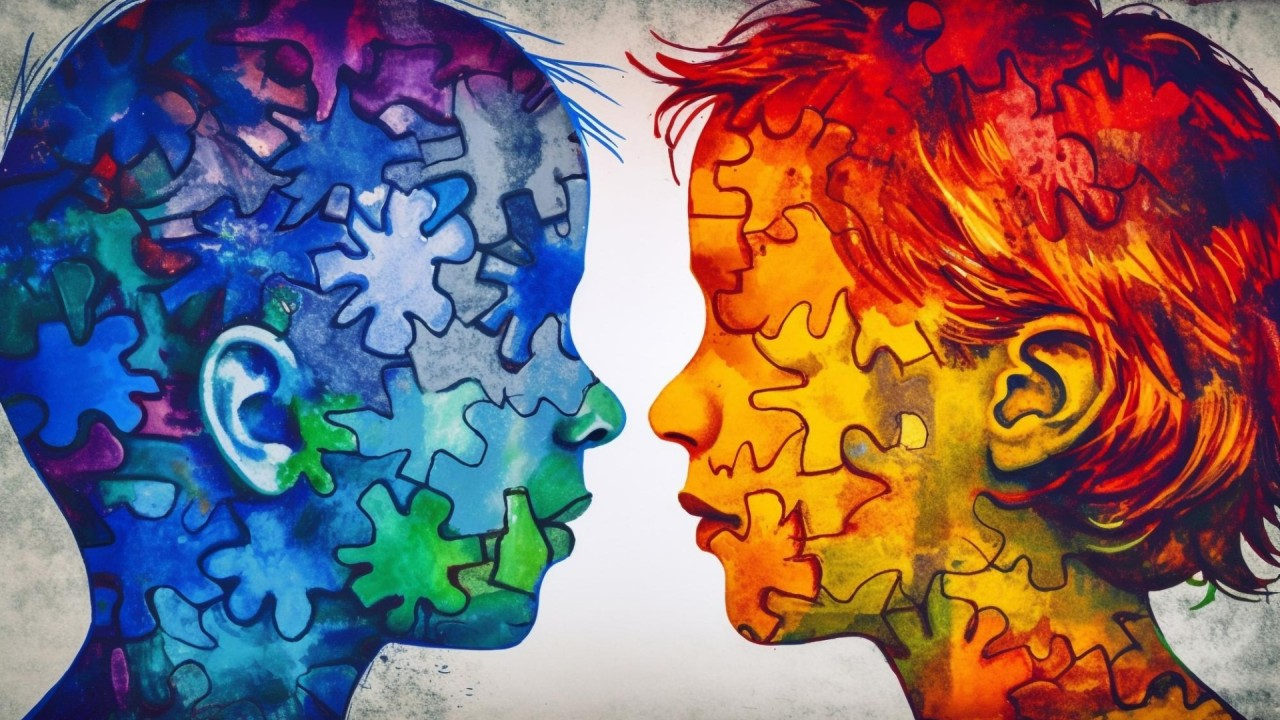
Color affects us whether we notice it or not. It nudges our emotions, shapes our perceptions, and quietly influences decisions—from what we buy to how safe or anxious we feel in a space. These effects may be temporary, but they accumulate over time.
The key takeaway is not that color controls us, but that awareness gives us choice. The next time you feel off, look around.
Notice the colors in your environment. Also from now on, notice what you wear and how it makes you feel.
As research suggests, sometimes a small shift—a different shade, a different light—can subtly change your emotional state.
Color may seem simple, but it speaks a language the brain understands instinctively. Learning to listen to it can change how we design, tell stories, heal, and even understand ourselves.
So choose colors you and not colors handed over to you.
See you on the next one!