Chief Owolabi Salis Become the First Nigerian in Space
On June 29, 2025, Chief Owolabi Salis became the first Nigerian to cross into space—wearing a Yoruba cap. His historic Blue Origin flight marked a cultural and scientific milestone for Africa and the diaspora.
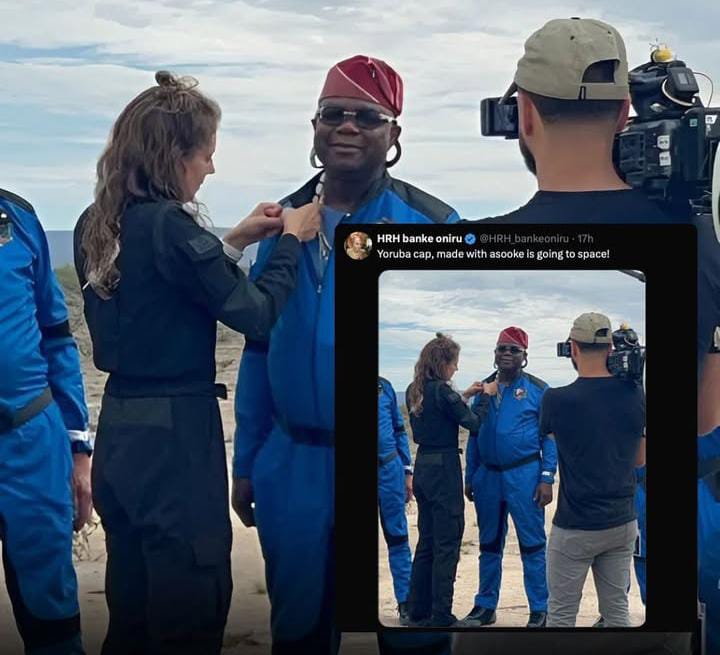
“I wore that cap for every African child who was told science wasn’t for them.”
On June 29, 2025, a rocket sliced through the sky above West Texas — but what made headlines across Africa wasn’t just the launch. It was the man inside. A Nigerian man. Wearing a Yoruba cap. In space.
His name? Chief Owolabi Salis — and he just became the first Nigerian to cross into outer space, aboard Blue Origin’s New Shepard NS-33 suborbital flight. That means he passed the Kármán line — 100km above sea level — the invisible border where Earth ends, and space begins.
“Humbling. Stupefying. Overwhelming,” he said.
But also: spiritual.
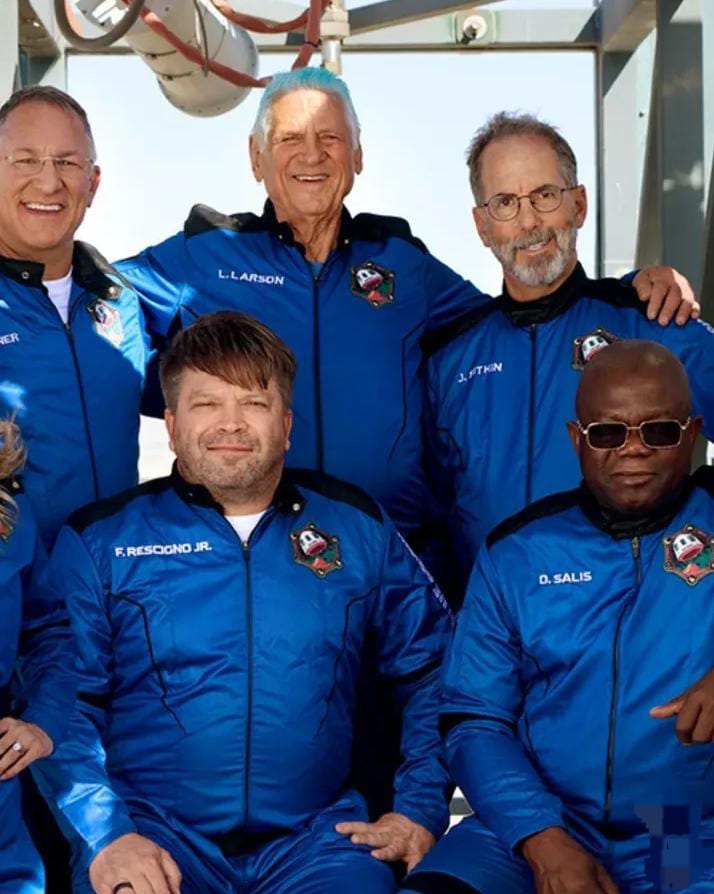
Photo credit: Instagram
The Only Black Man on That Rocket
The flight carried six people, but Salis, a US-based lawyer, spiritual leader, and author from Ikorodu, Lagos, was the only Black astronaut aboard.
He stood among a crew of Allie and Carl Kuehner, Leland Larson, Freddie Rescigno Jr., and Jim Sitkin. While they all shared one space capsule, Salis carried an entire continent.
“I dedicate this to every victim of racism, every child dreaming beyond the stars, and every African told they don’t belong in tech or science.”
Not Just a Lawyer — A Soul-Driven Trailblazer
Owolabi Salis is no stranger to firsts.
Before space, he was the first Black African to visit both the Arctic and Antarctic in one season. He leads Soul Maker’s Ministry Worldwide and authored Equitocracy — a political manifesto built around equity, fairness, and spiritual governance.
But his most symbolic move on this flight wasn’t just surviving zero gravity — it was choosing to wear a traditional Yoruba cap with his astronaut gear.
“It was never just a cap,” he said. “It was a reminder — that our culture, our identity, belongs everywhere. Even in space.”
For Nigeria, For Africa, For the Diaspora
This wasn’t just his mission. It was ours.
For Nigeria, it’s a moment of pride in science — a country whose tech industry is booming but still underrepresented in space exploration.
For Africa, it’s proof that space isn’t just for the U.S., Russia, or China. That we, too, can float, explore, innovate.
For the global Black diaspora, it’s one more ceiling broken — and a reminder that identity and innovation aren’t opposites.
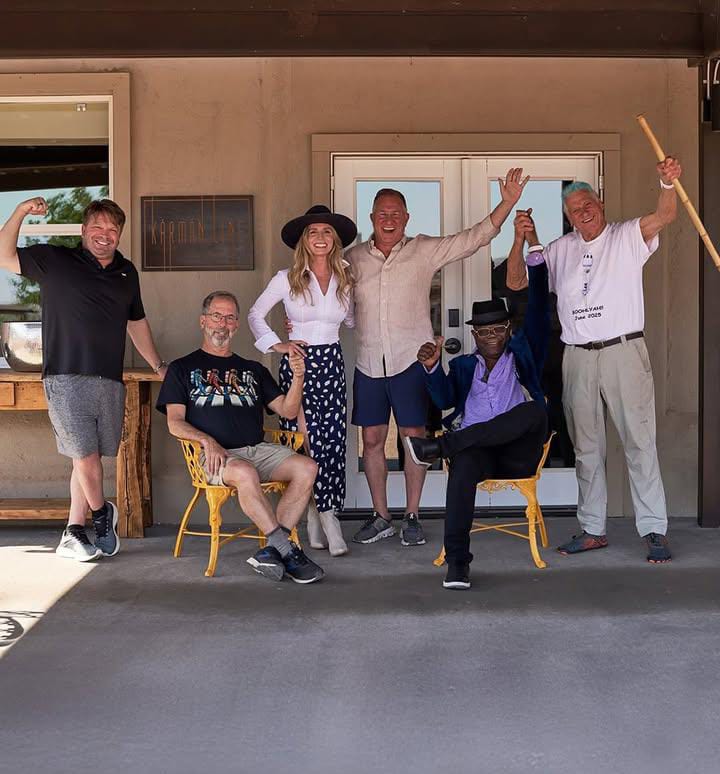

Photo Credit: World Journal
So What Now?
The real success of this mission won’t be measured in kilometers.
It will be in:
African classrooms where kids start dreaming of rockets instead of riches
Black girls who see themselves in STEM without erasing their culture
Pan-African leaders who realize inclusion isn't a handout — it’s overdue
Salis’ cap made it past the Kármán line — now it’s time to ask: who else are we sending next?
“Space is cold, vast, and silent. But that day, it heard a Nigerian name. And saw African pride orbit the earth.”
Let’s make sure this isn’t a solo mission. Let’s build a future where the next African in space isn’t a surprise — it’s the norm.
Follow Zealnews for more untold African stories that don’t just inform — they move you.
You may not hear this story on CNN. But you’ll hear it here.
Don’t scroll past — share it. A kid in Katsina or Cape Town might need to read this.