Bolivia on Brink: US Issues Urgent 'Coup d'État' Warning Amid Widespread Protests
Bolivia is in its second week of intense anti-government protests, challenging President Rodrigo Paz Pereira's six-month administration amidst a severe economic crisis and diplomatic tensions. The unrest, which has claimed lives, is further complicated by US intervention condemning the protests as a "coup" and the shadow of former president Evo Morales, accused of instigating the turmoil.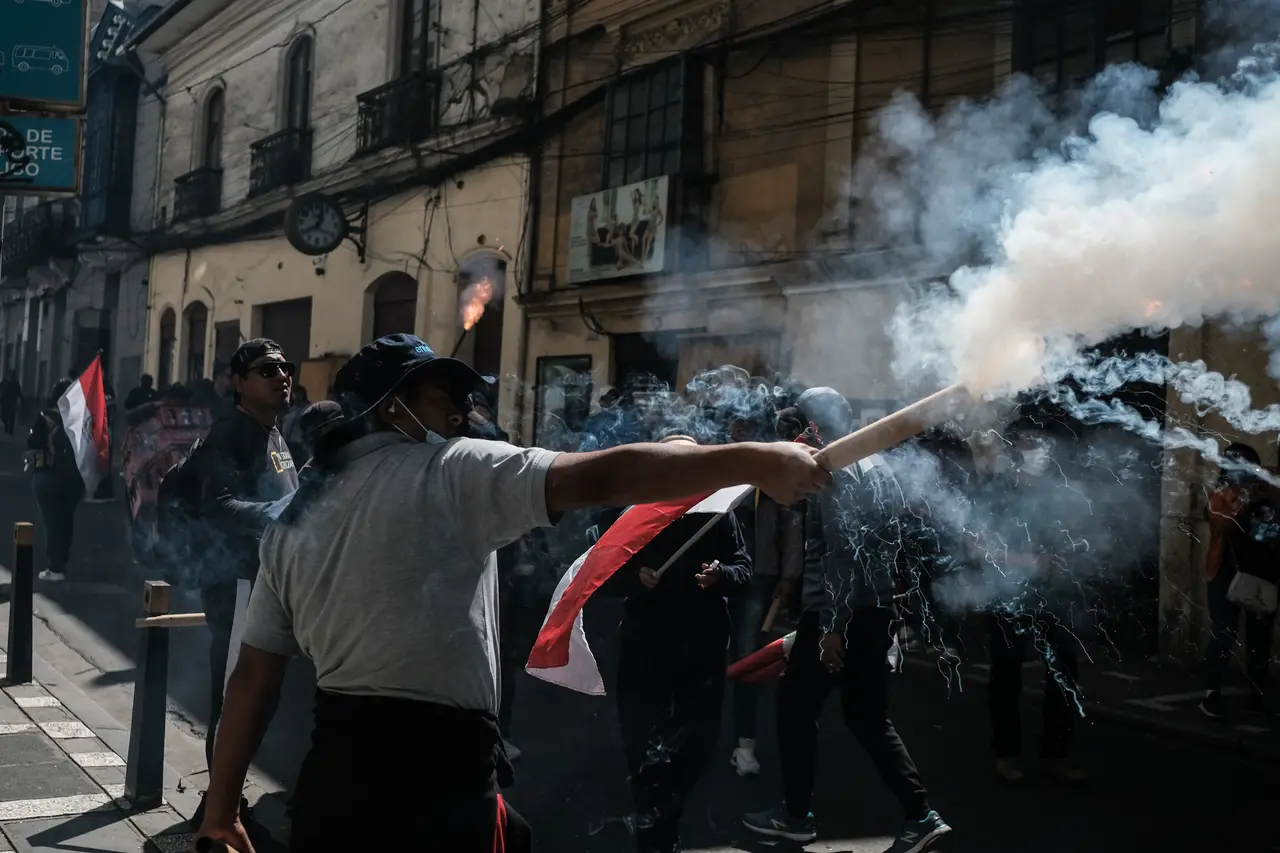
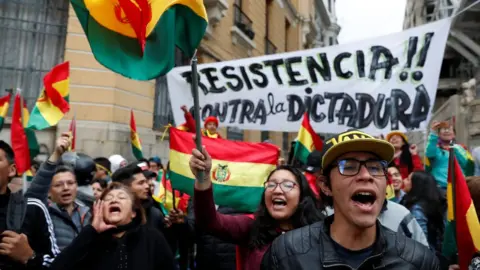
Bolivia is currently engulfed in its second week of widespread protests, which have escalated to block roads nationwide and transformed the heart of the capital, La Paz, into a volatile battleground between demonstrators and police.
This period marks the most turbulent phase of the centre-right president Rodrigo Paz Pereira’s nascent administration, barely six months after he took office, bringing an end to nearly two decades of rule by the left-wing Movimiento al Socialismo (Mas).
The unrest has already resulted in a tragic toll, with four reported deaths. One demonstrator was killed in direct clashes and three others allegedly due to roadblocks preventing access to critical medical treatment.
In addition, dozens have been injured, and more than 40 road blockades were reported across the country as of Wednesday, paralyzing movement and disrupting daily life.
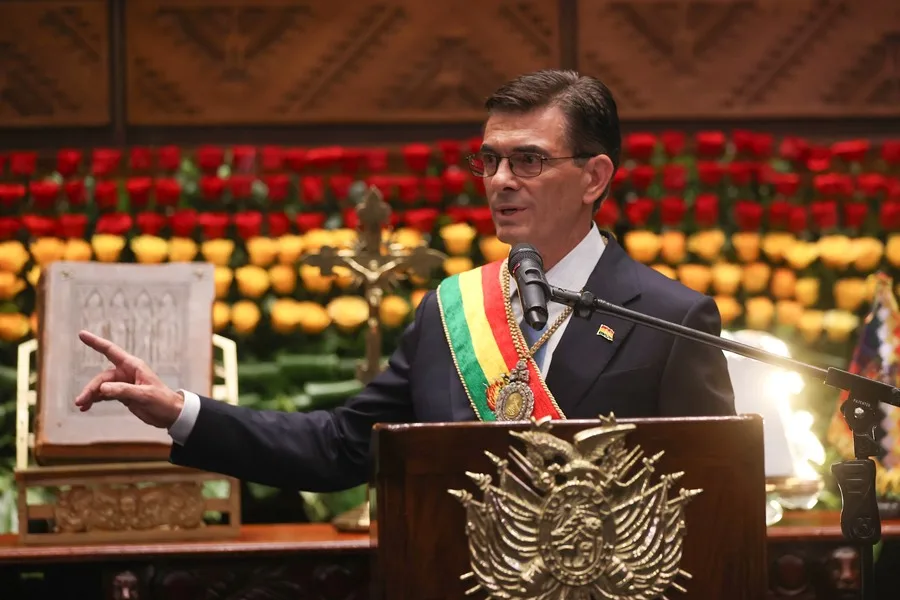
President Paz Pereira, in response to the escalating crisis, announced a cabinet reshuffle, emphasizing the need for a "more agile cabinet, closer [to the population]" with the capacity to listen. He also declared that he would not "dialogue with vandals" involved in acts of violence.
However, he committed to establishing an "economic and social council" to form a "joint government" and coordinate decision-making, inviting Indigenous groups, farmers, miners, and other workers who have been protesting to "be part of the decision-making process."
Domestically, Paz Pereira faces severe challenges, including Bolivia's worst economic crisis in four decades.
The country is grappling with chronic shortages of dollars and fuel, coupled with rising inflation, issues that predate his presidency, tracing back to the final years of the previous president Luis Arce’s term under Mas. Paz Pereira, son of former president Jaime Paz Zamora, had promised an "economic shock therapy" upon taking office in November.
However, conditions have not improved, and some of his early measures have proven deeply unpopular.
A significant decision wasthe termination of a two-decade-long fuel subsidy, intended to encourage a free market and attract higher-quality fuel. Instead, shortages persisted, culminating in a "dirty fuel" crisis when part of the supply was found to be adulterated.
The president has claimed he was a victim of alleged "sabotage" by former officials linked to Mas.
The situation has also triggered a significant diplomatic crisis. President Paz Pereira ordered the immediate expulsion of Colombia’s ambassador in La Paz in retaliation for remarks made by Colombia’s left-wing president, Gustavo Petro.
Petro had reposted a video claiming Paz Pereira was a "puppet of the US" and commented that Bolivia was experiencing a "popular insurrection" that was "the response to geopolitical arrogance."
Bolivia’s foreign ministry cited the decision to "preserve the principles of sovereignty and non-interference in internal affairs." In turn, Petro responded by stating that Bolivia was "sliding into extremism."
The United States has firmly sided with President Paz Pereira. US deputy secretary of state, Christopher Landau, claimed on Tuesday that the protests were "an ongoing coup d’état," financed by "this perverse alliance between politics and organised crime across the region."
The following day, US secretary of state, Marco Rubio, echoed these sentiments, posting that the United States "stands squarely in support of Bolivia’s legitimate constitutional government," and would "not allow criminals and drug traffickers to overthrow democratically elected leaders in our hemisphere."
One of Paz Pereira’s first moves after taking office was indeed to restore relations with the US.
Adding another layer of complexity is the persistent shadow of former president Evo Morales, the historic leader of Mas. Morales has been entrenched since late 2024 in the coca-growing region of Chapare, reportedly evading an arrest warrant related to allegations of fathering a child with a 15-year-old girl in 2006.
He is also being tried in another province on human-trafficking charges linked to alleged political favors. Having failed to appear in court, a new arrest warrant has been issued.

The presidential spokesperson, José Luis Gálvez, has publicly accused Morales of fueling the current unrest to "evade the trial."
Morales denies these accusations, asserting that the uprisings are a legitimate protest "against the implementation of the neoliberal model" and that it is "just and necessary for the thousands of victims of ‘dirty fuel’ to begin a civil action."
This multifaceted crisis, encompassing political turmoil, economic hardship, diplomatic rifts, and unresolved legal challenges for a prominent opposition figure, underscores the deep divisions and instability currently gripping Bolivia.