Balancing Technology and Childhood: How Modern Parents Navigate Screen Time in a Digital Age


In today’s world, technology is part of everyday life.
Children use smartphones, tablets, and computers more than ever, making screen time an important part of their daily routine.
Technology can help children learn, be creative, and stay connected with friends and family.
But too much screen time can cause problems.
It can affect their health, like causing eye strain or less physical activity, disturb sleep, and even impact emotions, making children feel stressed or anxious.
Parents today face the challenge of finding a balance.
They need to let children enjoy the benefits of technology while making sure it doesn’t interfere with their growth and development.
The goal isn’t to remove screens completely but to teach children to use them in a healthy and responsible way.

Understanding the Benefits and Risks of Screen Time
Technology itself is not bad for children, it can be a powerful tool for learning and development.
Educational apps and interactive games can help children develop important skills such as reading, math, problem-solving, and critical thinking.
For example, puzzle apps can improve logic and reasoning, while creative apps for drawing, music, or storytelling encourage imagination and self-expression.
Online learning platforms also provide access to resources that might not be available in the classroom, helping children explore topics they are passionate about at their own pace.
Social media and communication tools can also play a positive role when used appropriately.
They allow children to stay connected with friends and family, especially if relatives live far away.
Online platforms can help children build social skills, collaborate on projects, and even gain exposure to different cultures and ideas.
However, too much screen time carries risks that parents cannot ignore.
Spending long hours in front of screens can reduce physical activity, which is essential for healthy growth and development.
According to research, it wasfound out that watching screens can have detrimental or beneficial effects on development, depending on content and context, underscoring that not all screen time is equal.

It can also interfere with sleep, as the light from screens can make it harder for children to fall asleep and affect their overall sleep quality.
Overexposure to digital content can impact attention spans, making it harder for children to focus on schoolwork or other offline activities.
Moreover, unrestricted access to the internet can expose children to inappropriate content, cyberbullying, or harmful social comparisons.
Because of these mixed effects, parents must take a thoughtful approach.
Understanding both the benefits and the risks allows them to guide their children toward productive and safe screen use.
By choosing age-appropriate apps, monitoring online activity, and setting limits on recreational screen time, parents can help children enjoy the advantages of technology without letting it harm their development or well-being.
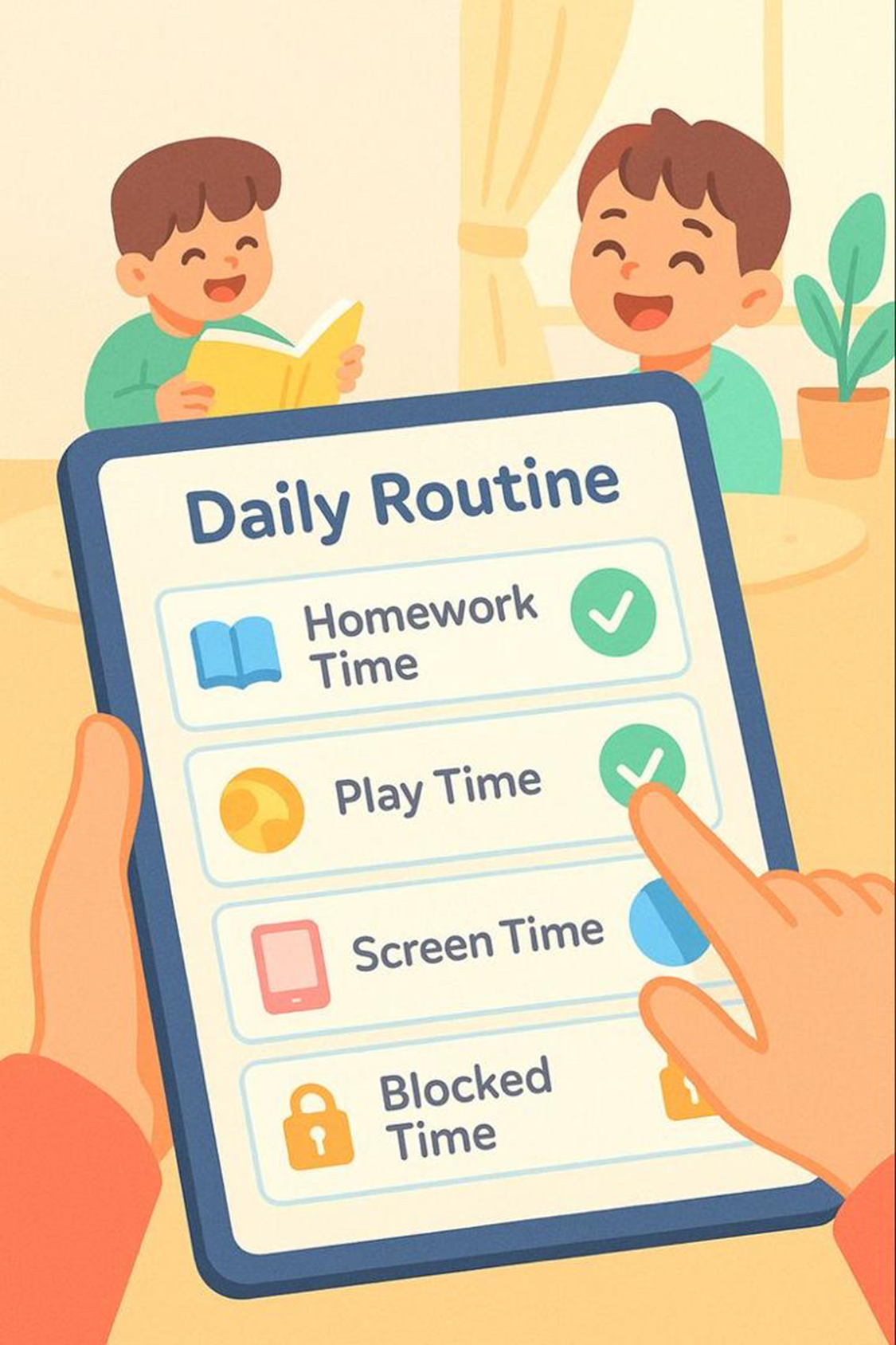
Establishing Healthy Screen Time Guidelines
Setting clear rules and boundaries is one of the most important steps parents can take to help children develop a healthy relationship with technology.
The American Academy of Pediatrics discourages media use, except for video chatting, by children younger than 18 months.
If you introduce digital media to children ages 18 to 24 months, make sure it's high quality and avoid solo media use.
For children ages 2 to 5, limit screen time to one hour a day of high-quality programming.
Which experts suggest that recreational screen time should be limited based on a child’s age, for example, younger children may benefit from just an hour of leisure screen use per day, while older children can handle slightly more, provided it doesn’t interfere with sleep, homework, or physical activity.
Creating balance is crucial. Encouraging device-free family time, outdoor play, sports, reading, and hobbies gives children opportunities to develop skills and interests beyond screens.
These activities also strengthen family bonds and help children manage stress naturally.
Parents can also use tools like parental controls and content filters to ensure children access safe, age-appropriate material.
Co-viewing or engaging in online activities together is another effective approach, it allows parents to monitor usage while discussing the content, which can improve learning and critical thinking.
Consistency and open communication are key.
Explaining the reasons behind limits helps children understand that these rules are designed for their well-being, rather than being arbitrary restrictions.
When children know what to expect, they are more likely to respect boundaries, making screen time a positive and balanced part of their daily routine.
Encouraging Tech-Smart Habits and Digital Literacy
Limiting screen time is important, but teaching children how to use technology responsibly is just as important.
Kids should learn to think carefully about what they see online, check if information is true, and stay safe by protecting their personal information.
They should also practice good online manners, like being respectful to others and avoiding cyberbullying.
Parents can help by showing positive examples, using devices in moderation and balancing online and offline activities.
Talking with children about what they do online, playing games together, or exploring apps as a family can teach them that technology is a helpful tool, not a replacement for real-life experiences and relationships.
By combining limits with guidance, parents can help children enjoy technology safely and responsibly.
Conclusion
Balancing technology and childhood requires awareness, structure, and guidance.
While screens offer learning opportunities and entertainment, they should not replace active play, family interaction, or emotional development.
Modern parents must actively engage with their children, set thoughtful boundaries, and teach responsible tech use.
By doing so, they can help their children enjoy the benefits of the digital age without compromising their overall well-being.
More Articles from this Publisher
Balancing Technology and Childhood: How Modern Parents Navigate Screen Time in a Digital Age
Screens are everywhere, and kids are using them more than ever. Learn how parents can balance technology, protect their ...
Balancing Technology and Childhood: How Modern Parents Navigate Screen Time in a Digital Age
Screens are everywhere, and kids are using them more than ever. Learn how parents can balance technology, protect their ...
Understanding Generation Z: How Digital Natives Influence Social Norms and Culture

Generation Z isn’t just following trends, they’re creating them. From shaping pop culture to driving social change, this...
Crossing Borders: How Cultural Exchange Shapes Our World

By sharing traditions and ideas, cultural exchange connects people, but it also tests how we navigate differences.
Artificial Friendship - Can AI Replace Human Connection?

AI companions are becoming popular as people seek comfort from loneliness and social struggles. While they offer support...
The Secret Force Behind Your Daily Decisions

Tiny daily choices, what you eat, say, or do, may seem small, but over time they quietly shape your habits, relationship...
You may also like...
Africa’s Minimum Wage Rankings 2026: Who Pays More and Who Really Benefits

Africa’s highest minimum wages in 2026 look impressive, until you break down what people can actually afford. This list ...
Nigeria's Oil Palm Industry Is Waking Up — and the Stakes Could Not Be Higher

Nigeria has validated a sweeping Oil Palm Development Strategy targeting 9–10 million metric tonnes of production by 205...
Australia Raises Minimum Salary for Nigerians And Other Foreign Workers To ₦72.5m

The minimum salary for Australia's employer-sponsored visas just went up. For mid-level workers it is a tighter squeeze....
NDPC Probes Remita And Sterling Bank Over Alleged Data Breach

The Nigeria Data Protection Commission has launched an investigation into an alleged data breach involving Remita and St...
Balancing Technology and Childhood: How Modern Parents Navigate Screen Time in a Digital Age
Screens are everywhere, and kids are using them more than ever. Learn how parents can balance technology, protect their ...
Balancing Technology and Childhood: How Modern Parents Navigate Screen Time in a Digital Age
Screens are everywhere, and kids are using them more than ever. Learn how parents can balance technology, protect their ...
Free Will Might Be an Illusion, And You're Not as in Control as You Think

Free will may not be as real as we think. From Benjamin Libet to modern neuroscience, research suggests your brain makes...
10 Surprising Things That Pass Through the Strait of Hormuz (That Have Nothing to Do With Oil)

When the Strait of Hormuz is disrupted, it’s not just oil at risk. Here are 10 critical global lifelines that pass throu...