Artificial Friendship - Can AI Replace Human Connection?
AI companions are becoming popular as people seek comfort from loneliness and social struggles. While they offer support, they cannot replace real human connection and may lead to emotional dependence.
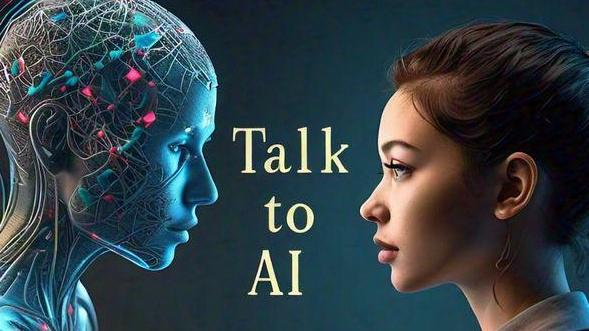
“In my view, the increasing reliance on AI companions is often driven by issues such as social anxiety, loneliness, and low self-esteem.
I think this dependence can gradually shift people away from real human relationships, making artificial companionship feel easier and more appealing.
However, if this trend continues, could AI companionship begin to replace meaningful human connection altogether?”
Friendship has always been a human experience built on trust, shared feelings, and real-life interactions.
But in today’s digital world, technology is changing how we connect.
What once depended on face-to-face communication now often happens through screens and messages.
From AI chatbots to virtual companions, people are starting to form connections with machines that can listen, respond, and seem to understand them.
For many, especially those who feel lonely or busy, AI offers an easy and judgment-free way to connect.
However, this raises important questions. Can a machine truly replace real human connection? Even though AI can imitate emotions, it doesn’t actually feel them.
As technology continues to grow, friendships may change in the future.
Before you know by 2030 and beyond, human and AI relationships may exist side by side.
The challenge will be using technology without losing the real, meaningful connections that make friendship special.
The Rise of AI Companions
AI companions are no longer just science fiction, they are becoming increasingly advanced, affordable, and accessible.
From smart chatbots to virtual friends in apps and gaming platforms, AI can engage in conversation, remember personal details, and even provide advice or encouragement.
These companions are available 24/7, never judge, and can adapt to a user’s personality and preferences, creating the impression of a personalized friend.
For many people, AI companions offer comfort and support in ways human friends sometimes cannot.
Individuals dealing with loneliness, social anxiety, or limited social opportunities find solace in virtual companions that respond without criticism or expectation.
In some cases, AI has been used in mental health support, helping users manage stress, practice mindfulness, or simply have someone, or something, to “talk to” during difficult moments.

Yet, despite these benefits, AI connections remain fundamentally different from human relationships.
While AI can simulate empathy and understanding, it does not truly feel emotions.
Every response is generated based on algorithms, patterns, and pre-programmed data.
This raises important questions: Can we consider interactions with AI as genuine friendship, or are they simply illusions of companionship designed to satisfy emotional needs?
Another factor to consider is dependency. Some people may grow emotionally reliant on AI companions, preferring their predictability and constant availability over the complexity of human relationships.
According to Humanities and Social Sciences communications reported that,AI chatbots have increasingly taken on the role of human companions, offering what can be dubbed ‘emotional fast food’: a convenient substitute for connection, instantly gratifying, but ultimately lacking substance.
While AI can provide support, it cannot replace shared human experiences, spontaneity, or the deep emotional resonance that comes from connecting with another person.
Looking ahead, the rise of AI companions may redefine social norms.
These digital friends can supplement human interaction, but their role in replacing or reshaping emotional bonds will continue to spark debate.
Understanding both their potential and their limitations is essential as AI becomes a more integrated part of our social lives.
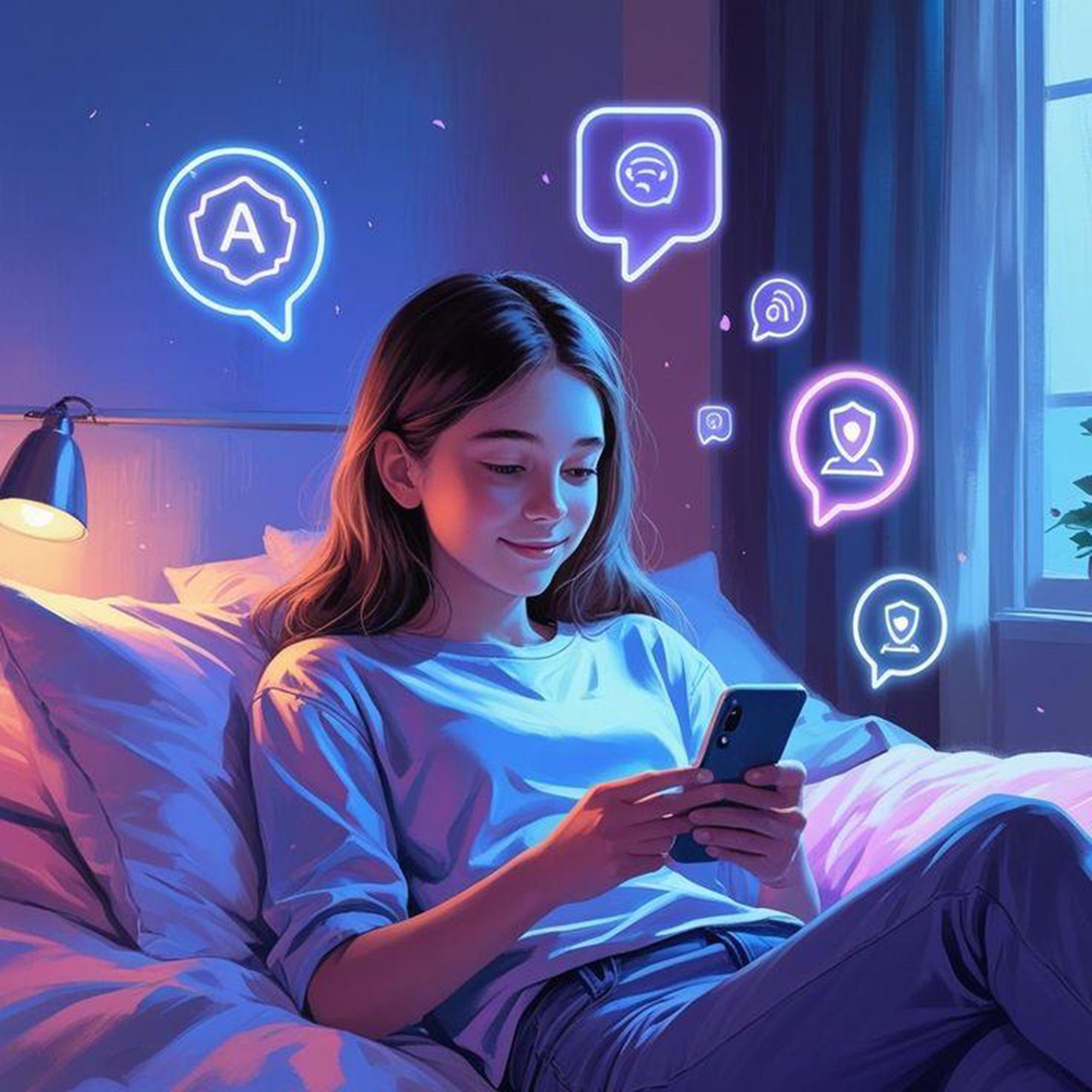
Redefining Connection in a Digital World
As technology becomes more integrated into daily life, the way we define friendship is evolving.
Social media, online communities, and virtual interactions have already changed how people build and maintain relationships, allowing people to connect across distances and share experiences instantly.
AI takes this a step further by creating connections that do not depend on another human being at all.
Virtual companions, chatbots, and AI-driven platforms can offer conversation, reminders, emotional support, and even companionship, blurring the lines between human and machine interaction.
In the future, friendships may increasingly exist in hybrid forms, where human and AI connections coexist.
People might rely on AI for daily conversation, emotional check-ins, or even entertainment, while maintaining deeper emotional bonds with human friends.
This could make relationships more accessible for those who struggle socially or live in isolated areas.
AI can fill in gaps, provide comfort, and even encourage people to engage more with human friends by offering suggestions or reminders for social interaction.
However, this shift also brings challenges.
The convenience of AI interaction could reduce the perceived need for face-to-face connection, leading some to favor virtual companionship over human relationships.
The risk is that reliance on AI may result in superficial social experiences, where people feel connected without the depth, unpredictability, and growth that come from real human interaction.
Moreover, AI-driven friendships raise questions about emotional authenticity.
While AI can mimic empathy and respond to cues, it cannot truly feel emotions or understand context the way humans do.
As a result, while AI may complement human relationships, it cannot fully replace the trust, vulnerability, and mutual understanding that define meaningful friendships.
Ultimately, redefining connection in a digital world is about finding a balance.
Technology and AI can enhance social experiences and provide support where human interaction is limited, but they must be integrated thoughtfully to preserve the richness and depth of true friendship.

The Limits of Artificial Friendship
Despite its advantages, AI cannot fully replace the depth of human connection.
Real friendships involve shared experiences, physical presence, and genuine emotional understanding, things AI cannot truly replicate.
Human relationships also involve unpredictability, growth, and mutual effort, which are essential for building meaningful bonds.
There is also the risk of over-reliance on AI, where individuals may choose artificial companionship over real relationships.
While only a small subset of users form emotional connections with ChatGPT, those who do are often its heaviest users, according to a pair ofjoint studies by MIT Media Lab and OpenAI.
Researchers found that users who engaged in the most emotionally expressive conversations with the chatbot also reported higher levels of loneliness, though it remains unclear whether the chatbot contributes to that loneliness or simply attracts individuals already seeking emotional connection.
This could lead to increased isolation rather than connection, highlighting the importance of balance in how we use technology.
Conclusion
AI is transforming the way we experience connection, offering new forms of companionship that were once unimaginable.
While it can support and enhance our social lives, it cannot fully replace the depth and authenticity of human relationships.
The future of friendship will likely be a blend of both, where AI complements human connection rather than replaces it.
Ultimately, no matter how advanced technology becomes, the need for genuine human interaction remains at the heart of what it means to be truly connected.