Are We Educating African Children for a Labour Market That No Longer Exists?
Africa's education systems are struggling to keep pace with changing labour markets. This commentary examines the colonial roots of formal education, the examination culture and why African curricula need a fundamental upgrade.

A student can spend years learning how to pass examinations, collect certificates and reproduce information under pressure, only to discover after graduation that the economy is asking a different set of questions and there is no spot for him or her in a large market full of opportunities.
This is not an argument against education; it is an argument that education itself must evolve when the society it serves has evolved. Across Africa, the problem is increasingly visible: the World Bank says the mismatch between education systems and the needs of African youth is a major challenge, while the ILO reports that two-thirds of young adult workers in developing economies have qualifications that do not match well with their jobs.
The origins of this problem are older than the smartphone, the internet or even independence. Much of the formal education inherited by countries such as Nigeria was shaped during British colonial rule, when schooling developed partly around the practical needs of administration, commerce and missionary activity.
In Nigeria, early Western schools emphasised literacy, numeracy, English and other subjects that could supply the colonial system with clerks, interpreters, teachers and administrative workers.
The CMS Grammar School in Lagos, founded in 1859, became an important source of clerks, civil servants and manpower for the then colonial administration, while colonial educational policies increasingly emphasised subjects considered useful for administration.
The context for that history matters a whole lot, but it would be too simplistic to say that Africa is still literally operating a Victorian classroom unchanged since colonialism.
The deeper inheritance is the logic of the system: standardised curricula, age-based progression, examinations, credentials and a hierarchy that often rewards the student who can reproduce the expected answer more reliably than the student who can ask a better question.
A model designed for an economy that needed predictable administrative workers now sits inside economies dealing with artificial intelligence, digital commerce, climate change, entrepreneurship, biotechnology, automation and jobs that did not exist when many of the curricula were designed.
The Examination Became the Destination No Agreed On
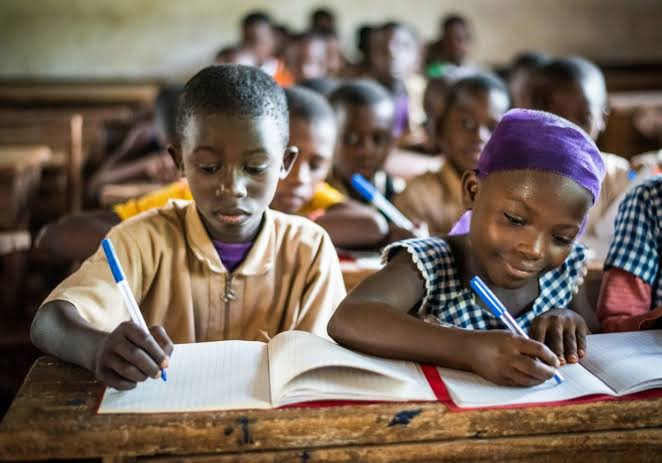
The contradiction becomes obvious in the way success is measured. A student can be exceptionally good at memorising definitions, formulas and textbook explanations and still struggle to build something, investigate a problem, communicate an idea, work with unfamiliar information or apply knowledge outside the examination hall.
The problem is not that examinations exist; it is that the examination can become the purpose of education rather than one instrument for measuring learning.
This creates a particularly damaging cycle: the school teaches what the examination rewards, the student learns what the school teaches, the university inherits the same habits, and the labour market eventually receives graduates who possess certificates but may require substantial retraining.
UNESCO's 2025 continental report on African education explicitly identifies skills mismatch and misaligned higher education among the continent's challenges, with the argument that Africa needs stronger demand-driven skills development because the skills being taught do not always correspond with what employers require.
The result is not simply unemployment. It is educational obsolescence. We have all heard the familiar advice: “Learn a skill alongside your education.” There is wisdom in encouraging students to develop capabilities beyond the classroom, but it also raises an uncomfortable question: what exactly is the purpose of spending four or five years in a university if the degree earned at the end cannot secure even a small space in the economy?
Education should educate and equip, not educate and cripple; a university degree should not become a beautifully printed certificate attached to years of learning that leaves its holder still searching for something useful to offer the economy.
This is because a university cannot continue to admit hundreds of students into a programme because the programme exists, or continue teaching the curriculum because it is approved, and whilst graduating students because they have completed the supposed requirements, even while the economy around the institution has moved somewhere else.
The system therefore risks becoming a pipeline of garbage in, garbage out: outdated assumptions enter the classroom, outdated knowledge is rewarded, and graduates emerge into a labour market that has no obligation to preserve the world their curriculum was designed for.
China offers an interesting contrast. Its education system is hardly perfect, but universities and authorities have shown a willingness to discontinue programmes when they no longer attract students or produce meaningful employment outcomes: in 2022, for example, 83 Chinese universities had dropped public affairs management as an undergraduate major over five years, while Anhui introduced rules allowing disciplines to be suspended or revoked if fewer than 60 percent of graduates entered employment or further education for three consecutive years.
More recently, Chinese universities have continued eliminating programmes, cutting off about 12200 courses, because of low employment rates and poor alignment with industrial changes.
The lesson is not that Nigeria should copy China wholesale. It is that a curriculum should be capable of admitting that something no longer works.
Africa Cannot Educate for Yesterday's Economy


Africa is entering a demographic transformation in which education will determine whether a huge young population becomes an economic advantage or an enormous pool of frustrated labour.
The World Bank estimates that Africa creates roughly three million formal jobs annually while 10–12 million young people enter the labour force each year, making it impossible for education policy to focus only on producing graduates without simultaneously asking what those graduates are being prepared to do.
That means African education needs to move beyond the narrow question of “What job does this certificate qualify me for?” and towards a more difficult question: “What can this person actually do?”
The distinction is enormous. A modern graduate needs foundational literacy and numeracy, but also digital competence, analytical reasoning, communication, creativity, collaboration, adaptability and the ability to learn continuously.
Some will become doctors, engineers, lawyers and teachers; others will become entrepreneurs, researchers, designers, technicians, farmers using technology, software developers or professionals working in occupations that today's curriculum designers cannot yet name. UNESCO and the African Union have already called for education and skills systems to become more responsive to Africa's economic and social needs.
The answer, therefore, is not to abandon universities or declare every traditional course useless. Nor is it to replace every academic subject with vocational training or chase whatever occupation happens to be fashionable this year. The real upgrade is to build an education system capable of updating itself.
Also for students currently inside this system, waiting for the education system to repair itself is not a strategy. A student should pursue the degree, but should also build a personal system of sustainability around it: develop practical skills, learn how to communicate and solve problems, understand technology, build relationships, experiment with ideas and acquire knowledge that can create value beyond the classroom.
This is not an excuse for universities to remain outdated; it is an acknowledgment that until the system catches up with reality, students cannot afford to make their entire future dependent on a system that may not have a clear plan for where it is taking them.
Universities should know where their graduates are going. Courses with persistently weak relevance should be reviewed rather than protected indefinitely. Employers should have a stronger voice in curriculum design without turning universities into corporate training centres. Students should encounter practical projects, apprenticeships, research, entrepreneurship and real-world problem-solving alongside theory.
Most importantly, Africa has to stop treating education as a factory whose primary output is certificates.
The world has changed faster than the classroom. The labour market has changed faster than many curricula. Technology has changed faster than the institutions responsible for preparing people to use it.
The question is no longer whether African children are going to school.
It is whether the school they are attending is preparing them for the Africa they are about to inherit.