Nigerian Elections: Explosive Survey Reveals 84% Voter Enthusiasm for 2027
A new survey by Yiaga Africa reveals that 84% of Nigerians intend to vote in the 2027 general elections, despite significant challenges like insecurity and declining trust in INEC and the judiciary. The report highlights that fear of violence and institutional distrust are major barriers, calling for urgent action from stakeholders before the January 2027 presidential election.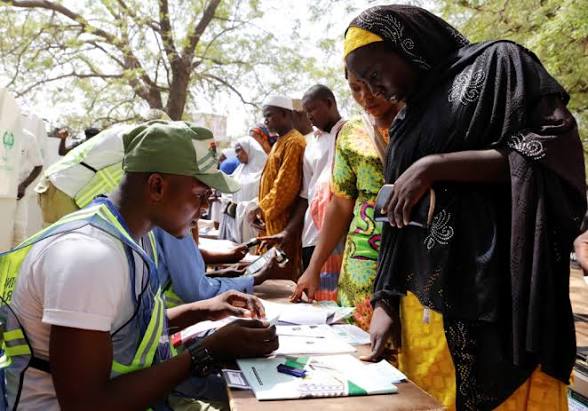
A recent survey by Yiaga Africa reveals that a significant 84 percent of Nigerians express their likelihood to participate in the 2027 general elections. However, this strong intention is tempered by considerable concerns regarding insecurity, public trust in the Independent National Electoral Commission (INEC), and the perceived credibility of electoral dispute resolution mechanisms.
The findings, detailed in the organization’s National Voting Intentions Survey 3.0, were launched in Abuja on Wednesday. Conducted in September 2026, the comprehensive survey engaged 2,470 Nigerians aged 18 and above across all 36 states and the Federal Capital Territory. The data collection utilized a mixed-method approach, with 2,066 respondents interviewed by telephone and 404 through face-to-face interviews specifically in rural communities.
The report highlights several critical barriers to full electoral participation. While 47 percent of respondents indicated they were "very likely" to vote, a substantial 61 percent admitted that fear of violence could prevent them from casting their ballots. Insecurity emerged as the foremost concern, with 82 percent of respondents expressing apprehension that it could adversely affect the integrity and smooth conduct of the 2027 polls.
Trust in electoral institutions also presents a notable challenge. Confidence in INEC experienced a significant decline, dropping from 45 percent in the initial two rounds of the survey to 34 percent in this latest edition. Interestingly, the survey found a disparity between trust in specific technologies and the commission itself, with 49 percent of respondents trusting the Bimodal Voter Accreditation System (BVAS) and IReV result transmission, yet overall confidence in INEC remained lower at 34 percent. Furthermore, a majority of 63 percent of Nigerians expressed little or no confidence in the judiciary's ability to resolve electoral disputes fairly, a figure that escalated to 81 percent in the South-South region.
Hussaini Abdu, Chairman of Yiaga Africa’s Board of Trustees, clarified that the survey’s objective was not to pass judgment but to identify avenues for enhancing voter intentions before the elections. He described the report as a "wake-up call" for Nigerians, civil society organizations, and all election stakeholders, emphasizing the critical importance of the upcoming elections for the country’s democracy. Abdu also urged political parties to actively encourage voter turnout, contrasting it with the disheartening 27 percent turnout of registered voters observed in the 2023 elections. He stressed that while the electoral system allows for a simple majority, it is democratically unfair for minorities to elect leaders.
Safiya Bichi, Yiaga Africa’s Head of Knowledge Management and Learning, underscored that despite the challenges, Nigerians have not given up on elections, viewing voting as a duty and believing their votes can make a difference. She identified "fear, distrust and money" as the primary obstacles between willingness to vote and actual participation. Bichi characterized low voter turnout in Nigeria as a "conversion problem" rather than an "apathy problem," placing the onus on institutions and actors controlling security, credibility, and logistics to address these issues. With the presidential election slated for January 16, 2027, she noted that the window for action is rapidly closing.
Ezenwa Nwagwu, Executive Director of the Peering Advocacy and Advancement Centre in Africa, lauded the 84 percent likely voter figure as a positive indicator, urging stakeholders to collaborate in engaging undecided voters or those affected by apathy. He, however, advised INEC to avoid overpromising, suggesting a strategy of "under-promise and then overperform." Nwagwu highlighted the complex nature of elections, where efforts to ensure credibility can be simultaneously undermined, and cautioned against disclosing operational details that might expose the process to unnecessary risks, instead recommending that INEC inspire public confidence in its preparations without such disclosures.
In its comprehensive recommendations, Yiaga Africa called upon the Federal Government and security agencies to publish a threat-based national election security plan through the Inter-Agency Consultative Committee on Election Security by November 2026, with a focus on prioritizing the North-East, North-West, and North-Central regions. The organization also advocated for measures to protect voters themselves, moving beyond a sole focus on election materials. It urged INEC to commit publicly and bindingly to the real-time upload of all polling unit results to IReV, and to publish and stress-test its results management protocol specifically in the South-East and South-South. Lastly, Yiaga Africa charged the judiciary to ensure pre-election candidacy disputes are resolved before ballot papers are printed and to establish clear timelines for the resolution of election petitions.