African Countries That Still Print Their Money Abroad
Some African countries print their banknotes abroad because domestic production requires specialised technology, expertise and investment, prompting efforts to build local capacity.
At least 40 African countries were reported to print their money abroad in 2022, decades after gaining independence.
Four years later, foreign banknote production remains an important part of the continent’s currency supply chain, while some countries are exploring whether they can bring more of that work home.
The arrangements vary across the continent. Fourteen countries using the CFA franc have their banknotes produced in France, while other African currencies have been manufactured in the United Kingdom, Germany and the United States.
Nigeria, despite having its own security printing company, also continues to rely heavily on foreign suppliers.
The African Countries That Print Their Money Abroad
France’s foreign ministry identifies several African currencies produced outside their countries of origin. The clearest regional example is the CFA franc, whosebanknotes have been produced at the Banque de France’s printing works in Chamalières since 1945.
The facility also manufactures currencies for other countries. The Banque de France confirms that its printing worksproduces banknotes for around 20 countries worldwide.
The 14 countries using the CFA franc are divided into two monetary unions.
West African CFA franc: Benin, Burkina Faso, Côte d’Ivoire, Guinea-Bissau, Mali, Niger, Senegal and Togo.
Central African CFA franc: Cameroon, Central African Republic, Chad, Republic of the Congo, Equatorial Guinea and Gabon.
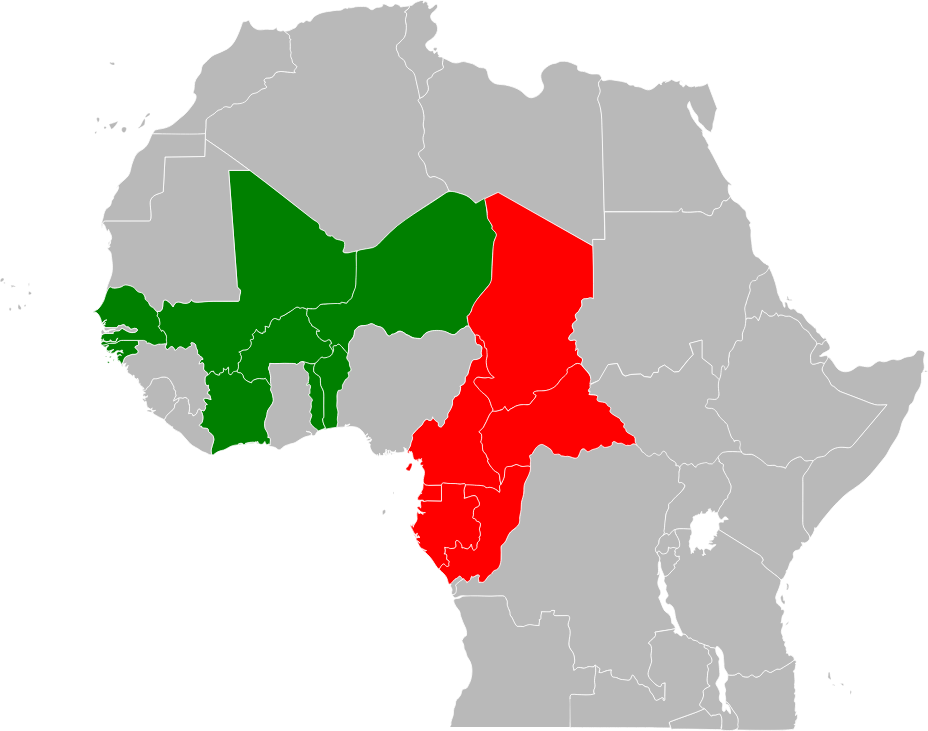
Beyond these countries, France’s foreign ministry lists the following currencies as being produced abroad:

United Kingdom: Guinean franc, Ethiopian birr, Ugandan shilling and Botswana pula.
Germany: Eritrean nakfa, Mauritanian ouguiya, Tanzanian shilling and Zambian kwacha.
United States:Liberian dollar.
These are documented examples of foreign production, but the supplier information does not establish that every contract remains unchanged in 2026. Tanzania, for instance,awarded a banknote reprinting tender to De La Rue International and Crane Currency of Malta in 2024, showing why newer procurement information must be checked against older supplier lists.
ADeutsche Welle investigation identified Ethiopia, Libya and Angola among countries reported to order banknotes from De La Rue, and named South Sudan among countries said to use German printers.
Nigeria Still Depends on Foreign Printers
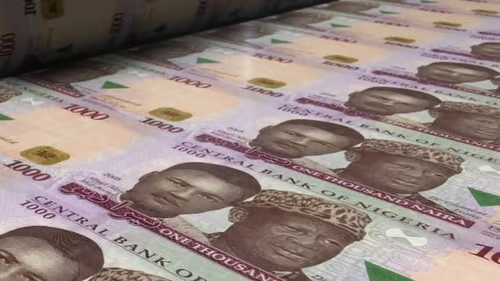
Nigeria has its own banknote printer, but it still turns to foreign companies to produce a substantial share of the naira notes in circulation.
The Central Bank of Nigeria’s 2025 annual report puts that reliance into numbers. Of the 5.71 billion banknotes approved for production that year, foreign high-security printers were allocated 65 per cent, while the Nigerian Security Printing and Minting Plc (NSPM) was allocated two billion notes.
NSPM delivered about 1.24 billion notes by the end of December, leaving roughly 761 million of its allocation outstanding.
Foreign printers delivered approximately 2.206 billion notes in the ₦1,000, ₦500 and ₦200 denominations during the same period.
The difference between the domestic allocation and actual deliveries raises a question about how much of Nigeria’s banknote demand its own printer can meet within a year.
The figures do not, on their own, explain why the CBN uses foreign suppliers, but they show that having a domestic printing facility has not eliminated the need for them.
Ethiopia and Uganda Want to Build Local Capacity
Some countries are now looking at ways to reduce their reliance on overseas banknote manufacturers.
In January 2026, Ethiopia announced plans to develop domestic currency-printing capacity through Ethiopian Investment Holdings, the state-owned investment company.
The initiative is intended to build strategic national capabilities and reduce dependence on foreign providers. However, the announcement does not mean Ethiopia has already started printing its banknotes locally.
Uganda has also taken steps towards establishing domestic capacity.
In August 2026, Uganda Security Printing Company entered into an agreement with Germany-based K&B Banknote Solutions to assess the feasibility of a proposed currency-printing facility.
The agreement concerns preparatory work, not a completed or operational plant.
Both developments reflect a wider interest in producing more strategic goods locally. Whether the projects proceed will depend on investment, technical expertise, security requirements and the cost of operating facilities capable of producing banknotes reliably.
Why Countries Outsource Banknote Production
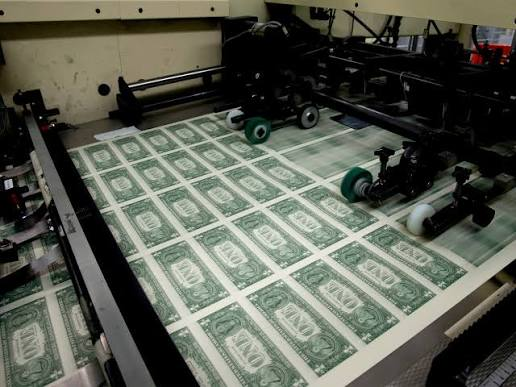
Banknote printing requires specialised machinery, secure materials, anti-counterfeiting technology and strict production controls. Establishing a facility that meets international security standards can be expensive, particularly for countries that need relatively small quantities of banknotes.
Contracting established manufacturers can therefore be more economical.
However, outsourcing exposes countries to foreign-exchange costs, shipping expenses and potential delays when new banknotes are urgently needed.
The decision to bring production home depends on whether a country can build and operate a secure facility that meets its needs at a competitive cost.
For Ethiopia and Uganda, the proposed move towards domestic production will depend on investment, technical expertise and the ability to sustain operations.