Africa United? South Africa's Xenophobia Ignites Regional Fury & Calls for Action
Recent xenophobic attacks in South Africa, primarily affecting Ghanaian nationals, have ignited widespread diplomatic calls for a coordinated continental response. Ghanaian officials, emphasizing historical solidarity and the need for accountability, are engaging with South African authorities who have expressed regret and pledged investigations. The ongoing incidents highlight the urgent need for pan-African unity and effective policy solutions to address socio-economic frustrations without resorting to xenophobia.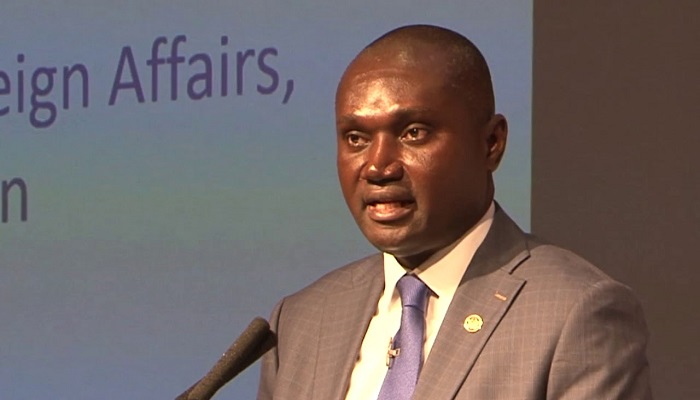
Recent xenophobic attacks in South Africa, particularly targeting Ghanaian nationals and other West Africans, have sparked strong condemnations and urgent calls for a coordinated continental response. These incidents, involving harassment and looting in areas like Gauteng and KwaZulu-Natal, have prompted significant diplomatic activity and raised serious concerns across Africa.
Ghanaian officials have been vocal in demanding action and accountability. Charles Asuako Owiredu, the Member of Parliament for Abirem and former Ghana High Commissioner to South Africa, emphasized the inadequacy of mere condemnations, advocating for stronger diplomatic pressure involving other ambassadors in South Africa and the African Union to create a united front. Similarly, Kenneth Ashigbey, Convenor of the Ghana Coalition Against Galamsey, described the situation as deeply troubling and called on the African Union to convene urgently to condemn the attacks. He also urged President John Dramani Mahama to engage directly with South African President Cyril Ramaphosa, stressing the need for high-level diplomatic intervention and collective responsibility among African leaders to safeguard citizens' rights and dignity.
Ghana's Minister for Foreign Affairs, Samuel Okudzeto Ablakwa, has confirmed several key developments. He stated that the South African government has expressed regret over the incidents and assured Ghana of ongoing investigations. Following diplomatic engagements, South African authorities pledged to take decisive action, with Ghana's High Commissioner to South Africa, Benjamin Kofi Quashie, revealing that officials had identified individuals behind the attacks. Minister Ablakwa also announced urgent consular measures, including the relocation of Mr. Emmanuel Asamoah, a Ghanaian national who experienced a xenophobic attack, out of South Africa to ensure his safety. He commended South African authorities for their reassuring response and continued commitment to the protection of Ghanaian citizens.
These recent events unfold against a profound historical backdrop of African solidarity. The fight against apartheid in South Africa commanded immense continental support, with independent African states like Ghana committing resources, diplomatic capital, and human effort. Ghana, under its early post-independence leadership, served as a crucial hub for liberation movements, offering training and logistical support. This collective sacrifice was rooted in a shared vision of continental unity, exemplified by acts such as Mayor Agbleze's symbolic protest of walking barefoot until Nelson Mandela's freedom. The current wave of xenophobic violence, therefore, is particularly troubling as it signifies an erosion of historical memory and contradicts the very ethos that made South Africa's liberation possible.
Xenophobic violence in South Africa is not a new phenomenon, with its targets shifting over the years—from Mozambicans and Zimbabweans in 2008 and 2015, to Nigerians and Zimbabwean truck drivers between 2019-2021, and now reportedly Ghanaians and other West Africans. The recurring justification for these attacks is often the narrative that “foreigners steal jobs and economic opportunities.” While the socioeconomic frustrations driving these tensions are real, including unemployment exceeding 32% and youth unemployment topping 60%, the diagnosis is fundamentally flawed. The core problem lies in “skills mismatch and policy failure,” rather than nationality.
Migrants often fill critical roles, including artisanal, technical, and professional skills, as well as jobs in spaza shops, trucking, and construction, which are sometimes shunned by locals or for which local training pipelines are weak. The consequences of a successful “foreigners out” strategy would be severe: a labor vacuum leading to empty shelves and rising prices, a collapse in revenue as foreign businesses exit, accelerating urban decay, and crime turning inward once external scapegoats are removed. The cautionary tale of “Zimbabwe post-2000” illustrates how the departure of skilled people can lead to an economic collapse for everyone, not just an opening for locals.
Pan-Africanism dictates that migration is a continental reality, permitted by the African Union. If countries like Ghana or Nigeria adopted similar xenophobic logic, South Africans abroad would face expulsion. Such selective pan-Africanism is unsustainable. While South Africans deserve jobs, safety, and dignity, blaming other Africans misdiagnoses the true issues of corruption, poor basic education outcomes, and deindustrialization—all governance problems, not immigration ones. As Kojo Asiamah Addo, a Social Policy & Community Development Practitioner, warns, “What is normalized in Johannesburg will be mirrored in Accra, Lagos, and Nairobi. Be careful what you ask for. Because when there’s no foreigner left to rob, the only targets left are each other.”
To honor its legacy and ensure a stable future, South Africa must reaffirm its commitment to pan-African solidarity. This requires more than condemning violence; it demands investment in education to preserve liberation history, clear leadership against division, and policies that address economic grievances without scapegoating vulnerable populations. By upholding the principles of unity and mutual respect, South Africa can renew the foundation of shared African dignity and progress.