10 Most Innovative African AI products That Made Big Waves in 2025
A look at the most innovative African AI products launched in 2025, from app builders and learning companions to voice technology, fintech assistants, and health tools, showing how the continent is building AI solutions tailored to its own languages, infrastructure, and daily realities.

Across Africa, artificial intelligence moved decisively beyond experimental chatbots in 2025. The year marked a shift toward sophisticated large language models and machine-learning tools built to reflect the continent’s realities; its languages, market dynamics, infrastructure gaps, and cultural diversity.
As investment increased, governments in Nigeria, Kenya, Ghana, Rwanda, and others unveiled clear AI integration strategies for priority sectors such as education, finance, agriculture, and public administration.
Telecom operators, including MTN and Airtel, accelerated the rollout of local data centres, strengthening the infrastructure required for dependable, scalable AI systems. With each addition, the vision of using AI to drive economic growth and social development edged closer to execution.
The result was a surge of new products and prototypes created for African users, and these were among the most notable launches of the year. Here are 10 most innovative African AI products launched in 2025.
Gebeya Dala (AI app builder, Ethiopia)
Gebeya, the Ethiopian software company founded by Amadou Daffe and Hiruy Amanuel, introduced Gebeya Dala in October 2025. Daffe developed the platform after observing that global no-code tools struggle with language, payment, and device constraints common across African markets.

Gebeya Dala addresses these barriers with a mobile-first system where users can describe the app they want, using Hausa, Swahili, Amharic, Arabic, or English, and the engine automatically generates full-stack code.
Its appeal goes beyond trained developers. A user can request an app that tracks local crop prices and get a fully functional, low-data solution with integrations such as mobile-money payments.
Curation AI (Authentication and opinion intelligence, Nigeria)
MYai Robotics, founded by AI and robotics engineer, Kayode Aladesuyi, launched Curation AI in November. The tool was built to counter the growing spread of synthetic media, misinformation, and deepfakes.
Curation AI authenticates videos, audio, images, news, and social-media posts in real time, flagging manipulated or AI-generated content before users amplify it.
It also includes an “opinion intelligence” engine that tracks live sentiment across digital platforms, giving organisations continuous insight into how conversations are evolving online.
YarnGPT (Multilingual AI dubbing and speech technology, Nigeria)
Developed by Nigerian AI engineer, Saheed Ayanniyi in February 2025, YarnGPT specialises in text-to-speech, video translation, and voice generation using Nigerian vocal cadences. Ayanniyi trained the model by extracting audio and transcripts from Nollywood films to capture natural intonation patterns.

The system can translate and dub English-language videos into Yoruba, Igbo, or Hausa within minutes. It also includes a URL-to-audio tool that converts written articles into podcast-style narration and offers an API for developers building voice-enabled products.
YesCheff (Interactive cooking, Nigeria/UK)
Product designer Deji Ajetomobi launched YesCheff in October 2025 as an interactive kitchen assistant. Users can search for any meal, retrieve the best YouTube tutorial available, and have the system transcribe and reorganise the content into a structured recipe with ingredients, tools, calorie counts, serving sizes, and allergen information.
The platform supports step-by-step cooking with timers, heat indicators, and ingredient checklists, and can even suggest nearby grocery stores if something is missing. It relies on YouTube transcript tools, Google’s API, and OpenAI technologies.
JobPilot AI (Careers, Ghana)
Ghanaian founders, Kelvin Agyare Yeboah and Anthony Gudu, launched JobPilot AI in April 2025 as a comprehensive career support tool. The platform integrates job search, resume creation, and interview preparation.
Its standout feature is an AI Interview Simulator that acts as a virtual panel, scoring confidence, delivery, and technical accuracy in real time.
JobPilot AI also generates ATS-compliant resumes and cover letters, matches users with suitable job opportunities, and includes a community forum for peer guidance and networking.
SmartSkin Africa (AI skincare analysis, Ghana)
Accessplus Communications Limited, led by Kelvin Boateng, introduced SmartSkin Africa in November. The platform provides personalised skin assessments tailored to African skin types by analysing up to 15 parameters, including pigmentation, hydration, dark spots, acne, wrinkles, firmness, and uneven tone.
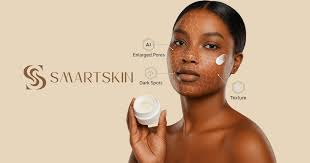
After evaluating a selfie, it produces a detailed report and product recommendations aligned with the user’s skin needs and local environment. SmartSkin Africa can also track changes over time, helping users understand how lifestyle shifts and climate conditions affect their skin.
Thunders (AI software testing platform, Tunisia)
After their success with the Tunisian fintech startup Expensya, co-founders Karim Jouini and Jihed Othmani launched Thunders in June 2025. The platform automates software testing, allowing teams to describe test cases in simple English while AI agents generate, execute, and maintain the tests.
By automating repetitive QA tasks, Thunders helps teams deploy faster and with higher confidence, reducing the manual workload for developers and QA engineers.
Xara (AI banking assistant, Nigeria)
Launched in June 2025 by Sulaiman Adewale, Xara is a WhatsApp-based banking assistant trained on Nigerian speech patterns, Pidgin, and English, with more local languages planned.

Users can send money, pay bills, track spending, and schedule payments through natural chat commands.
Xara also processes transactions via images and voice notes, allowing users to upload screenshots of bank details or record an instruction.
Chidi (AI learning companion, Rwanda)
Chidi was launched in November 2025 through a partnership between ALX, the Rwandan government, and Anthropic. Built on Claude, it functions as a Socratic tutor that encourages critical thinking rather than rote answers.
Teachers can use it to build lessons and enrich classroom engagement. Within its first 48 hours, Chidi facilitated more than 1,100 conversations and 4,000 chats. The next phase aims to train up to 2,000 teachers and civil servants and expand access to Claude-based learning tools.
MamaMate (Maternal health AI companion, Tanzania)
Ele-vate AI Africa, founded by Yvonne Baldwin, launched MamaMate in 2025 to support first-time mothers in rural and underserved communities. The device provides postnatal guidance, tracks baby-care routines, offers nutrition advice, and monitors maternal mental wellbeing through voice-interactive prompts.
It works offline, supports local languages, and is powered by solar or USB, making it suitable for low-connectivity regions. MamaMate received recognition at the 2025 AI for Good Innovation Factory and Global Summit for its community-focused approach.
Conclusion
The year demonstrated that African innovators are no longer adapting global technologies to local environments; they are designing systems from scratch for the lived realities of the continent. These tools respond directly to challenges shaped by language diversity, infrastructural gaps, informal economies, and the need for scalable, context-aware solutions.
As 2026 approaches, the trend signals a broader shift: technology shaped by those who understand Africa’s nuances is beginning to define not just local markets, but global expectations of what AI can be.