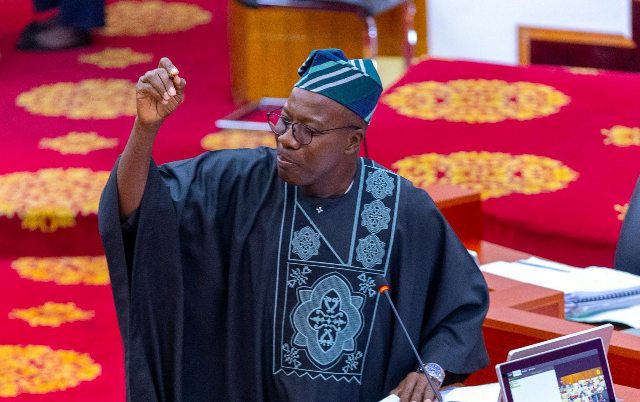
Zambian Constitutional Court Issues Ultimatum: New Political Parties Law Demanded in 12 Months!
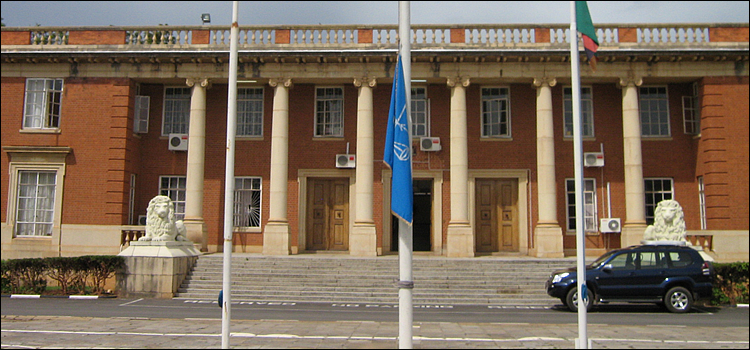
In a landmark decision with significant political implications, the Constitutional Court has ruled that the State's prolonged failure to enact the Political Parties Act is unconstitutional. The Court has issued a directive, ordering the government, through Parliament, to ensure this crucial legislation is in place within 12 months. Despite this mandate for new law, the Court also affirmed that the existing colonial-era Societies Act will continue to govern political parties in the interim, provided its application aligns with constitutional provisions.
The ruling stemmed from a petition filed by the Legal Resources Foundation Limited (LRF), represented by constitutional lawyer John Sangwa. LRF sought declarations against the State, including the President, the Speaker of the National Assembly, and the Registrar of Societies, for their failure to implement Article 60(4) of the Constitution. This article explicitly requires legislation to regulate political parties, a mandate that had remained unfulfilled for nearly a decade since the Constitution's adoption.
LRF, through its legal counsel, argued that the absence of a dedicated Political Parties Act had forced political parties to operate under the outdated Societies Act. This statute, originally enacted during the colonial era, was deemed inadequate to address contemporary issues vital for a democratic society, such as political party funding, transparency in financial operations, campaign expenditure limits, and ensuring equitable participation within the political landscape. The foundation also warned that this regulatory gap could potentially jeopardize the integrity and credibility of the 2026 general elections, urging urgent court intervention.
Conversely, the State, represented by the Attorney-General, contested the petition. Its arguments included the assertion that the Constitution does not specify a timeline for the enactment of such legislation, citing budgetary limitations as a contributing factor to the delay. Furthermore, the State maintained that the Court lacked the authority to supervise the legislative duties of another arm of government and insisted that the legislative process was already underway, implying no deliberate delay.
However, in a judgment delivered by Justice Mudford Mwandenga, the Constitutional Court unanimously dismissed the State's arguments. The Court concurred that the delay in enacting the Political Parties Act constituted a violation of the Constitution. It emphasized that the obligation placed on Parliament by Article 60(4) was mandatory and could not be indefinitely postponed. While acknowledging the Constitution did not provide an explicit deadline, the Court found the prolonged inaction—spanning nearly 10 years—to be unreasonable and unwarranted. It further highlighted the State's failure to provide credible justification for the delay, pointing out that a draft Bill prepared as early as 2017 had inexplicably stalled at the consultation stage.
Regarding the continued reliance on the Societies Act, the Court clarified that it remains in force. It held that existing legislation would continue to apply as long as it is interpreted and applied in a manner consistent with the Constitution, thereby maintaining a legal framework until the new Act is passed. However, the Court declined to determine whether the absence of the Political Parties Act would directly affect the credibility of the 2026 general elections, stating that the petitioner had not presented sufficient evidence to support such a claim.
Ultimately, the Constitutional Court declared the State’s failure to enact the Political Parties Act unconstitutional and issued a clear order: the State must take all necessary steps to give effect to Article 60(4) within the stipulated 12-month period. This ruling places Parliament under considerable pressure to revive and swiftly pass the much-anticipated Political Parties Bill.
You may also like...
De Zerbi's Tottenham Apology: Fallout from Controversial Greenwood Remarks!

Roberto De Zerbi has issued an apology to Tottenham Hotspur fans for past comments about Mason Greenwood, emphasizing hi...
Wilder Unleashes Roaring Confidence Ahead of Chisora Showdown!
Deontay Wilder and Derek Chisora are set for a pivotal heavyweight clash in London, marking their 50th career bouts. Chi...
Fan Favorite Exits 'The Pitt' as Season 3 Shakes Up Cast
HBO Max's medical drama "The Pitt" announces major casting changes for Season 3, with Ayesha Harris promoted to series r...
Meryl Streep Takes on Taylor Sheridan with Netflix's Bold New Series

Netflix is finally bringing Jonathan Franzen's critically acclaimed novel, "The Corrections," to the screen as a limited...
Grammy Sensation Olivia Dean Unpacks Her Unbelievable Best New Artist Victory!

British singer Olivia Dean reflects on a monumental year, discussing her Best New Artist Grammy win for <em>The Art of L...
Rap Star J. Cole's Shock Basketball Career Move with Chinese League Team!

J. Cole has signed a contract to play for the Nanjing Monkey Kings in the Chinese Basketball Association, continuing his...
Global Powers Unite: WTO, AFCAC Push Urgent African Aviation Overhaul for Trade Boom

Nigeria's aviation future is under scrutiny as WTO and AFCAC leaders urge significant investments and policy reforms. Ca...
Microsoft Unleashes Three New Foundational AI Models, Intensifying Rivalry

Microsoft AI has unveiled three foundational AI models—MAI-Transcribe-1 for speech-to-text, MAI-Voice-1 for audio genera...