Urgent Update: Ebola Response Efforts Intensify Across Africa
The U.S. Department of State, in coordination with the CDC, is mounting a comprehensive response to the Ebola outbreak in DRC and Uganda, contributing over $162 million. Efforts include enhanced travel screenings for Americans, significant regional funding, and support for PPE, border surveillance, and treatment centers. The U.S., Mexico, and Canada have also aligned travel measures to protect citizens during global events like the FIFA World Cup 2026™.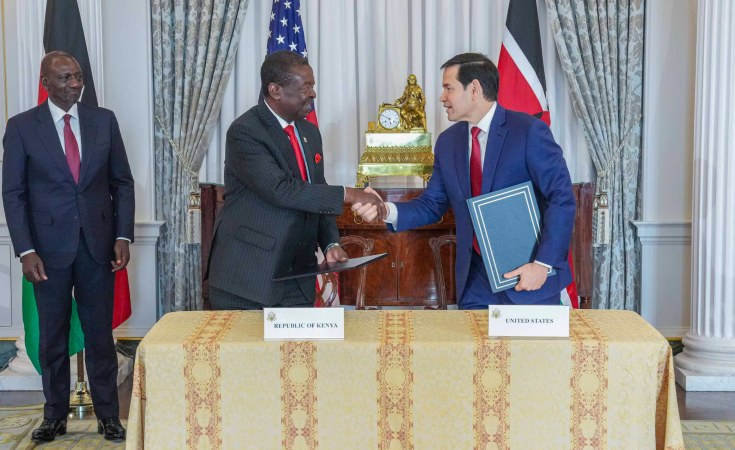
The United States Department of State, in close coordination with the U.S. Centers for Disease Control and Prevention (CDC), is actively leading a rapid and comprehensive response to the ongoing Ebola outbreak in the Democratic Republic of the Congo (DRC) and Uganda. The United States proudly stands as the largest financial contributor to the global Ebola response effort, with a commitment from the Department of State exceeding $162 million. This substantial funding empowers implementing organizations to significantly expand their vital response activities across Africa, specifically targeting the outbreak at its source to prevent its spread to the United States.
Beyond direct Ebola response, the Department has also allocated an additional $350 million through OCHA pooled funds to the DRC, Uganda, and South Sudan for broader humanitarian efforts in the affected region. This is part of a larger $1.8 billion in additional funding announced for OCHA on May 14. Furthermore, $50 million has been mobilized to OCHA's Central Emergency Response Fund, earmarked for the immediate establishment of up to 50 Ebola response clinics, bolstering the region's capacity to manage and treat cases.
Protecting Americans from the outbreak remains a paramount concern. On May 28, the United States, Mexico, and Canada issued a joint statement announcing aligned public health travel measures. These coordinated measures are specifically for individuals arriving from African regions deemed at the greatest risk from the Ebola virus. This trilateral approach aims to safeguard citizens and the millions of visitors, fans, athletes, and tourists anticipated for the FIFA World Cup 2026™, while simultaneously ensuring the continuity of travel and commerce across North American borders. The collective health and safety of every individual in the region is the highest priority as the world is welcomed to North America.
To further enhance protective measures, the Department of State issued a Worldwide Caution on May 28, providing updated information on arrival restrictions and Ebola screening protocols. This caution mandates that U.S. citizens and U.S. nationals who have been present in the DRC, Uganda, or South Sudan within 21 days of their arrival in the United States must enter exclusively through designated airports. These airports are equipped for enhanced screening procedures. Travelers are strongly advised to consult the U.S. CDC's guidelines regarding returning to the United States from these high-risk countries for a comprehensive list of designated entry points. Additionally, on May 28, an updated health alert was issued for U.S. citizens in Uganda, reiterating the recommendation against travel, providing details on border closures, and reflecting the CDC's elevation of its Travel Health Notice from Level 1 to Level 2, signifying the need for enhanced precautions.
The United States is also robustly supporting the regional response through significant funding and collaborative efforts with governments, non-governmental organizations (NGOs), and international bodies. These partnerships are crucial for a comprehensive and coordinated strategy to contain the Ebola outbreak at its origin. Secretary Rubio and Kenyan President William Ruto held discussions on May 28, reaffirming a shared U.S.-Kenya commitment to combating the Ebola outbreak, with the United States intending to commit $13.5 million towards Kenya's Ebola preparedness efforts.
With the $162 million in assistance from the Department, key partners on the ground are significantly scaling up critical response activities. These include, but are not limited to, the procurement and delivery of Personal Protective Equipment (PPE) and essential supplies. In the DRC, U.S.-funded partner UNICEF has successfully imported 100 tons of additional water, sanitation, and hygiene (WASH) as well as infection prevention and control (IPC) supplies. The International Organization for Migration (IOM) has also distributed IPC supplies, including PPE, hand hygiene materials, chlorine and disinfectant products, infrared thermometers, and screening and triage equipment. Samaritan's Purse, another U.S.-funded implementer, completed two out of three planned flights to Bunia, delivering 24 tons of PPE and equipment for a 40-bed treatment center. In Uganda, UNICEF has delivered WASH and IPC supplies to 48 health centers situated in high-risk districts.
Border screening and surveillance operations are being bolstered significantly. U.S.-funded partner IOM is providing support for health screening and surveillance at numerous points-of-entry and points-of-control across Ituri Province (Bunia) and North Kivu (Beni and Goma) in the DRC. Regionally, IOM is also supporting these crucial operations at major international airports, including N'djili International Airport and Bunia Airport in the DRC; Entebbe International Airport and Arua Airport in Uganda; Bujumbura International Airport in Burundi; and Bole International Airport in Ethiopia.
Contact tracing and risk communications are also central to the response. In the DRC, U.S.-funded partner UNICEF has deployed 1,300 health workers and provided 100 motorbikes to facilitate the rapid movement of contact tracing personnel in the field. FHI 360, another U.S.-funded implementer, has actively engaged local media, religious leaders, and community structures to amplify prevention messaging and counteract the spread of misinformation in hotspot health zones. Their efforts include training 40 health zone supervisors on IPC measures and organizing coordination meetings to ensure safe and dignified burials. In Uganda, UNICEF has oriented district health educators in 15 high-risk districts and translated critical risk communications materials into 10 local languages to enhance the reach and effectiveness of prevention messaging.
To improve diagnostic capabilities, U.S.-funded implementer FHI 360 delivered an initial 2,000 Ebola testing cartridges to the DRC, which are vital for timely detection, identification, and reporting of Ebola cases. FHI 360 continues to support laboratory coordination and diagnostic activities, including the transportation of 310 samples from Bunia to Kinshasa, further strengthening the country's testing infrastructure.
Finally, in terms of detection and treatment, U.S. assistance has enabled the International Medical Corps (IMC) to establish five transit centers and a dedicated Ebola Treatment Unit, specifically designed to isolate and treat patients. IMC is also proactively scaling up infection prevention and control practices across 43 health clinics to aid in preventing transmission, screening suspect cases, and facilitating the safe transportation of patients to specialized Ebola treatment facilities.