Top 10 Countries Hosting the Most U.S. Troops in The World
Japan, Germany, and South Korea lead the list of countries hosting the most U.S. troops in the world, revealing global security priorities and strategic military deployments.
The United States continues to maintain one of the most expansive global military footprints in the world, with troop deployments strategically positioned across key regions.
Across the world, a small group of countries hosts the majority of U.S. personnel, reflecting enduring alliances, security priorities, and evolving geopolitical tensions.
These deployments are not random, they represent decades-long defense agreements, strategic partnerships, and operational needs tied to global stability, deterrence, and rapid response capabilities.
From Asia to Europe and the Middle East, the presence of U.S. troops continues to shape international security dynamics.
Asia and Europe Dominate U.S. Military Presence
Japan
Japan remains the country with the largest U.S. military presence, hosting approximately 61,684 military and civilian personnel.
This long-standing deployment reveals the strength of the U.S.–Japan alliance and the strategic significance of the Indo-Pacific region, particularly amid rising regional tensions.
Germany
Germany ranks second, with about 49,338 U.S. personnel stationed across the country.
Germany serves as a major logistics and operational hub for U.S. forces in Europe, supporting NATO operations and broader regional security efforts.
South Korea
South Korea hosts about 26,722 personnel, making them on the list. The heavy presence of the US military reflects ongoing security commitments on the Korean Peninsula and broader regional stability efforts in East Asia.
Italy and the United Kingdom
Concluding the list of the top five countries with the presence of the US military is Italy and the UK, with 15,365 and 11,592 personnel respectively.
Both countries serve as essential pillars of U.S. military operations in Europe, providing strategic air, naval, and logistics bases that support operations across Europe, Africa, and the Middle East.
The top 10 countries hosting the most U.S. troops in 2025 include:
Japan — 61,684 personnel
Germany — 49,338 personnel
South Korea — 26,722 personnel
Italy — 15,365 personnel
United Kingdom — 11,592 personnel
Spain — 4,331 personnel
Bahrain — 3,813 personnel
Belgium — 1,832 personnel
Turkey — 1,728 personnel
Cuba — 771 personnel
Together, these countries form the backbone of the United States' global military positioning.
Strategic Deployments Reflect Global Security Priorities
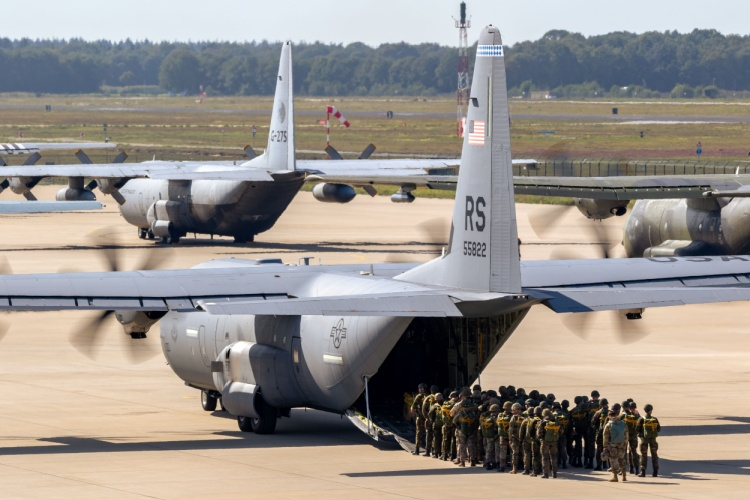
Beyond the largest host countries, smaller deployments also play critical strategic roles.
Spain hosts over 4,300 personnel, supporting naval operations and logistics in Europe and Africa.
Bahrain hosts nearly 3,800 personnel and serves as a vital hub for U.S. naval operations in the Middle East.
Belgium and Turkey also host important U.S. deployments that support NATO operations and regional security missions.
Meanwhile, Cuba, despite hosting the smallest number among the top 10, remains strategically important due to the U.S. naval base at Guantanamo Bay.
Overall, U.S. troop deployments remain heavily concentrated in regions tied to major geopolitical concerns, particularly areas influenced by Russia and China.
This distribution highlights the continued focus on deterrence, alliance support, and maintaining rapid response capabilities.
Despite shifting global tensions, overall troop levels across these host countries have remained relatively stable over the past decade, hovering around 200,000 personnel.
This consistency reflects long-standing defense agreements and well-established infrastructure that continue to support U.S. global operations.
As geopolitical dynamics evolve, the U.S. military footprint abroad is expected to remain a central component of American foreign policy.
The current deployment pattern shows and reveals how geography, alliances, and security priorities continue to shape military strategy in an increasingly complex global landscape.