The Talent Exodus: Why African Players Keep Leaving
Africa’s football talent continues to migrate abroad, driven by poor local leagues, weak infrastructure, and cultural bias toward Western football. Can Africa reverse the talent exodus and reclaim its game?
Introduction
Across the continent, a story keeps unfolding silently everyday, one not of triumph or unity, but of departure. Stadiums that once echoed with the cheers of hometown fans from the 90’s now echo with silence as the best of Africa’s footballing talent chase greener pastures abroad and even football lovers and enthusiasts prefer watching foreign football matches. The love affair between Africa and football runs deep, yet the romance feels heartbreakingly one-sided. For every rising star born on dusty pitches in Accra, Lagos, or Nairobi, there’s an all-too-familiar ending: a flight ticket to Europe.
This is not merely about dreams or ambition, it’s about survival, validation, and a system that keeps pushing its brightest away.
Football in Africa is not just a sport, it’s a social language, a heartbeat that unites villages and cities alike, making even strangers share ideas and deep conversation around it. From the crowded streets of Lagos to the open fields of Kampala, kids grow up barefoot but filled with professional dreams. Yet, those dreams rarely find fulfillment at home.
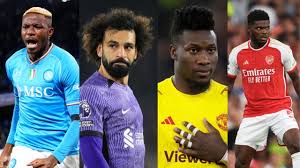
The truth is simple: while Africa produces some of the world’s most electrifying footballers, think Mohamed Salah, Sadio Mané, Victor Osimhen, Riyad Mahrez, the local leagues they once called home are struggling for breath.
A literature report revealed thata large percentage of African players were registered across European clubs, spanning from elite divisions to lower-tier leagues. Many leave immediately after a big break. It’s not just Europe; Asian and Middle Eastern leagues, too, have become magnets for African talent seeking financial security.
The irony? Africa’s greatest export isn’t oil or gold, it’s talent.
The Western Obsession: A Mirror of Our Own Discontent
When Liverpool faces Chelsea at Stamford Bridge, the streets of Nairobi, Accra, and Abuja erupt in noise, you see viewing centres filled to the brim with fans. Jerseys are worn, chants rehearsed, and arguments fill the air. Yet, when two local clubs face off, say, Accra Hearts of Oak and Asante Kotoko in Ghana or maybe Kano pillars and Warri wolves in Nigeria, the same fans scroll through their phones, waiting for the next Premier League kickoff.
It’s a painful paradox: Africa loves football, but not its own.
This cultural disconnect runs deep. Decades of colonial influence, globalization, and media dominance have turned Western football into the ultimate standard. European clubs are not just teams, they are lifestyles, aspirational symbols that represent a life many Africans crave.

Many argue thatfootball might just be a fragment of neocolonialism or maybe it's just globalisation: when local passion is redirected toward foreign icons at the expense of homegrown identity. It’s not that fans don’t love local football; it’s that they’ve been taught it’s inferior.
Broken Systems, Lost Dreams
At the heart of this exodus lies a broken structure. Local leagues are plagued with poor administration, delayed salaries, decaying infrastructure, and lack of media investment.
In Nigeria, the once-promising Nigeria Professional Football League (NPFL) continues to battle irregular fixtures and financial uncertainty. Across the continent there have been news of multiple clubs withdrawing mid-season due to funding challenges
The result? Players can’t wait to leave.
According to a report, over 70% of professional players in African leagues earn less than $1000 per month. Compare that to the minimum wage in Europe’s lower divisions, and the math is sobering.
“It’s not just about the money,” It’s about dignity. These players are professionals but are treated like amateurs. Who wouldn’t leave?”
The Stigma of Football as a “Plan B”

For decades, African parents have told their children: Become a doctor, lawyer, or engineer. Football, in most households, is never seen as a legitimate career, until success stories abroad began to rewrite that narrative.
But even now, the stigma lingers. While Europe institutionalized sports education early, creating academies that marry academics with athletic training, Africa still treats football as a pastime, not a profession.

The lack of structured development means that many young talents rely on street scouting or informal academies. Those lucky enough to catch the eye of a foreign agent often find themselves signing exploitative contracts, becoming commodities in an international market that profits from their dreams.This is because the talent migration isn’t just emotional, it’s economic.
African clubs often see their best players as short-term assets. When European scouts arrive with even modest transfer offers, local clubs, desperate for revenue, agree to deals that barely reflect the players’ true worth.
This transactional cycle weakens local leagues and widens the dependency gap. Instead of building powerful, competitive domestic structures, Africa exports potential and imports regret.
Government Neglect and Corporate Apathy
While players shoulder the blame for “abandoning” local football, governments and corporations remain conveniently silent.
Sports infrastructure across the continent is in decay, stadiums lack maintenance, youth programs are underfunded, and national football associations often find themselves embroiled in corruption scandals. Meanwhile, private investors who might help rejuvenate the ecosystem hesitate due to poor transparency and inconsistent policies.
South Africa’s PSL (Premier Soccer League) remains a notable exception, thanks to structured sponsorship deals and strong local media partnerships. But it’s an isolated success story on a continent where many leagues can’t even secure consistent television rights.
“Until governments see sports as part of the economy, not just entertainment, the cycle will continue,” we cannot retain what you refuse to invest in.
The Changing Tide: New Hope in African Football
Yet, amid the despair, a quiet revolution is brewing.
In Senegal, the Generation Foot Academy—which produced Sadio Mané—has become a model for how local academies can shape world-class talent while reinvesting profits at home. In Nigeria, private ventures like Remo Stars FC are proving that professionalism and structure can thrive with the right leadership. Also, growing interest from streaming platforms and sports startups could finally give African football the digital visibility it deserves.
The next frontier lies in technology—digital scouting networks, blockchain-based player contracts, and AI-driven training analytics could help bridge the gap between raw talent and global opportunity without requiring physical migration.
But for that to happen, Africa must start believing in its own reflection.
Keeping African players on home soil is not about restricting dreams, it’s about expanding them.
Imagine a future where a child in Lagos dreams not of playing for Manchester United, but against them in a CAF–UEFA Super Cup. Imagine thriving domestic leagues that attract foreign spectators, rather than losing local fans to foreign screens.
To get there, three things are essential:
Investment in infrastructure and youth academies.
Transparent governance and fair player wages.
Cultural rebranding of local football as a national asset, not a poor cousin.
Until then, Africa will continue exporting its magic and importing its emptiness.
The talent exodus isn’t just about players leaving; it’s about dreams deferred. Every time a young footballer boards a plane, another empty pitch reminds us of what could have been.
Africa doesn’t lack skill, ambition, or heart. It lacks faith in itself.
As the continent stands at the crossroads of a digital and sporting revolution, the question is no longer whether talent will leave, but whether Africa will finally give it a reason to stay.