The Science Of Memory Manipulation: Are We Ready to Forget?
Memory manipulation, once the stuff of science fiction and speculative philosophy, is rapidly stepping into the realm of scientific possibility
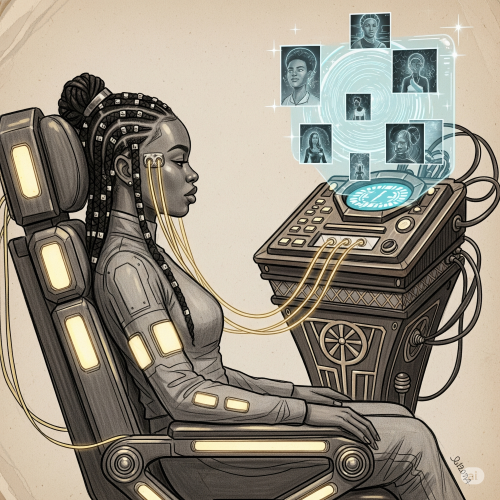
We all know that once an experiment has been conducted with mice, cabbages, fruit flies, or other terribly unfortunate guinea pigs, it's only a matter of time before humans join the queue.
This time, however, we might find ourselves joining a queue we’ll mysteriously forget we ever entered
Memory manipulation, once the stuff of science fiction and speculative philosophy, is rapidly stepping into the realm of scientific possibility. While we are not yet at the point where human memories can be fully deleted, edited, or implanted àlaEternal Sunshine of the Spotless Mind or Inception, the scaffolding is being laid.
From labs experimenting on rodents and insects, to clinical trials using memory-altering drugs, the science is not just plausible, it’s already underway.
Optogenetics: Flicking Memories On and Off

Image Credit: Unsplash
In 2015, researchers at the RIKEN-MIT Center for Neural Circuit Genetics pulled off something that sounds like science fiction.
Using optogenetics, a method where light is used to control neurons—they flipped memories in mice like a light switch.
By targeting neurons in the hippocampus, they implanted a false memory into a mouse’s brain. It came to believe it had been shocked in a chamber it had never entered.
The memory wasn't real, but it behaved as though it were. Reality, in the most literal sense, was rewritten.
This wasn’t a lucky accident. It was intentional manipulation of memory, and a strong signal that we are beginning to understand how to edit our own minds.
What Fruit Flies Are Teaching Us About Forgetting
At Columbia Universityand other research centers, scientists and other research centers, scientists have been experimenting with genetically modified fruit flies to better understand how they disappear.
These studies suggest that forgetting isn’t a failure of the brain, but rather an active, deliberate process. The brain, it turns out, has a memory deletion mechanism baked right in.
Researchers have identified a specific protein—named Rac, that seems to play a central role in this process. When Rac is turned on in the brainof a fruit fly, the insect forgets previously learned behaviors.

When Rac is suppressed, the memory sticks. Forgetting, in other words, is something the brain chooses to do.
Why would it do that?
There’s a compelling evolutionary logic to it. If every memory, no matter how minor, stayed with us forever, the brain might become overwhelmed—cluttered with irrelevance. Imagine remembering the exact layout of a supermarket you visited once ten years ago, or the temperature of your tea on a Tuesday morning in 2016. The brain needs to prioritize. It needs to clean the house.
The Human Studies: Propranolol and Emotional Dampening

Image Credit: Unsplash
Human studies have taken a different route. At McGill University and Emory, researchers are experimenting with propranolol, a medicine usually prescribed for heart conditions.
But in this context, it's used to weaken the emotional sting of traumatic memories. When a person recalls a painful event while under the influence of the drug. The memory doesn’t disappear, but its emotional power is muted.
It’s being explored as a possible treatment for PTSD. And it's also, in its own quiet way, an early form of ethical memory engineering. You still remember—but you may no longer relive.
But What Happens When We Forget Too Much?
There’s a philosophical snag we can’t ignore. If memory is central to who we are, then what happens when we start to rewrite it?
Painful memories are, often, formative ones. The heartbreaks, failures, embarrassments—these shape our empathy and maturity. If we decide to erase those chapters, what else are we erasing? If we delete too much, do we risk creating people who look whole on the outside but are hollow within?
And what about implanted memories? If it’s possible to make someone believe something that never happened, can we trust anything at all?
This is the slippery slope toward what some call the Mandela Effect. Once a fringe internet theory, it now feels like a plausible outcome of real-world science.
If enough people start removing memories at will, do we lose our collective grasp on what actually happened? Could society fracture, not from disagreement, but from competing internal realities?
Ethical Concerns: Rewriting the Mind

Image Credit: Unsplash
A technology that edits memory is not just powerful. It’s volatile. And it opens up a field of ethical dilemmas we’re barely prepared to address.
Consent: Can someone truly consent to altering their memories if they can't know how much of themselves they'll lose?
The Legal System: If memories can be edited, how reliable is an eyewitness? How do courts handle testimony if the past is fluid?
Manipulation: What happens when memory tech is in the hands of governments or corporations? Could a state remove dissent by simply erasing it?
Access and Inequality: Will memory editing be a luxury? If only the wealthy can erase trauma or sharpen recall, does that create a new kind of cognitive elite?
Are We Entering Nolan’s Dreamworld?
It’s hard not to think of Christopher Nolan's Inception. The idea that memories can be planted—that reality can be reshaped from the inside out.
That kind of fragmentation, once it begins, is hard to reverse.
Conclusion: Remember What’s at Stake
Memory manipulation is no longer just a thought experiment. It is becoming a clinical tool, a research frontier, and possibly, a future commodity..
If we don’t approach this technology with a deep and deliberate sense of caution, we might one day forget what it means to be human.