Nairobi in Chaos: Police Vow Crackdown as Saba Saba Protests Declared Illegal, City Braces for Unrest
Nairobi is experiencing severe transit disruptions due to extensive security checkpoints ahead of "Saba Saba" Day demonstrations, impacting thousands of commuters. While police declare protests unlawful citing lack of notification and concerns over property damage, human rights groups assert their legal right to demonstrate, highlighting demands for accountability and justice. The measures underscore a renewed clash between state authority and civil liberties surrounding the historic anniversary.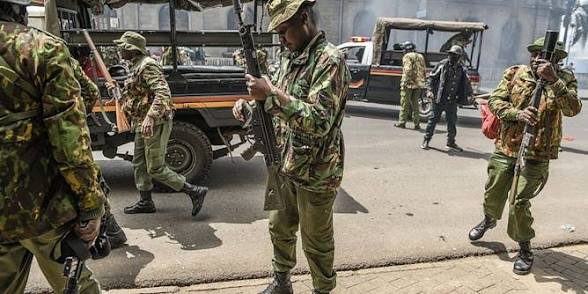
Nairobi awoke to unprecedented transit disruptions this morning as multi-agency security teams established aggressive, heavily guarded checkpoints across virtually all major arterial highways feeding into the Central Business District (CBD). These sweeping security operations, initiated in anticipation of scheduled “Saba Saba” Day demonstrations on July 7, 2026, completely paralyzed morning commutes, leaving thousands of public and private vehicles gridlocked for kilometers. The extensive deployment included heavily armed anti-riot units, water cannons, and razor wire barricades, strategically positioned to intercept and inspect vehicles at key entry points into the capital.
Commuters from the expansive Mt. Kenya transit corridor, particularly via Thika Road, experienced the most severe delays, enduring hours of standstill at bottlenecks such as Blue Post, Ruiru, Kimbo, Githurai, and Allsops, with traffic often forcibly diverted into single service lanes. Similar high-intensity checkpoints and painfully slow vehicular movements were reported along Jogoo Road, where vehicles were turned back near the City Stadium Roundabout. Traffic chaos also severely choked Outer Ring Road, Kiambu Road, Lang’ata Road, Waiyaki Way, and the primary express routes serving Jomo Kenyatta International Airport (JKIA). Frustrated citizens were observed alighting from Matatus and walking long distances on foot after public transport operators were barred from proceeding past outer city limits.
The highly disruptive containment exercise follows a formal public directive issued by National Police Service (NPS) Spokesperson Michael Muchiri, and further reinforced by Nairobi Regional Police Commander Issa Mohamud. The state apparatus justified these heightened security protocols as essential preemptive tools, designed to safeguard private commercial investments and protect citizens not participating in the demonstrations. Commander Mohamud officially declared any anticipated "Saba Saba" demonstrations unlawful, stating unequivocally that the National Police Service had not received any formal, statutory notification from civil society groups or political organizers regarding planned marches, a legal mandate under Kenya’s Public Order Act. "If you gather anywhere tomorrow, we will treat it as an unlawful assembly and we will deal with you," Mohamud firmly warned, adding that restricted areas, including the Parliament Buildings, had been designated as highly restricted zones to prevent "intruders." He also revealed extensive multi-jurisdictional security strategy meetings with commanders from Kiambu, Machakos, and Kajiado counties, anticipating common challenges. The police chief underscored the state’s concern over economic disruption and property destruction, citing intelligence of opportunistic criminal elements planning to exploit the anniversary for widespread looting, vandalism, and violence against private businesses.
In stark contrast, a coalition of civil society organizations and human rights groups, including the Grassroots Economic Justice Movement, strongly condemned the roadblocks. Activists maintained they had fully satisfied the legal prerequisites of the Public Order Act by formally serving the National Police Service with a notification of their intent to hold a peaceful procession. Lawyer John Maina Ndegwa corroborated this, confirming paperwork was presented and received by the police the previous week. The planned march, scheduled to commence at Jeevanjee Gardens before moving through the CBD toward Parliament, aimed to present a formal petition demanding comprehensive parliamentary intervention, police accountability, an absolute end to extrajudicial killings, and justice for victims of enforced disappearances.
Civil society leaders raised red flags regarding police conduct during past assemblies, publicly demanding that all deployed law enforcement officers remain fully identifiable and warning against the use of face coverings or vehicles with concealed or missing registration number plates. They also called for an investigation into credible intelligence suggesting that rogue criminal elements were being financed to infiltrate their peaceful ranks and incite violent chaos. Saba Saba Day, celebrated annually on July 7, commemorates the historic 1990 uprising that broke Kenya’s single-party regime and paved the way for modern multiparty democracy. While originally a political holiday, it has increasingly become an annual battleground for contemporary human rights groups campaigning against bad governance and police brutality, highlighting the ongoing tension between state security and civil freedoms.