Obi Ignites 2027 Presidential Bid, Challenges Rivals to Public Debate
Peter Obi, the NDC presidential candidate, has challenged all 2027 presidential aspirants to publicly defend their records and plans directly to Nigerians, without relying on proxies. He emphasizes direct engagement, empathy, and his commitment to personally campaign with Rabiu Kwankwaso to "reset Nigeria" through unity, security, and economic growth, shifting the nation from consumption to production.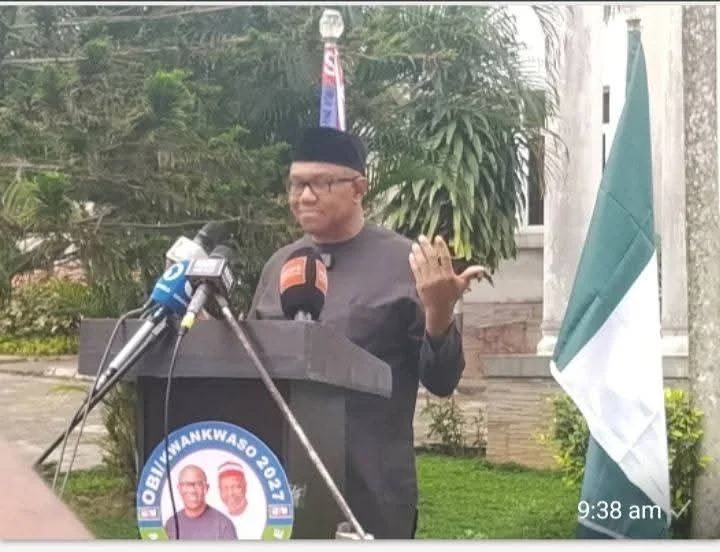
Presidential candidate of the Nigeria Democratic Congress (NDC), Peter Obi, has issued a direct challenge to all contenders vying for the 2027 presidential election, urging them to publicly defend their records and present their plans for Nigeria directly to its citizens. This call was made during a press conference on Friday, August 21, 2026, which formally marked the flag-off of his presidential campaign, just days after the official campaign period commenced on August 19.
Obi emphasized that any individual seeking to lead the country must be prepared to face Nigerians, answer their questions, and subject their vision to open scrutiny. He firmly stated that presidential hopefuls should not conceal themselves behind political surrogates or representatives while soliciting votes. "Every candidate must be willing to present their credentials, defend their records, and subject their vision to open scrutiny," Obi declared. He added, "No candidate should hide behind the high walls of power, send proxies or surrogates… and expect Nigerians to entrust them with leadership of their country."
The former Anambra State governor underscored that true leadership necessitates empathy and direct engagement with citizens, particularly those grappling with insecurity, banditry, terrorism, criminality, and natural disasters like flooding across the nation. He argued that effective governance is impossible without visiting, listening to, and understanding the communities affected by these challenges. "You cannot truly lead a people you are unwilling to visit, listen to, and understand," he asserted.
Peter Obi made a firm commitment that he and his running mate, Senator Rabiu Kwankwaso, would personally traverse the country to deliver their message directly to Nigerians, eschewing reliance on party officials or spokespersons. "Today, I make a clear commitment that I and Senator Rabiu Kwankwaso will take our message directly to Nigerians. We will listen to them, understand their concerns, and engage them openly. We will not delegate this process," Obi stated, pledging to answer questions, defend their record and character, and present their plan to rebuild Nigeria.
Obi further contended that any presidential candidate unwilling to travel across Nigeria to engage directly with citizens lacks the fundamental capacity to govern the country. He articulated that his campaign is centered on "resetting Nigeria" by fostering national unity, enhancing security, achieving economic recovery, and promoting inclusive growth, ultimately shifting the nation from a consumption-based economy to a production-oriented one. "I am committed to commencing the journey of resetting Nigeria by uniting it, securing it, on the path of economic and inclusive growth, and moving our country from consumption to production," he added.
During a press conference in Onitsha, Obi elaborated on his campaign's key message, framing it as a national dialogue focused on rebuilding Nigeria. He highlighted that despite their diverse backgrounds and experiences, he and Kwankwaso share a common goal: to improve the living standards of the impoverished. "Our experiences differ, but our conclusion is clear: Nigeria must invest in its people and manage its public resources responsibly."
Addressing the economic landscape, Obi asserted that Nigeria requires more than superficial reforms. He posed critical questions to citizens: "Are Nigerians better off than they were four years ago? Can they afford food, education, and healthcare? Can businesses grow, produce, and generate jobs? Can young people secure productive employment? Can farmers work safely and get their produce to market?" He urged citizens to demand direct answers from their leaders.
Obi acknowledged the severe challenges Nigeria faces, some of existential importance. He cited IMF data indicating that 63%, or over 140 million Nigerians, live at or below the national poverty line, and humanitarian estimates suggesting 35 million people will require food aid during the 2026 lean season. Additionally, approximately 3.6 million Nigerians remain internally displaced due to conflict and insecurity, while millions of young people annually enter the labor market struggling to find meaningful opportunities.
Regarding the transformation from consumption to production, the NDC flagbearer highlighted Nigeria's immense potential with a rapidly growing population exceeding two hundred million, possessing one of Africa's largest domestic markets and labor forces. "Nigeria cannot import its way to prosperity. We will produce more of what we consume, process more of what we produce, and compete more effectively in global markets." He stressed harnessing collective experience from public funds management, the private sector, and civil service to convert population into productive human capital, natural resources into value-added industries, and the domestic market into an engine for investment and enterprise. Key sectors for this transformation include agriculture, manufacturing, technology, construction, energy, creative industries, and services.
On insecurity, Obi stated that its pervasive impact has displaced millions and disrupted agriculture, education, trade, and investment. He advocated for a comprehensive response, including improved intelligence gathering and coordination among security agencies, strengthened policing and border management, and better utilization of technology. He reiterated his call for leaders to scrutinize their records and engage directly, concluding that "Any presidential candidate who lacks the resolve to travel across the country, meet the people, and respond to their questions lacks the capacity to govern it."