The Countries Quietly Buying Africa Might Not Be Colonising It. They Might Be Investing In It - A Case Study.
Africa is no longer being colonised through conquest, but through contracts, currency arrangements and mineral partnerships. The real question is whether the continent has learned to negotiate its future differently.
If you are reading this, there is a high chance that you stopped reacting to the headlines months ago. That is quite understandable. Everyone seems tired of the endless cycle of breaking news with little hope or visible change in sight.
You have come across the usual statements before. A mineral partnership was signed somewhere in the Sahel. A currency reform was pushed back at the end of the year. An infrastructure loan was disbursed against a resource that many citizens of the nation may never directly benefit from. Many of us scroll past these headlines the same way people mindlessly scroll through social media.
That numbness might be the actual story here and a symptom of the issue that is going on.
In our current reality, nobody is annexing African territory in 2026. You are not going to see any soldiers are planting flags over gold deposits or declaring protectorates over cobalt belts. What's quietly happening instead is considerably more sophisticated: contracts, offtake agreements, currency arrangements, infrastructure loans and strategic partnerships, all wrapped in the language of mutual benefit.
The real question isn't whether these deals amount to colonisation under a nicer name. It is why Africa keeps encountering versions of the same pattern, evidence sitting comfortably in plain sight, and responding as though it is seeing it for the first time.
A Currency Born Free, Printed Somewhere Else
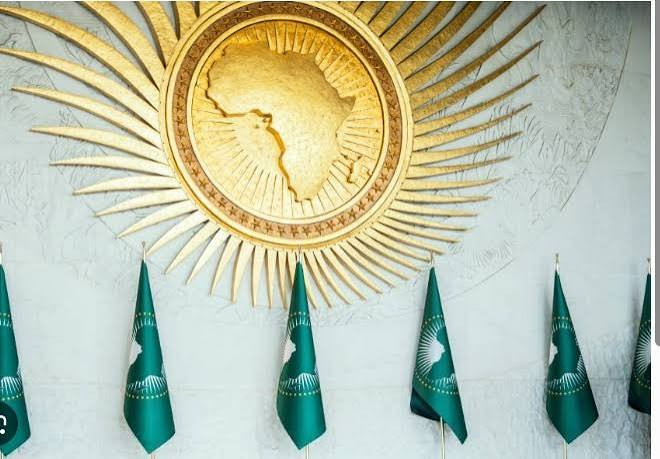
ECOWAS has reaffirmed 2027 as the launch year for the Eco, the long-promised single currency meant to retire the CFA franc and, with it, decades of monetary arrangements tied to the French Treasury.
On paper, meaningful reforms have already happened. The 2019 changes ended the requirement for UEMOA states to centralise reserves in Paris and removed French officials from the currency's governing bodies.
Yet, reports this year that France may still handle the physical printing of the Eco's banknotes reopened a wound many assumed had closed.
Senegalese Prime Minister Ousmane Sonko has described the CFA franc as an instrument of control rather than stability, and the printing question, whatever its technical justification, continues to provoke an uncomfortable observation.
Political independence and economic independence have never been the same thing. If we truly think about it, why do many African nations still depend so heavily on foreign assistance decades after independence? This is not to disregard bilateral relations or mutual interests between nations. International partnerships are necessary in an interconnected world.
However, a currency can be African by name and still force us to ask uncomfortable questions about ownership, infrastructure and sovereignty. Who prints your money may not define your freedom, but it certainly tells a story about who built the systems that make that freedom possible.
More than fifty years ago, Ghana's first President, Kwame Nkrumah, warned in his bookNeo-Colonialism: The Last Stage of Imperialism that the greatest danger to newly independent nations would not necessarily come through military occupation, but through economic dependence disguised as cooperation. Reading some of today's headlines, his argument feels less historical than many of us would like to admit.
Minerals For Security, Not For Sovereignty
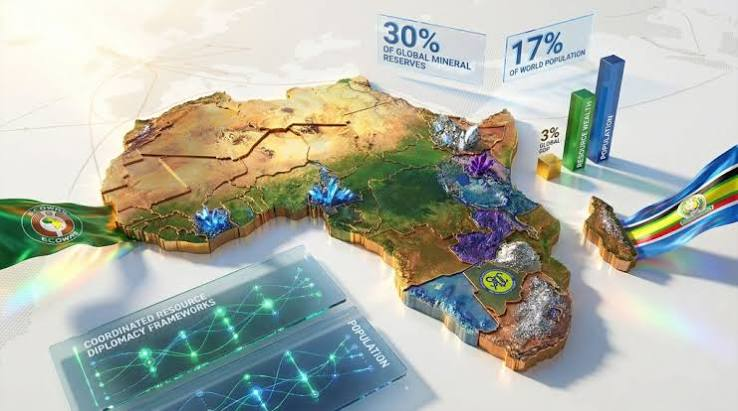
In December 2025, Washington signed a strategic partnership granting the Orion Critical Mineral Consortium preferential access to Congolese cobalt and lithium, part of a wave of resource-for-security arrangements reshaping alliances from the Democratic Republic of Congo to the Sahel.
The United States, Russia, China and the European Union are all competing for the same resources. The competition is not necessarily about controlling nations or territories. It is about securing access to resources that will define the next generation of global industries.
Increasingly, the currency of that competition isn't simply money. It is security guarantees, infrastructure investments, military cooperation and long-term access agreements.
Foreign powers pursuing strategic interests is not particularly surprising. Nations have always acted in their own interests. The more pressing question is: when will Africa consistently negotiate from its own?
The more uncomfortable question is whether African governments are negotiating from a position of long-term strategy or short-term necessity. Minerals may finance today's priorities, but the agreements signed around them often outlive the administrations that negotiated them.
Nkrumah once argued that neo-colonialism operates through economic control while allowing nations to maintain the appearance of political sovereignty. Whether one agrees entirely with his thesis or not, it remains difficult to ignore how relevant the conversation has become in an era where influence is increasingly measured by contracts rather than conquest.
The Silent Scramble Of Supply Chain Contracts

A columnist writing in February 2026 perhaps captured the moment best: no gunboats, no flags, no formal declarations of empire, just battery offtake agreements, sovereign wealth fund term sheets and late-night memoranda of understanding signed from Kinshasa to Accra.

Chinese firms have invested roughly $1.3 billion in Nigerian lithium processing infrastructure since September 2023. The European Union has designated sixty strategic mineral projects under its Critical Raw Materials Act. The US-backed Lobito Corridor continues to connect Angola, Zambia and the DRC through rail infrastructure designed primarily to facilitate exports to global markets.
Why all this interest? Why the investments? Is Africa simply that lucky?
None of these developments are illegal or inherently exploitative. In fact, many of them are economically sensible and potentially beneficial. That is precisely why they deserve closer attention.
The modern scramble for influence is difficult to recognise because it looks remarkably professional. Nobody is forcing signatures onto agreements. The contracts are negotiated, notarised and mutually celebrated at press conferences.
The paperwork has replaced the gunboats. The leverage, however, remains very real and deserves far more public conversation than it currently receives.
Owning The Pattern Is The Sovereignty Still Up For Grabs
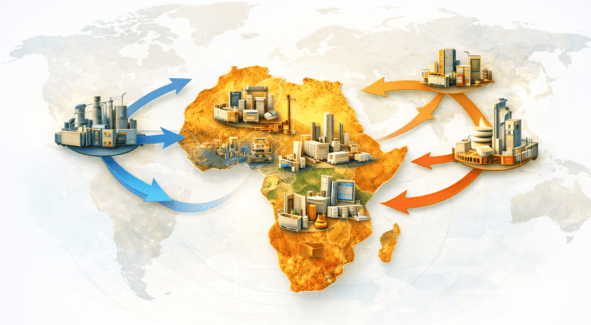
None of this suggests Africa should reject foreign investment. Capital, infrastructure, technology transfer and market access remain indispensable for economic growth.
The conversation has never been, and should never be, about isolation. It has always been about negotiation and understanding what Africa truly gains in the process.
What Africa has not consistently built is the institutional memory required to recognise its own historical patterns before signing the next agreement.
Namibia banned the export of unprocessed critical minerals in 2023 and later proposed majority Namibian ownership requirements for new mining ventures. Burkina Faso has nationalised gold mines it accused foreign firms of exploiting and increased the state's stake in mining projects.
These decisions are not anti-investment policies. They are reminders that leverage is often more negotiable than we assume.
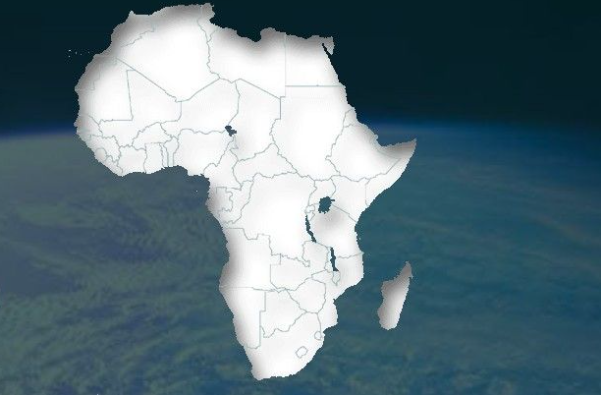
That, perhaps, is the real wake-up call buried beneath all these headlines. The evidence is not hidden. It is published in central bank communiqués, mining bills and strategic partnership announcements. Africa's future is not being negotiated in secret rooms. It is being debated in public documents that many of us simply scroll past.
The story of who owns Africa's next century will not be written by whichever country signs the most contracts. It will be written by whichever African institutions finally develop the confidence and memory to read their own history back to themselves before signing the next one.
Kwame Nkrumah argued that neo-colonialism would be the final stage of imperialism because it would be difficult to recognise. Perhaps that is what makes it so uncomfortable to discuss today. The challenge for Africa is not determining whether foreign nations will pursue their interests; they always will. The challenge is deciding whether Africa is equally committed to pursuing its own.
The world stopped needing to colonise Africa the day Africa learned how to sign the paperwork itself.