Atiku Warns Rising Naira Revenues Mask Declining Purchasing Power
Former Vice President Atiku Abubakar has accused President Bola Tinubu's administration of creating a "money illusion" by celebrating rising naira revenues amidst severe currency depreciation and inflation. He argues that increased nominal figures do not translate to real economic value or improved living standards, citing declining purchasing power and persistent state indebtedness. Atiku stressed that true economic progress must be measured by its tangible impact on infrastructure, debt, public services, and citizens' quality of life.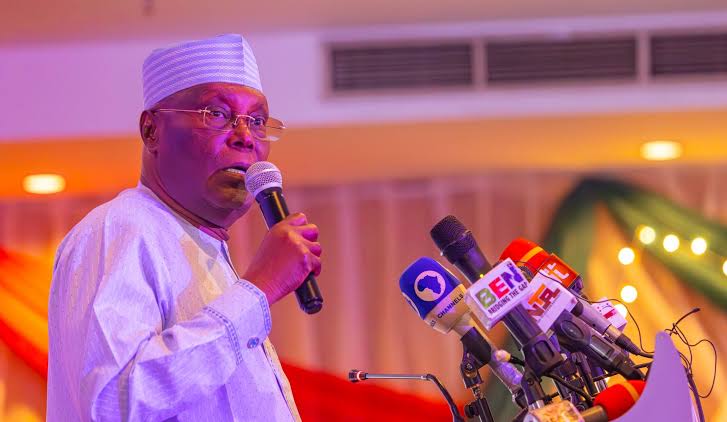
Former Vice President Atiku Abubakar has accused President Bola Tinubu’s administration of creating an illusion of economic prosperity by highlighting rising naira-denominated government revenues while Nigerians contend with inflation, currency depreciation and declining purchasing power.
In a statement issued through his Senior Special Assistant on Public Communication, Phrank Shaibu, Atiku argued that Federal Account Allocation Committee (FAAC) figures should be assessed against the naira’s declining value and the rising cost of essential goods and services.
He cited a comparison showing that FAAC distributions rose from about ₦7.85 trillion in 2019 to ₦21.9 trillion in 2025, while their estimated dollar value fell from about $25.6 billion to $14.6 billion.
Atiku said a similar “money illusion” was evident in workers’ earnings, using Nigeria’s minimum wage as an example. He noted that the ₦30,000 minimum wage introduced in 2019 was worth about $83, compared with roughly $65 by May 2023 and approximately $53 for the current ₦70,000 minimum wage at an exchange rate of ₦1,320 to the dollar.
He argued that while nominal figures have increased, Nigerians’ ability to afford food, transport, electricity, medicine and housing has weakened, describing the situation as “more naira on paper, less value in reality.”
The former vice president also questioned why state governments continue to carry substantial debts despite what he described as unprecedented FAAC revenues. Citing a September 2026 report based on Debt Management Office data, he said 12 states collectively owed about ₦5.3 trillion, comprising roughly ₦2.16 trillion in domestic debt and $2.33 billion in foreign obligations.
Atiku called for greater scrutiny of government spending, tax concessions, import waivers, revenue exemptions, duplicated and abandoned projects, arguing that economic progress should ultimately be measured by improved infrastructure, public services, debt reduction and Nigerians’ standard of living rather than the size of government allocations.