Russian Drone Threatens Zelenskyy's Plane, Europe's Defence Dilemma Deepens
The Indian SUV market sees compact SUVs leading sales in FY2025, with Tata Punch topping the charts. Maruti Brezza and Fronx follow in the top three, showcasing the popularity of sub-4-meter models in India.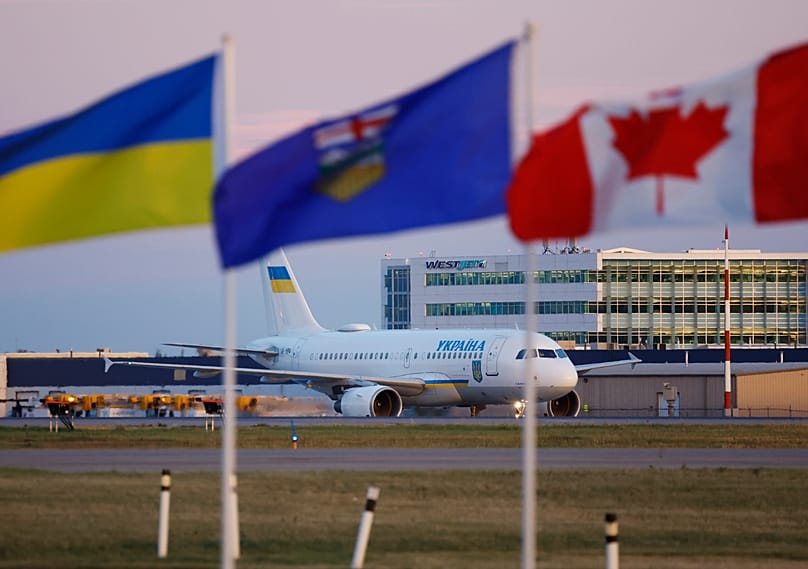
Ukrainian President Volodymyr Zelenskyy’s flight from Chișinău to Oslo on Tuesday afternoon was nearly struck by an unmanned aerial vehicle (UAV), a revelation made public by Norwegian Prime Minister Jonas Gahr Støre. This incident, initially detected as a potential Russian drone incursion, took on severe significance when Støre told Norwegian public broadcaster NRK that Zelenskyy's plane had almost been hit, underscoring the perilous reality the Ukrainian leader faces.
The sequence of events began at 4:20 pm CEST when Moldova’s military detected an unidentified UAV in its airspace. By 4:37 pm, Romania’s Defence Ministry confirmed the drone had crossed into Romanian, and thus NATO, airspace. Two minutes later, two Spanish F-18 fighter jets, part of NATO’s enhanced Air Policing mission, took off to monitor the drone, though they did not intercept it. Romanian radar tracked the UAV until 5:02 pm when contact was lost, only to be detected again at 5:07 pm over Moldova. It later crashed approximately 25 km east of the Romanian border. Zelenskyy’s plane, according to monitoring channels, took off from Chișinău around 5:57 pm, after these events unfolded.
For much of Russia's full-scale war in Ukraine, Zelenskyy has primarily traveled abroad via Poland, using Rzeszów as a regular departure point. However, in recent months, his presidential aircraft has increasingly utilized Chișinău for foreign trips. The exact model of the drone involved in the Moldovan and Romanian incident has not been officially confirmed, but Ukrainian open-source monitoring channels identified it as a Geran-4, one of Russia’s newer jet-powered attack drones. The Geran-4 and Geran-5 represent the latest additions to Russia’s expanding Geran family, distinct in design and capabilities. The Geran-4 boasts a wingspan of approximately three meters, a length of about 3.5 meters, and a maximum take-off weight of around 450 kilograms. Ukrainian military intelligence suggests it can achieve speeds of up to 500 km/h and carry a warhead weighing between 50 and 90 kilograms.
Russia has escalated its deployment of jet-powered drones, often integrating them into complex barrages alongside ballistic and cruise missiles to overwhelm Ukrainian air defenses. The high speed of these drones makes them considerably more challenging to intercept compared to conventional Shahed-type drones, posing a particular problem for the mobile fire groups and other cost-effective systems Ukraine has relied on. Consequently, Ukraine is compelled to use scarce and more expensive air-defense missiles against these faster threats, further straining its limited interceptor stocks. In response, several Ukrainian companies have reportedly commenced testing missiles specifically designed to counter the new jet-powered Geran models.
Beyond immediate threats, the broader security landscape remains tense. Latvia, a small Baltic nation, has been preparing for decades for Russia’s worst-case scenario while maintaining unwavering support for Ukraine. This resolve is evident in Riga, where the street housing the Russian embassy was renamed Ukrainas neatkarības iela (Ukrainian Independence Street) in 2022, and the embassy itself is surrounded by buildings displaying unflattering illustrations of Russian President Vladimir Putin. Latvian Prime Minister Andris Kulbergs reiterated the frontline country's need for billions in additional EU funds to bolster its defenses. The threat extends beyond physical aggression, manifesting in political spheres, as Finnish Minister for Foreign Affairs Elina Valtonen suggested Moscow's satisfaction with the Alternative for Germany's win in a recent German regional election, indicating increased Kremlin influence.
Europe also grapples with a burgeoning housing crisis, reaching what EU’s housing and energy boss Dan Jørgensen described as “emergency” levels, with ordinary working people struggling to find affordable accommodation. Jørgensen unveiled new measures designed to empower local authorities to curb the meteoric rise of short-term rentals in European cities. These rules will define areas under “housing stress” and provide local authorities with greater legal certainty when restricting holiday lets and short-term rentals such as Airbnbs.
Speaking to Euronews, Jørgensen acknowledged the EU’s need for further steps to address the issue, emphasizing that it is a “European problem” that the bloc takes “very seriously,” despite housing typically falling outside the EU’s competences. He starkly noted that in many cities and member states, under-35s can no longer become homeowners, and “normal people with normal jobs” like police officers, nurses, and teachers are being crowded out of cities. He deemed this