The Climate Cost of Growth: How Development Poses Threats to the Environment
As Africa surges into the global development race, the environmental price is growing: deforestation, industrial waste, land degradation and pollution threaten the continent’s future. Explore how growth and ecology collide and what it means for tomorrow.
Introduction
Across cities like Accra, Nairobi, Addis Ababa and beyond we see amazing development and the eagerness of African nations to become developed from the lens of both government and private investors, new skyscrapers rise, highways stretch further, and economic zones multiply. The image of Africa ‘on the move’ is real and compelling. Yet beneath the gloss of progress lies a less visible truth: development and growth are imposing a heavy toll on the continent’s environment. Industrial waste flows into rivers, forests vanish to make way for farms and mines, coastal ecosystems buckle under oil and chemical pollution. As Africa stakes its claim in the global growth race, one question echoes louder than any cheer: at what cost?
Africa contributes only about 2–3% of global greenhouse-gas emissions, yet it carries one of the greatest burdens of climate vulnerability on the planet.The continent is urbanising faster than any other: cities are expanding, populations rising, infrastructure developing. But this development is unfolding in tandem with ecological degradation, land turned barren, deforestation accelerating, ecosystems collapsing.
Consider this: the United Nations Environment Programme (UNEP) reports that Africa loses about 500,000 km² of land each year to degradation, soil erosion, salinisation and deforestation.Meanwhile, industrialisation and urban sprawl are rewriting landscapes once defined by fields and forests. In Kampala, Uganda, for example, significant growth has been seen, the urban area grew from 7.1% in 1989 to 55.1% in 2015, with corresponding drops in agricultural and forest land.
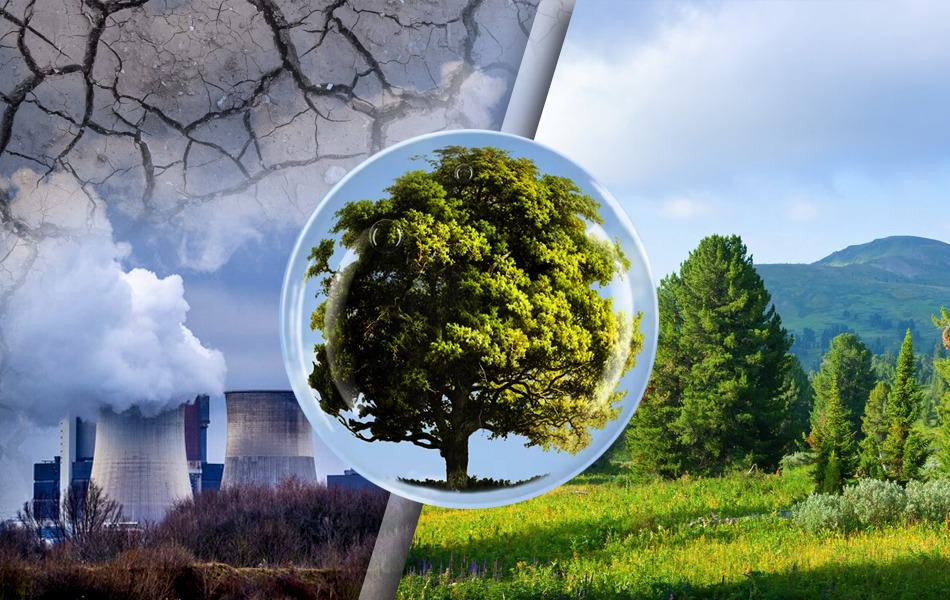
This is the growth story often omitted from the brochures: development is not only about building, it’s also about breaking.
Industrial Waste, Urban Growth and Environmental Impact
The engines of growth, factories, highways, export zones, also produce the by-products of degradation. Across sub-Saharan Africa, only about 44% of urban solid waste is collected, according to the World Bank, leaving massive volumes of industrial, hazardous and domestic waste un-managed. The United Nations Environment Programme projects that global waste production could reach an annual cost of $640 billion by 2050, driven in part by fast-growing economies in Africa and Asia.
In very populated cities like Lagos, accumulation of waste, decaying infrastructure and limited treatment systems create toxic backdrops to economic zones. Rivers carry industrial effluent; informal settlements grow alongside factories; the environmental burden falls hardest on the poor. The irony: growth is meant to raise lives, but without safeguards, it can degrade them.
Off-shore and coastal regions fare little better. In Nigeria’s Niger-Delta for instance, oil exploration has led to deforestation, swamp forest loss, water pollution and livelihood disruption.Industrialism without regulation becomes a double-edged sword: jobs increase, but so do poisoned ecosystems.
Deforestation, Land Degradation and Their Hidden Costs
Deforestation is Africa’s silent crisis. Between 2010 and 2020 the continent lost approximately 3.9 million hectares of forest annually, nearly double the global average. The Food and Agriculture Organization (FAO) estimates that from 1990 to 2005 Africa lost 9% of its forest cover, about 40,000 km² each year.
Why does this matter? Trees store carbon, stabilize soil, regulate water cycles and sustain biodiversity. Their removal undermines agriculture, water security and climate resilience. In Nigeria, rapid urban expansion alone clears an estimated 35,000 hectares of forest annually; Lagos reportedly lost up to 70% of its green cover since 1990.
Desertification adds another layer. The African Development Bank reports that more than 45% of Africa’s land is threatened by desertification and land degradation.The Sahel region, in particular, faces the creeping advance of the Sahara, with degraded soil, failed crops and climate-driven migration. The Great Green Wall initiative aims to restore 247 million acres of degraded land and sequester 250 million tonnes of carbon by 2030—but progress is slow.
For a continent whose economy still depends heavily on land and agriculture, these losses are not abstract, they are existential. Reduced soil fertility means lower yields: Africa’s average maize harvest is less than one tonne per hectare compared to 10 tonnes in the United States.
Urbanisation, Infrastructure and Ecosystem Strain
Cities are the new frontiers of growth, but they are also theatres of environmental strain. Rapid urbanisation demands land, energy, transport and materials and often the ecological cost is hidden. In Kampala’s case study, between 1989 and 2015 half of the city’s growth came at the expense of agricultural and forest land.
Infrastructure such as roads, highways, housing estates and industrial zones consume land and fragment ecosystems. In Nigeria’s Lekki Free Trade Zone, for example, 11,000 hectares of mangroves were displaced, robust ecosystem degraded for development.
The consequence: reduced biodiversity, increased flood risk, fewer natural buffers and rising urban heat-island effect. Growth without ecological planning becomes a kind of short-term win with long-term losses.
The Climate Dimension: Growth Meets Risk
Economic development and climate change are no longer separate realms, they intertwine. Africa may emit relatively little CO₂ per capita (about 0.8–1 ton per person compared to the global average of over 4 tons) but the rate of increase is alarming. Emissions rose from 450 million metric tons in 1980 to 1,309 million in 2021, a 191% increase over four decades.
At the same time, Africa loses 2-5% of its GDP each year to natural disasters like droughts and flooding. Growth that fails to anticipate climate risk will be undermined by it. Higher temperatures, shifting rainfall, intensified storms and unstable seasons all pose direct threats to development projects and livelihoods.

Industrial expansion, mining, large-scale agriculture, fossil fuel extraction, further compounds the risk. When ecosystems degrade, the cost of adaptation and recovery rises. A degraded coast means higher cost of storm protection; depleted forests mean less resilience during droughts. The economic calculus of growth must therefore include environmental liability.
Beyond land and carbon, emerging economies carry other environmental liabilities. Wildlife habitats shrink as deforestation advances, Africa is home to eight of the 34 “critical biodiversity reserves,” yet ecosystem degradation is accelerating.
Water pollution from industry and mining threatens fisheries and livelihoods. Coastal development, oil spills and chemical runoff disrupt marine ecosystems, increase health risks and degrade fisheries, yet are often invisible in growth narratives.
Air pollution too is rising with development, urban transport and industrialisation. A recent study found that in some cities daily PM2.5 levels exceed 50 µg/m³, well above healthy standards. The human cost is evident: environmental degradation begets health burdens, lost productivity and higher public expense.
Growth’s Blindspots: Investments, Governance and Policy
One of the key tensions lies in the mismatch between ambition and governance. African governments are pushing infrastructure, industry and urban expansion, but environmental safeguards lag behind. Until governments view ecosystems as capital, not cost, growth will continue to erode its foundations.
Industrial waste management is particularly weak. Given the high cost of modern waste infrastructure, many industries in Africa struggle to manage hazards. According to Ken Research, some companies spend up to US$1.5 billion annually on waste disposal, yet coverage remains inadequate.
Mining, oil extraction and large-scale agriculture often bypass regulation. In many cases local oversight is weak, corruption is high and the voice of affected communities is muted. Development becomes extraction without regeneration.
Despite all of this and the grim numbers, hope still persists. Innovation in circular economy models, recycling industrial waste into materials, restoring degraded land, reclaiming plastics, offers pathways for growth that respect the environment. Advocates suggest that if Africa converts a small fraction of its industrial waste into secondary resources, it could reduce CO₂ by millions of tonnes.
Improved governance, regional cooperation and investment in green infrastructure are also essential. The Economic Commission for Africa notes that unless land management, air pollution and ecosystem preservation are improved, growth gains will be undermined by ecological losses.
Reforestation and landscape restoration initiatives like the Great Green Wall offer symbolic promise, though progress is slow and challenging. When communities are empowered, and financial incentives aligned with ecology, development can serve both the economy and environment.
A Choice Between Two Futures
Growth and environment don’t have to be rivals but many current models treat them as such. Africa stands at a crossroads: follow the path of past industrialisers who sacrificed ecology for economy or chart a new path where development and environment are co-equals.
The continent’s youth, its widening cities, its rising middle class, they all expect better than yesterday’s trade-offs. They deserve infrastructure, jobs and opportunity, but not at the cost of degraded land, polluted air or disappearing seasons.
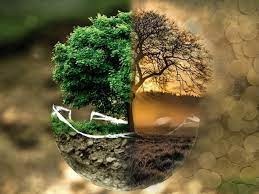
If development is simply about building infrastructure and increasing GDP, then Africa is winning. But if it’s about sustainable prosperity, resilient ecosystems, healthy communities, thriving wildlife, then much remains undone.
The real question is: Can Africa build a future in which growth enriches lives without eroding the land beneath them? Because once the soil disappears, the profits vanish too and then the growth was only an illusion.