Burkina Faso Is Challenging the Business of African Poverty. Should Other Governments Follow?
Burkina Faso's new humanitarian rules banning the exploitative use of images of vulnerable people have reignited debate over dignity, "poverty exploitation images," NGO accountability, and who gets to shape Africa's global image.
There is an uncomfortable truth about Africa that many people on the continent have quietly lived with for decades, and many of us have even internalized as normal.
For millions of people around the world who have never set foot in Africa, their first introduction to the continent isn’t universities, thriving cities, innovation hubs, literature or entrepreneurs. It was a fundraising poster and the depiction of a geography that is in constant need of help.
You have probably come across one of the photos before, a child with visible ribs. A woman sitting beside a sack of donated rice. A village framed to look abandoned. A line of people waiting for relief.
The message has always been subtle, but behind all that is a powerful framing: Africa is where suffering lives.
Images like that have raised billions of dollars for humanitarian work over the years, saved countless lives, and mobilised global generosity. But it has also created another economy, one built on the repeated display of African vulnerability.
That is why Burkina Faso's latest humanitarian regulation deserves far more attention than it is currently receiving.
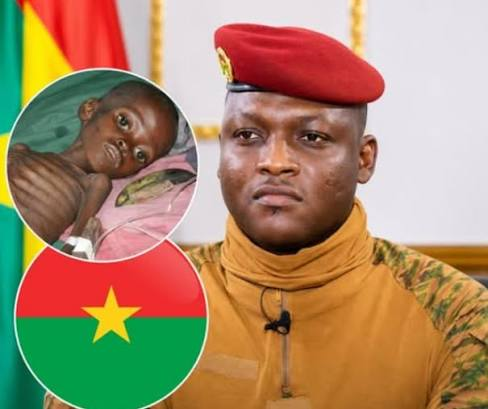
The government has adopted new rules prohibiting humanitarian organisations from taking, displaying or sharing images that portray vulnerable people alongside donated items in ways considered degrading or exploitative.
The wider decree, according to a facebook post, also introduces mandatory accreditation for humanitarian organisations operating in the country, requires 60% of humanitarian funding to be directed toward recovery and self-reliance rather than prolonged assistance, and promotes local sourcing for aid supplies.
According to the government, the objective is simple: protect dignity while monitoring how humanitarian assistance is delivered.
Whether one agrees with every aspect of the decree or not, it asks a question Africa has avoided for too long: When did poverty become a communications strategy?
The Cost of Turning Suffering Into a Story
Humanitarian organisations face an undeniable challenge. They need to show donors where money is going. They need evidence that crises exist. They need compelling stories capable of generating enough funding to sustain life-saving operations.
Photography has always been one of the fastest ways to accomplish that. But somewhere along the line, documentation and exploitation began to blur.
The image of a hungry child beside a food package often communicates urgency. It also reduces a human being to a fundraising tool. The woman receiving aid becomes the campaign and the refugee becomes the poster.
The vulnerable become visual proof that an organisation is making a difference. Most organisations would argue this has never been their intention. Many have adopted ethical photography guidelines, consent procedures and safeguarding policies.
Yet critics have long argued that "poverty exploitation"—the repeated use of distressing images to evoke sympathy and donations—has shaped global perceptions of Africa far more than many realise.
The consequence extends beyond fundraising.
It influences how investors view African markets.
How tourists imagine African countries.
How foreign media selects stories.
How African children grow up seeing themselves represented.
When one narrative dominates long enough, it slowly becomes accepted as reality. Africa is home to more than 1.5 billion people, yet too often the continent's global image has been narrowed to humanitarian crises.
This is not because those crises do not exist, but because they have become disproportionately visible and that is what Burkina Faso appears to be pushing back against.
The policy quietly insists that receiving assistance should not require surrendering one's dignity. Perhaps that should never have been controversial.
The Other Side of the Conversation
Still, every policy carries consequences beyond its intention.
The same regulations protecting vulnerable people also expand state oversight of humanitarian organisations. NGOs must now receive formal accreditation before operating, while the government gains greater visibility over where organisations work and how they intervene.
Supporters see accountability but critics are seeing tighter state control.
That issue deserved to be squarely attended to, particularly because Burkina Faso is governed by a military administration that has increasingly tightened its oversight of civil society and international organisations.
Earlier this year, authorities dissolved more than 100 NGOs and associations, while relations with international human rights bodies have become increasingly strained.
This is where the conversation becomes more complicated, because protecting dignity is a legitimate objective and restricting exploitation is equally reasonable.
But any policy that expands government authority over humanitarian communication must also raise questions about transparency.
Could future governments interpret "degrading" so broadly that documenting genuine humanitarian crises becomes difficult?
Could organisations become hesitant to report worsening conditions for fear of violating regulations?
Could legitimate scrutiny of state failures become harder if visual documentation is heavily restricted?
These are not arguments against the policy. They are reminders that good intentions deserve equally strong safeguards. Because protecting dignity should never come at the cost of hiding reality.
Perhaps Other African Governments Should Pay Attention—Carefully
Image credit: TechCabal
Despite those concerns, Burkina Faso may have opened a conversation that extends well beyond its borders.
For years, African governments have spoken about economic sovereignty, political sovereignty and resource sovereignty.
Very few have spoken about the narrative sovereignty of the African continent. Who gets to tell Africa's story? Who decides which images become global symbols of the continent?
Why are photographs of African innovation rarely as viral as photographs of African hardship? Perhaps this decree is one attempt—however imperfect—to reclaim that balance.

Civilian governments across Africa may not adopt Burkina Faso's model of humanitarian oversight, nor should they copy any policy without careful scrutiny. But the underlying principle deserves consideration.

There is room for legislation that protects citizens from exploitative photography while preserving press freedom, humanitarian transparency and public accountability.
Aid should restore dignity, not unintentionally erode it. Helping someone should not require displaying their lowest moment to the world.
The most powerful humanitarian work is not measured by how moving its photographs are. It is measured by whether the people in those photographs eventually no longer need to be there.
Perhaps that is the deeper message hidden inside Burkina Faso's decision. Africa should never become invisible. But neither should it become permanently visible only through the lens of suffering.