Sweden Shifts Left: Centre-Left Clinches Victory in Nail-Biting Election
Sweden's centre-left bloc, led by Magdalena Andersson, has secured a narrow parliamentary majority in a closely contested general election. Andersson now faces the complex challenge of forming a government amidst significant ideological differences within her alliance. This victory comes despite waning support for individual parties within both the centre-left and right-wing blocs.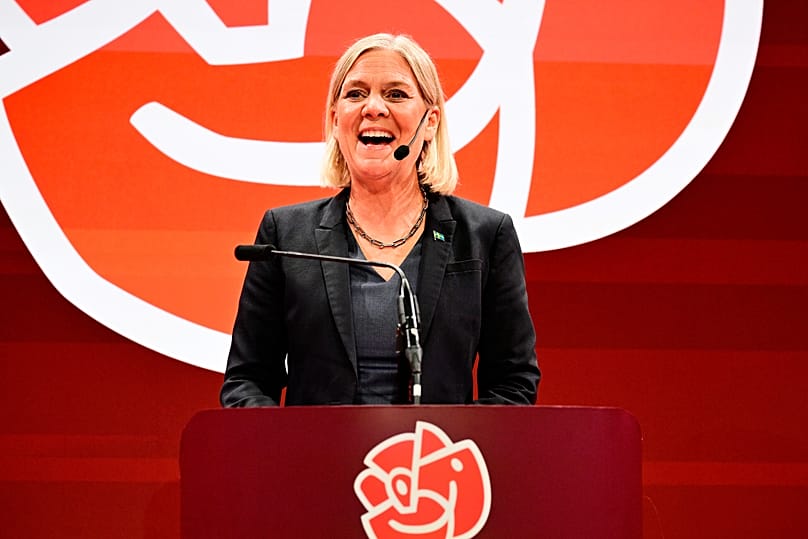
Sweden's political landscape has shifted following a tightly contested general election, where the bloc of centre-left parties secured a parliamentary majority. Led by Magdalena Andersson and her Social Democrats, the alliance also includes the Left Party, Greens, and the Centre Party. This coalition now holds a narrow three-seat majority in the 349-seat Riksdag, Sweden's parliament, surpassing the right-wing alliance of outgoing prime minister Ulf Kristersson.
The election result was exceptionally close, with a difference of only approximately 50,000 votes separating the two opposing blocs across the nation. For Prime Minister-designate Andersson, the victory marks the beginning of a challenging period, as she faces the complex task of forming a government with her alliance partners. This process is anticipated to involve difficult negotiations due to significant ideological differences within the bloc. Notably, the Centre Party has stated its refusal to support a government that grants cabinet posts to the Left Party, while the Left Party is pushing for ministerial representation.
Following the election, Ulf Kristersson, the outgoing prime minister, has resigned. However, the possibility remains that if Andersson fails to establish a functional cabinet, Kristersson could still attempt to form an alternative government. Despite this, Kristersson has publicly stated he would respect Andersson's efforts to form a government, acknowledging the internal divisions within her alliance. Historical precedents indicate that forming coalition governments in Sweden can be a protracted process; for instance, it took over five weeks in 2022 and nearly 20 weeks after the 2018 election.
Despite the centre-left bloc's overall victory, some of its key constituent parties experienced a decline in individual support. Magdalena Andersson's Social Democrats recorded their worst result in over a century, losing eight seats and securing only 28% of the total vote. Nonetheless, they remain Sweden's largest party, having governed the country for the majority of the 20th century. Similarly, the far-right Sweden Democrats saw a decrease in support for the first time since their parliamentary entry in 2010, with their vote share falling to 17.5% and resulting in the loss of 11 seats.
Internationally, the election outcome was met with a positive reaction from some leaders. Spain's Prime Minister Pedro Sánchez, for example, welcomed the result, interpreting it as a victory for social democracy and the welfare state. He extended his support to Magdalena Andersson's centre-left bloc, as conveyed through his statements on social media.