Sowore Faces Intense Legal Battle Over Tinubu 'Criminal' Claims; Court Demands DSS Evidence
Activist Omoyele Sowore has been re-arraigned on cyberstalking charges against President Bola Ahmed Tinubu. The Federal High Court in Abuja ordered the DSS to provide all prosecution documents, as the trial was stalled by procedural lapses and a key admission by the prosecution counsel.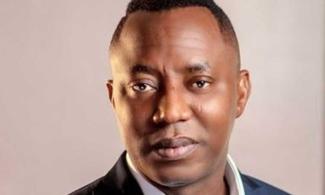
Human rights activist and publisher of Sahara Reporters, Omoyele Sowore, has been re-arraigned on a two-count amended charge of alleged cyberstalking against President Bola Ahmed Tinubu. The charges stem from posts made on his verified X (formerly Twitter) and Facebook accounts on or about August 25, 2025, where he referred to President Tinubu as "a criminal." The prosecution claims these messages were false, knowingly disseminated, and intended to cause public disorder or endanger lives, contravening sections of the Cybercrimes (Prohibition, Prevention, etc.) (Amendment) Act, 2024.
At the resumed hearing on Monday, January 19, 2026, Justice Mohammed Umar of the Federal High Court in Abuja struck out Meta Platforms Inc. (parent company of Facebook) and X Corp. (owners of X) as co-defendants. This decision followed an application by the Department of State Services (DSS) counsel, Akinlolu Kehinde, SAN, during Sowore's re-arraignment, making Sowore the sole defendant in the amended charge filed on December 5, 2025. Sowore pleaded not guilty to both counts.
The amended charge, marked FHC/ABJ/CR/484/2025, alleges that Sowore knowingly and intentionally sent messages via his official X handle (@YeleSowore) and Facebook page, including the statement: "This criminal @officialABAT actually went to Brazil to state that there is NO MORE corruption under his regime in Nigeria. What audacity to lie shamelessly!" The prosecution maintains these posts were false and aimed at causing a breakdown of law and order, posing a threat to life, or inciting public disorder, in violation of Sections 24(1)(b) and 24(2)(a), (b), and (c) of the Cybercrimes (Prohibition, Prevention) (Amendment) Act, 2024.
The attempt to commence the definite trial was stalled due to a strong objection by Sowore’s lead counsel, Abubakar Marshal. Marshal argued that the prosecution had failed to furnish the defense with essential documents, including proof of evidence, a list of witnesses, and their particulars and statements on oath, as mandated by law. He asserted that this omission grossly violated Sowore’s constitutional right to a fair hearing under Section 36 of the 1999 Constitution (as amended) and undermined due process, preventing adequate preparation for trial.
Justice Mohammed Umar concurred with the defense, emphasizing the sacrosanct nature of due process and fair hearing. He firmly ordered the DSS counsel, Akinlolu Kehinde, to comply with the legal requirements by providing all necessary prosecution documents to Sowore's legal team. Justice Umar remarked, "Even if you are calling a spirit as a witness, you must follow the law," underscoring that compliance with the law is not optional, regardless of the nature of the witnesses.
Akinlolu Kehinde, SAN, for the DSS, initially pressed for the trial to commence, citing previous adjournments at the instance of the defense and incorrectly suggesting that requirements for witness details primarily apply to Magistrate Courts. In a significant disclosure that "shocked observers," Kehinde admitted to the court that President Bola Ahmed Tinubu, despite being listed as the complainant, did not personally contact him to initiate or prosecute the matter, raising fundamental questions about the prosecution's instructions.
Speaking to journalists, Abubakar Marshal described the prosecution's actions as a clear violation of constitutional and statutory provisions. He further criticized the case as emblematic of broader governance issues, arguing that state resources were being misdirected to suppress citizens' fundamental right to criticize the government amidst pressing national challenges like terrorism and insecurity. Marshal highlighted that the individual allegedly defamed had not made a formal complaint and accused the DSS of abandoning its core mandate for "private disputes and political criticism," questioning the "selective prosecution" in light of another critic's government appointment.
Following the arguments and ruling, Justice Mohammed Umar adjourned the case to Thursday, January 22, 2026, for definite trial. Upon conviction, the charges attract a penalty of a minimum fine of ₦15 million or imprisonment for a term of five years.