Should There Really Be More Women in Africa's Parliaments?
Is there actually a need for women to contribute to policies and laws in African parliaments?
The Unwritten Laws of Power
In the grand halls of power, who speaks often matters more than what is said. Across parliaments and congresses from Africa, to Europe, to Asia, an old assumption has begun to erode: that political leadership is a man’s domain.
The last few decades have quietly upended that idea, and in doing so, they’ve begun to reshape the global economy. Not by rhetoric. But by data.
What The Stats Say

Image Credit: Flickr.com
In Europe and Central Asia, researchers tracking the economic consequences of gender representation in parliaments made a discovery that might seem almost too precise to believe: a 10 percentage-point increase in female parliamentary seats corresponded with a 0.74% to 0.92% increase in GDP growth.
The methodology wasn’t casual. Economists applied panel data analysis across multiple countries using advanced tools like fixed effects and two-step system GMM estimators to control for confounding factors. The results held up. The pattern repeated.
The previously mentioned research also included countries of vastly different income levels, from the United States to Brazil to India. The trend persisted. A rise in female political participation boosted economic growth by 0.22% to 0.49%, depending on income classification.
The study looked at data from more than ten years and used careful methods to make sure the results weren’t distorted by overlapping or confusing factors.
Why would this happen?
Women in parliament tend to invest more attention in social infrastructure, healthcare, education, and child care — sectors often overlooked in male-dominated legislatures. These are not soft issues. They are economic engines. An educated population, a healthy workforce, a reduction in corruption through transparency are not ideological victories. They are GDP contributors.
Long-term studies across over 100 countries, using machine learning and econometric modeling, reinforce this idea. When women are meaningfully empowered in governance, national economic performance improves.
It’s a global pattern. But patterns, by definition, have outliers. Enter Africa.
The African Disparity
According to the Africa Barometer and Invictus Africa, as of 2024, women made up just 26.5% of parliamentarians across the African continent. That number may not seem alarming at first, until you look more closely.

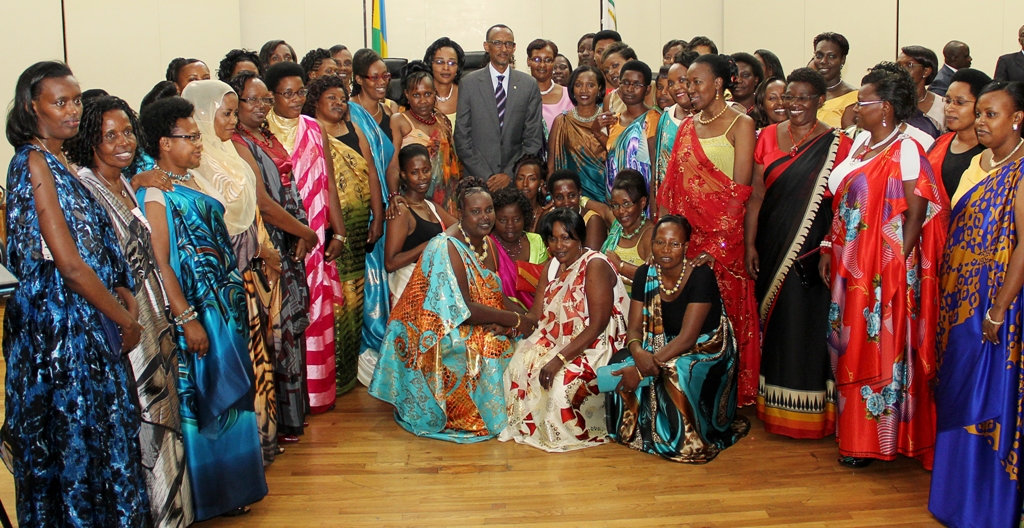
Out of Africa’s 54 countries, only four have more than 40% women in parliament. Rwanda leads not just the continent, but the entire world, with women holding about 61% of parliamentary seats. Ethiopia and Djibouti have also made progress, reaching around 40% and 26%, respectively.
But after that, the numbers drop off sharply.
The Decline
Beyond these few examples, the trend reverses quickly. According to research done by Invictus, twenty African countries still have fewer than 20% female representatives in their national parliaments. Some countries remain stuck in the single digits.
The most striking example is Nigeria, Africa’s largest democracy and its most populous country. In 2007, women held just 8.3% of Senate seats. By 2023, that number had dropped to 2.8%.
The House of Representatives saw a similar decline: it peaked at 7.2% in 2011 and fell to just 3.8% by 2023.
What Rwanda Got Right

Image Credit: African Leadership Magazine
Rwanda’s high percentage of women in parliament isn’t a coincidence; it’s the result of intentional policies. After the 1994 genocide, Rwanda rebuilt its political system with inclusivity at its core. In 2003, Gender quotas were introduced, and structural reforms followed.
It’s no coincidence that the country has also become a leader in technology, infrastructure, and education.
It has made significant strides in establishing digital innovation hubs, notably through the Kigali Innovation City (KIC) initiative. This project aims to position Rwanda as a leading center for technology and innovation in Africa.
Rwanda has attracted world-class universities and technology companies, including Carnegie Mellon University Africa and the African Institute of Mathematical Sciences. These institutions contribute to the country's growing digital ecosystem.
Additionally, the World Bank approved $100 million in financing to support Rwanda's digital transformation. The Digital Acceleration Project focuses on expanding digital access, enhancing government digital services, and strengthening the local entrepreneurship ecosystem.
These outcomes aren’t accidental. They reflect what happens when women have the power to influence policy in real, lasting ways.
What Nigeria and Others Are Losing

Image Credit: The Nation Online
Meanwhile, Nigeria offers a stark contrast. Despite its size and resources, its lack of political inclusion for women has come at a cost.
When women are left out of parliament, the effects ripple across society. Health budgets may not reflect the real needs of communities. Education reforms are often delayed or diluted. Gender-based violence goes unaddressed. Economic inequality remains unresolved. These aren’t abstract issues—they are lived realities.
The exclusion of women from political life is more than a gender imbalance. It creates a policy gap, and that gap has measurable consequences.
So Should There Really Be More Women in Africa's Parliaments?
What if Africa doubled the number of women in its parliaments? We do not have to imagine. The data exists, just not always from the continent. From Eastern Europe to Southeast Asia, the inclusion of women in parliament has produced better outcomes because diverse governments govern more completely. They ask different questions. They solve different problems.
In Africa, where poverty rates remain high, infrastructure deficits endure, and inequality persists, the exclusion of women is a strategic error. Women do not need to be in parliament as a matter of symbolism. They need to be there as a matter of competence, of representation, of economic growth, of democratic health.
Legitimacy and the Future of Africa
In a continent where more than half the population is female, how can legitimacy exist when less than a quarter of lawmakers are women? And what if Africa’s future—the development goals, the policy reforms, the constitutional transformations, depends not just on innovation, foreign investment, or political revolution, but on something far simpler?
More seats. More voices. More women.