N1.3bn 'Fake Agency' Scandal EXPLODES: Senate Investigates, Police Act in Ogbomoso
A major controversy surrounds the alleged 'fake' Presidential Fiscal and Infrastructure Projects Council (PFIPC) and its N1.3 billion allocation, with its purported director-general's father reportedly arrested. The scandal involves forged appointment letters and bureaucratic failures, prompting widespread calls for accountability and Senate intervention.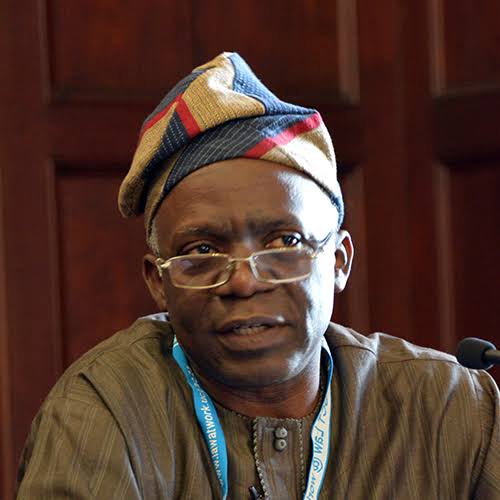
A significant national controversy has erupted around an alleged 'fake' government agency, the Presidential Fiscal and Infrastructure Projects Council (PFIPC), and its purported Director-General, Prince Adeyemi Adeniyi, following an alleged N1.3 billion allocation in the 2026 Appropriation Act. The scandal has drawn widespread criticism and demands for accountability from various quarters, including human rights organizations, political figures, and the National Assembly.
The controversy intensified with allegations by human rights lawyer Femi Falana (SAN) that police operatives raided Adeniyi’s family residence in Ogbomoso, Oyo State, on Monday, arresting his father and a visiting family friend. Eyewitnesses corroborated the account, stating police arrived in four vehicles, leaving Adeniyi’s elderly mother in shock. Falana vehemently condemned these ‘substituted arrests’ as lacking any legal basis, emphasizing Adeniyi's promise to appear in court. As of the report, independent verification of these claims and an official statement from the Nigeria Police Force were pending.
Central to the scandal is the revelation that the PFIPC, also referred to as the Presidential Foreign Intervention Promotion Council, allegedly operated for over a year using a forged appointment letter bearing a falsified signature of the President’s Chief of Staff, Femi Gbajabiamila. This fraudulent document reportedly enabled Prince Adeniyi Adeyemi Mathew to secure office space at the Federal Secretariat Complex in Abuja, thereby giving the controversial council the appearance of a legitimate government agency.
Presidency and civil service sources disclosed that bureaucratic failures across the Civil Service Headquarters, the Budget Office, and the National Assembly contributed to the fraud thriving, ultimately leading to the inclusion of the N1.3 billion allocation for the council in the 2026 Appropriation Act. Senior Presidency officials clarified that appointments to agencies under the Presidency are constitutionally made by the President and formalized through the Office of the Secretary to the Government of the Federation (SGF), not the Chief of Staff. A senior civil servant further explained that Adeniyi exploited a major administrative loophole by presenting the fake letter to secure office accommodation, which then conferred significant legitimacy on the purported agency, complete with a letterhead and website.
The alleged fraud first came to light when officials of the Nigerian Investment Promotion Commission (NIPC) noticed that the PFIPC was performing functions already assigned to their commission. This prompted the Chief of Staff, Femi Gbajabiamila, to deny any knowledge of Adeniyi and alert the Department of State Services (DSS). Although the office at the Federal Secretariat was sealed after Adeniyi’s initial arrest, he allegedly continued operating elsewhere. Concerns have also been raised that the prosecution of Adeniyi, who faces criminal charges including forgery and impersonation, has slowed since his arraignment, and that he may have violated his bail conditions.
The Senate is scheduled to address the N1.3 billion allocation controversy upon resuming plenary. A National Assembly source indicated that the council’s budget was never subjected to normal legislative scrutiny, having been collectively processed with other items directly from the Presidency, without any defence or oversight from Adeniyi or his officials. This lack of due diligence has fueled public scrutiny and allegations of complicity.
In response to the escalating scandal, various organizations and political figures have demanded immediate action and accountability. The Socio-Economic Rights and Accountability Project (SERAP) issued a Freedom of Information request to Senate President Godswill Akpabio and Speaker Tajudeen Abbas, demanding documents related to the N1.3 billion allocation and threatening legal action if not provided within seven days. Similarly, the Human and Environmental Development Agenda (HEDA) called for a public inquiry into how the allocation found its way into the budget. Former Vice President Atiku Abubakar described the controversy as evidence of systemic governance failures, urging President Bola Tinubu to order an independent investigation. The Tanimu Turaki-led faction of the Peoples Democratic Party (PDP) and the Kwankwasiyya Movement echoed sentiments of weak governance and demanded answers on who proposed, approved, and processed the allocation, and whether public funds were released. The Committee for the Defence of Human Rights (CDHR) went further, calling for Chief of Staff Femi Gbajabiamila to step aside pending an independent investigation, citing the gravity of allegations on both sides. Meanwhile, the Deputy Spokesman of the House of Representatives, Philip Agbese, urged Nigerians to allow the judicial process to run its course.