She100: The Ethiopian Woman Who Made History at Berkeley and Is Taking AI Into the Fight for Justice
Rediet Abebe’s journey from Addis Ababa to UC Berkeley is more than academic excellence; it is a story of using AI to confront inequality, reshape systems, and build spaces for those historically excluded.

When the story of every successful woman is told out there, there is always the grass to grace version and Rediet Abebe is no exception.
There is the version where a girl from Addis Ababa makes it to Harvard, Cambridge and Cornell and ends up at one of the most prestigious universities in the world. That version is and will always be impressive but it is often incomplete.
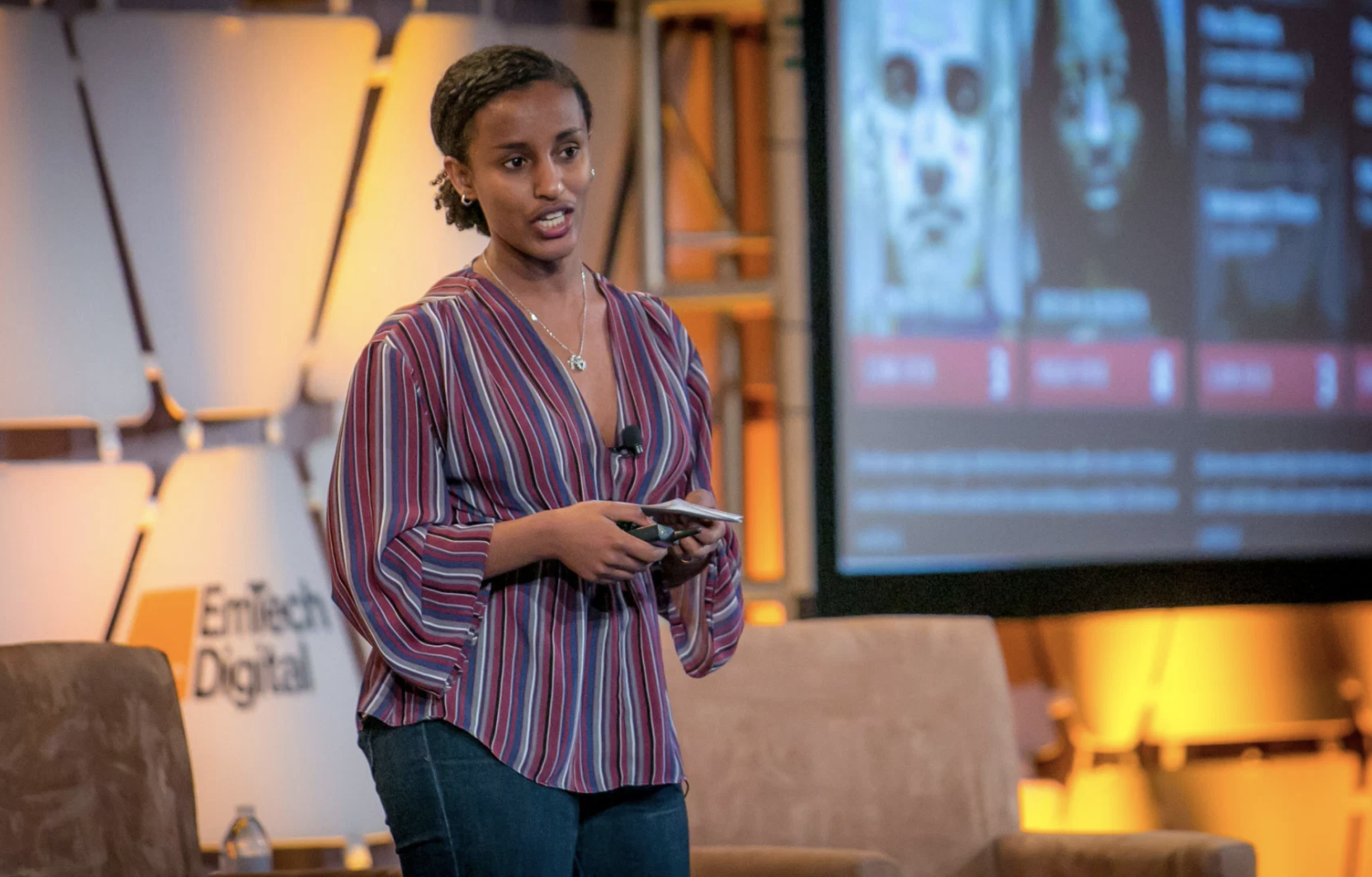
What makes Abebe remarkable is not just where she went. It is what she decided to do when she got there.
From Addis Ababa to Every Room That Mattered
Rediet Abebe was born and raised in Addis Ababa, Ethiopia, where she studied under the national curriculum at Nazareth School before earning a competitive merit-based scholarship to attend the International Community School of Addis Ababa. From there, the journey was steep and unrelenting.

She went to Harvard for her undergraduate degree in Mathematics, stayed to complete a Master's in Applied Mathematics, then went to Cambridge where she earned a Master of Advanced Studies in Pure Mathematics as the Governor William Shirley Scholar at Pembroke College.
Her doctoral degree came from Cornell University, where she studied computer science under the supervision of Professor Jon Kleinberg, one of the most decorated names in the field.
When she finished at Cornell, she became the first Black woman to earn a computer science PhD from that institution. That alone would have been enough for most people. Abebe was only getting started.
The Dissertation That Won Two Awards
At Cornell, Abebe did something that most PhD students spend years trying to do. She produced a work so significant that it was recognised across multiple disciplines simultaneously.
Her doctoral dissertation received the 2020 ACM SIGKDD Dissertation Award, one of the most competitive honours in computer science and also earned an honourable mention for the ACM SIGecom Dissertation Award.
The work laid the mathematical and computational foundations for examining how algorithms interact with inequality and distributive justice, establishing an entirely new research direction in the process.
Her advisor, Jon Kleinberg, stated that her work mobilised an entire research community, creating new directions for computing to address societal challenges and increase access to opportunity.
Making History at Berkeley
In 2021, Abebe joined the faculty of the University of California, Berkeley, one of the top public universities in the world, as an assistant professor in the Department of Electrical Engineering and Computer Science.

She became the first Black female professor in the history of that department and only the second in the history of the College of Engineering.
At Berkeley, she leads theBEAAMO (Berkeley Equity and Access in Algorithms, Mechanisms, and Optimization) research group and is affiliated with some of the most influential research labs on campus, including the Berkeley Artificial Intelligence Research Lab and the Center for Human-Compatible Artificial Intelligence.
She is also a Junior Fellow at the Harvard Society of Fellows, where she is one of only two fellows in the Society's history with a computer science PhD.
In 2022, she was named an Andrew Carnegie Fellow, joining a programme that funds some of the most consequential research in public life.
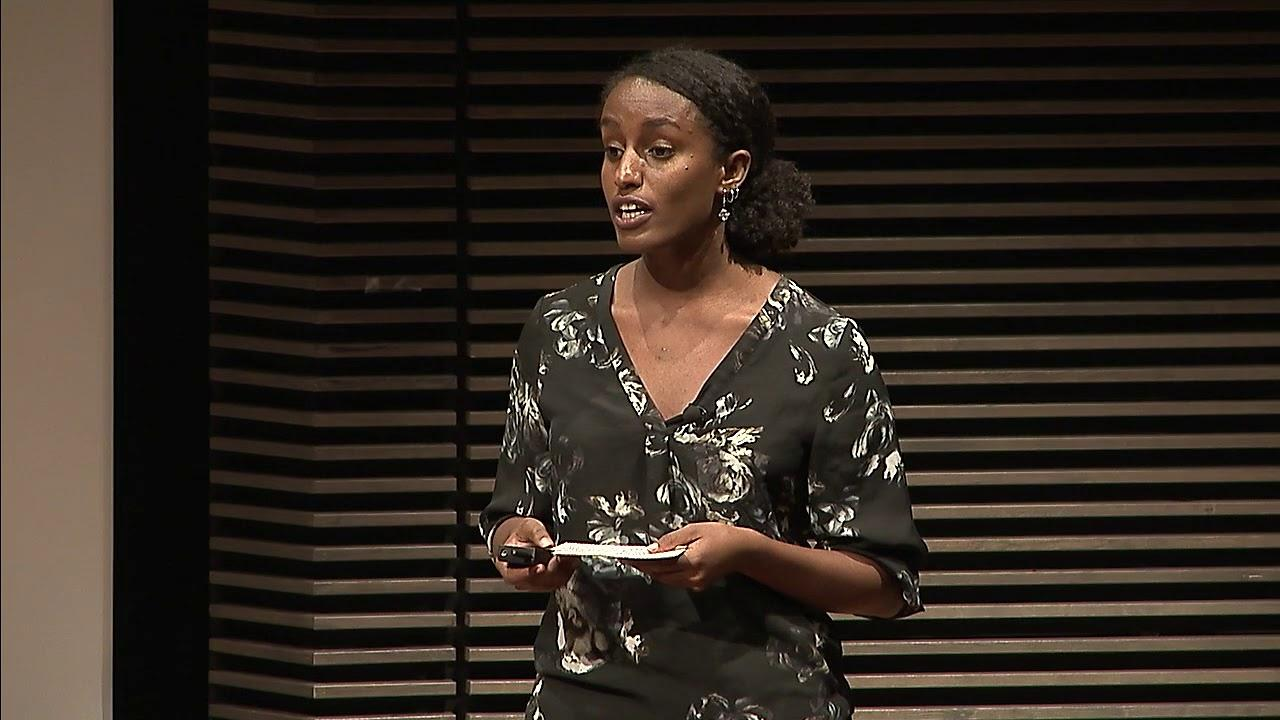
Her Carnegie project investigates the use of algorithmic tools as evidence in the American criminal justice system, examining whether these tools should be admissible in court at all, and how public defenders can challenge them.
The Tables She Built From Scratch
Abebe's most enduring legacy may be the communities she created for people who had none.
In 2016, when she arrived at Cornell as the only Black doctoral computer science student on campus, she felt the particular loneliness of being the only one.

That feeling, shared by Black researchers across the country, led her and fellow researcher, Timnit Gebru, to co-found Black in AI, a network that has since grown to thousands of members globally, running annual workshops and creating pathways for Black researchers in artificial intelligence.

She also co-founded Mechanism Design for Social Good, a multi-institutional research initiative that brings together computer scientists, economists and policymakers to apply algorithmic thinking to real-world challenges like housing, education, healthcare, poverty alleviation and its likes.
Both organisations exist because she built them. Because she understood that individual excellence, unaccompanied by structural change, only goes so far.
What She Means for the Continent
Rediet Abebe is Ethiopian. She is also a mirror held up to a continent that produces extraordinary minds and too often watches them solve other people's problems.
She has chosen, at every stage of her career, to redirect her brilliance toward the people and communities most likely to be left behind by the technology she helps build.
She has been named to MIT Technology Review's 35 Innovators Under 35, featured in the Bloomberg 50 list and honoured with a Cornell Social Justice Award. The accolades keep coming because the work keeps compounding.
Africa is hurtling toward an AI-shaped future it did not design. It needs people at the table who understand what is at stake. It already has one.