You Think You're Building a Habit, But Your Duolingo Streak Might Be Conditioning You
Duolingo streaks can create the illusion of progress while delaying real language learning. Here is how habit psychology, operant conditioning and app design shape your motivation.
Duolingo lessons have slowly become part of your routine. You check in, do a lesson for the sake of it, you are not even sure you would understand anything outside the app, but you do it anyway because that fire icon is really firing you up to keep you going.
You have a 47-day streak and you feel productive, disciplined, almost admirable to yourself.
But, when last did you actually sit down and practice speaking French out loud, or watch a Spanish film without subtitles, or hold a real conversation in the language you have been "learning" for three months?
The Streak Is Not the Goal, It Just Feels Like One
There is a difference between doing a thing and building the skill that the thing is supposed to give you.
Your Duolingo streak is giving you the feeling of progress without necessarily delivering the substance of it and that distinction matters more than most people are willing to admit.

Psychologists call this goal substitution. This is the tendency for humans to replace a difficult, meaningful goal with a simpler, measurable replica that feels close enough.
Learning a language is hard, unpredictable and full of embarrassing moments where you stumble over pronunciation or blank on vocabulary mid-sentence.
But tapping through five Duolingo lessons at midnight before your streak resets is manageable, predictable and comes with a little animation that congratulates you for showing up.
So your brain, by default, picks the easier path, and your sense of accomplishment follows it, even when the actual goal is quietly gathering dust.
Skinner's Box With a Cute Owl
B.F. Skinner, one of the most influential behavioural psychologists of the twentieth century, demonstrated through his research on operant conditioning that behaviour can be shaped entirely through reward and punishment systems, without the subject ever developing genuine understanding or intrinsic motivation.
The Duolingo streak is almost a textbook example of what Skinner described.
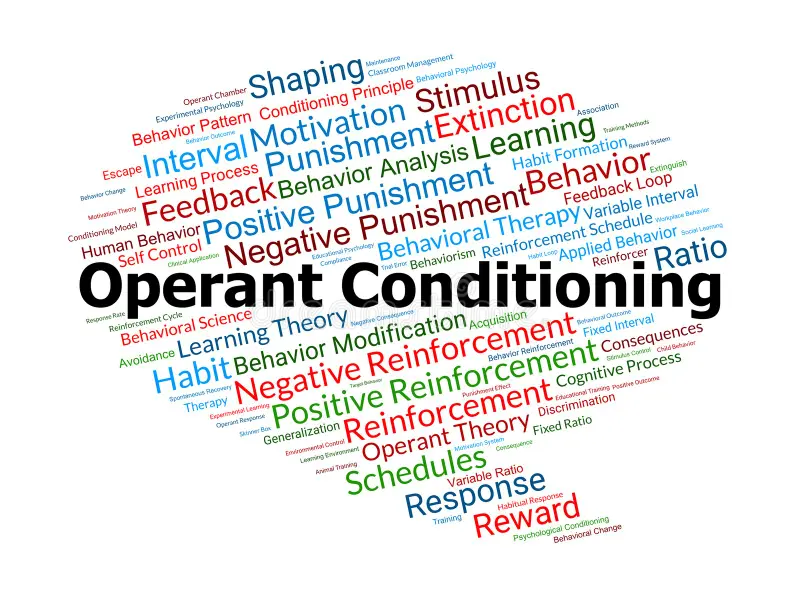
Operant conditioning works by pairing a behaviour with a consequence. In this case, maintaining your streak pairs daily app usage with the emotional reward of not losing something you have already built.
The fear of losing a 30-day streak activates the same loss aversion mechanism that makes people hold losing stocks too long or stay in relationships past their expiry date.
Daniel Kahneman's research established that losses feel psychologically twice as powerful as equivalent gains, which means your brain is not fighting to gain language fluency; it is fighting desperately to not lose that flame emoji.
Social Insight
Navigate the Rhythms of African Communities
Bold Conversations. Real Impact. True Narratives.
Deep down, you know you are not doing any serious learning. You are just protecting a number.

When Completion Becomes a Substitute for Growth
Research in The Neuroscience of Goals and Behavior Change suggests that reward systems and visible progress markers can make the brain associate consistency with achievement, even when real skill development is limited.
The act of recording, measuring and maintaining a visual streak gave participants enough of a sense of accomplishment to reduce their motivation for the real work.
This is why you can have a fitness tracker that tells you that you hit 8,000 steps when all you did was pace your room during a phone call and still feel like you did something for your health.
The metric became the mission.

You want to be the person who speaks four languages, codes, reads thirty books a year and journals consistently, and apps give you the visual proof of that identity before the actual capability catches up.
What Real Habit Formation Actually Looks Like
Research by Phillippa Lally at University College London found that on average, it takes 66 days for a behaviour to become truly automatic, and that the behaviour in question needs to be contextually consistent to stick.
Simply put, the habit has to connect to real-world cues and produce real-world results, not just in-app rewards.
Neuroplasticity, the brain's ability to rewire itself in response to repeated experience, is genuinely activated by language learning, but the research is clear that it requires immersion, emotional stakes, and social interaction to fully take hold.
Five minutes of matching cartoon words to images does not wire your brain for fluency. It wires your brain to open the app.

The Life You Are Procrastinating On
The streak is really costing you, not time, but the comfortable illusion that you are already doing the thing.
Every night you maintain your Duolingo streak, you get to sleep feeling like a person who is learning a language, which makes it easier to postpone the actual conversation class, the language exchange partner, the uncomfortable but necessary practice of speaking badly until you speak well.
The owl is not your enemy.
But the story you are telling yourself about what the owl means is where the real work begins.