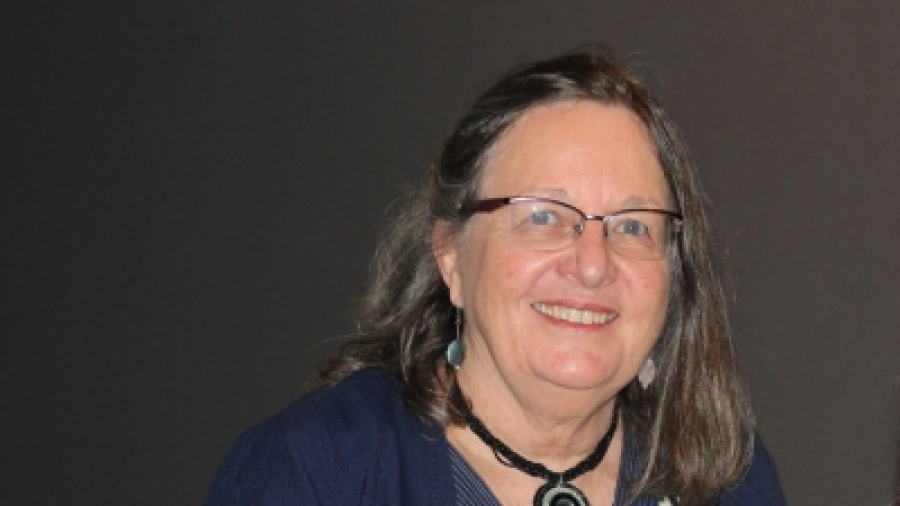
She100: How Prof. Penelope Engel-Hills Became One of Africa's Most Important Health Educators
The woman behind Africa’s radiation therapists: Prof. Penelope Engel-Hills built a legacy in health education, ethics, and professional training that changes lives continent-wide.
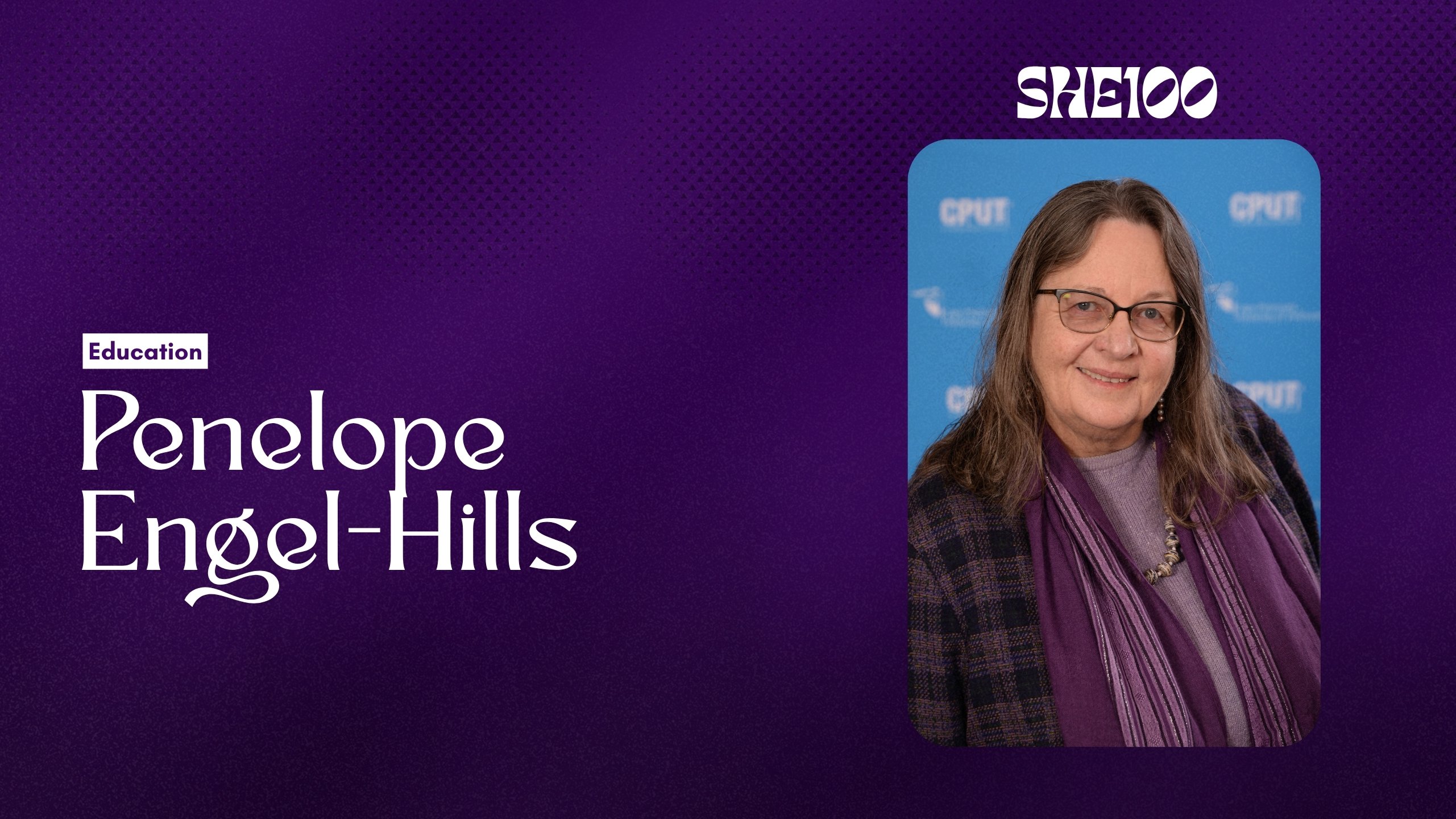
There are people who treat patients and then there are people who train the people who do. Prof. Penelope Engel-Hills belongs firmly to the latter.
Across Africa, in radiography rooms and cancer treatment centres, her influence shows in the competence of professionals, in the ethics of care and in the systems that hold it all together.
The Beginning
Not many people choose radiography on purpose. It is one of those fields you stumble into, through a hospital attachment, a family member's diagnosis or a careers counsellor who knew what they were talking about.
However Prof. Penelope Engel-Hills found her way in, one thing is clear: she never left.
Decades later, she is still in health sciences, still at the same institution where she built her career and still doing the work. That kind of consistency is rare and it is worth paying attention to.
Radiography, the use of radiation in healthcare, is one of those fields that most people have encountered without fully understanding. Need a chest X-ray? Radiography. Received treatment for cancer? Likely involved a radiation therapist.
It covers diagnostic imaging, nuclear medicine, radiation oncology and ultrasound. It is essential, highly technical and chronically underfunded in most of Africa.
And for much of the continent, the biggest problem isn't just the machines, it is the people trained to use them.
The Gap She Decided to Close
Through her work at the Cape Peninsula University of Technology, where she rose from lecturer to Deputy Dean to Acting Dean of the Faculty of Health and Wellness Sciences, she became a key figure in building the educational infrastructure for radiation therapy across the continent.
But her classroom was never just CPUT. Through her partnership with the International Atomic Energy Agency, a United Nations body with 152 member states, she contributed to developing a core curriculum for radiation therapistsspecifically designed for developing countries.
The need for it is staggering. Across most of the continent, access to radiation therapy is either severely limited or completely nonexistent. Many countries offer basic diagnostic radiography training.
Very few offer specialised training in radiation oncology or nuclear medicine. Postgraduate opportunities are even rarer.
What this means in practice is that patients who need radiation treatment for cancer often cannot access it not because the technology doesn't exist, but because there aren't enough trained people to deliver it safely and effectively.
A Classroom Without Borders
Prof. Engel-Hills understood this before it became a talking point.
She facilitated IAEA fellowship programmes that brought students from across Africa to CPUT to access training they simply couldn't get at home. She travelled as an external examiner to multiple African countries, assessing programmes and setting standards.
She wasn't just teaching; she was ensuring that what was being taught held up. Quality assurance as a form of continent-wide advocacy.
And then there is the ethics work. She chaired both the Faculty Research Ethics Committee and the Senate Ethics Committee at CPUT and was appointed the Deputy Chairperson at National Health Research Ethics Council (NHREC).
She, also, holds a Postgraduate Certificate in International Research Ethics.

In a world where health research on African populations often raises serious questions about exploitation and informed consent, having someone with that profile in the room matters enormously.
She was shaping the moral framework within which health research on this continent gets conducted alongside building the next generation of radiation therapists.
A Record of Work That Speaks Before She Has To
Her academic record is not a list, but a steady accumulation of proof.
She has two diplomas, a BSc Honours, an MSc in Medical Physics, a Doctorate in Radiography Education, a Teaching Diploma, a Counselling Certificate, a National Research Foundation C2-rating, over 80 publications and more than 330 citations.
Each qualification, she said, allowed her to contribute more to degrees, to research ethics, to the institution, to the field.
In spaces that often demand women over-prove themselves, she simply kept adding tools to her arsenal until the question of whether she belonged became unanswerable.
She was nominated for the Lifetime Award of the NSTF-South 32 Awards, one of South Africa's most prestigious science and technology recognitions.
When asked about her career highlights, she didn't mention the titles or the accolades. She said the most satisfying thing was finding a place where her four passions — professional education, health and wellbeing, ethics, and research — could sit together and intersect in something meaningful.
The Kind of Important That Lasts
Prof. Penelope Engel-Hills built a life with intention and let the impact accumulate.
Somewhere on this continent, a radiation therapist is treating a cancer patient today because of a curriculum she helped design, a standard she helped set, or a student she helped train.
That is what it looks like to be important. Even when nobody is watching.