SHE100: Hilda Moraa’s Quiet Revolution in African Credit
Hilda Moraa turned a failed school project into Kenya’s first major tech exit and built , a platform that has delivered over 500,000 loans to small businesses across Africa, bridging the gap between who gets access to credit and who gets left behind.
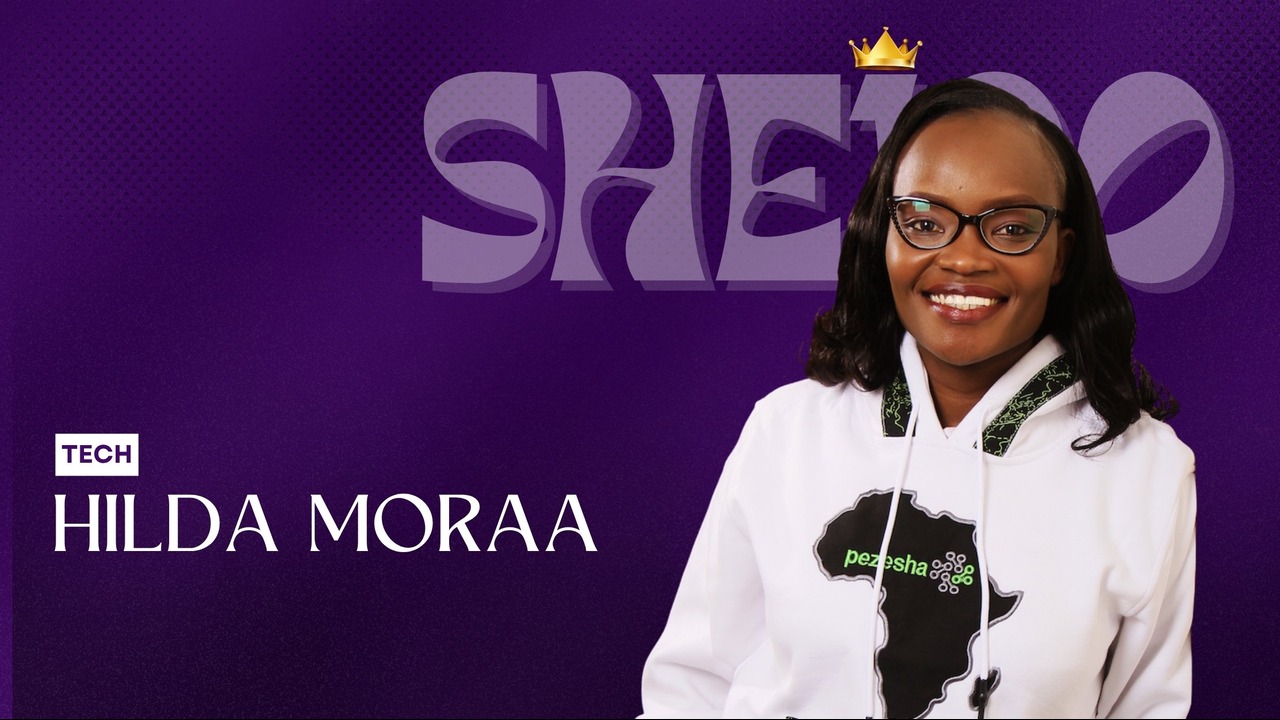
She had no investor backing, no famous surname, no Silicon Valley connections. Just a school project, a frustration with broken supply chains, and a stubborn belief that technology could fix them.
That student grew up to speak on a global stage before Barack Obama, sell her first startup for over Ksh 100 million at age 26, and build a fintech platform that has extended over 500,000 loans to small businesses across Africa. Her name is Hilda Moraa, and her story is one you build, brick by painful brick.
As we celebrate women in March through the SHE100 series, Moraa stands out not just for what she has built, but for who she built it for: the small trader in Kampala who cannot get a bank loan, the woman-run kiosk in Nairobi turned away from formal credit.
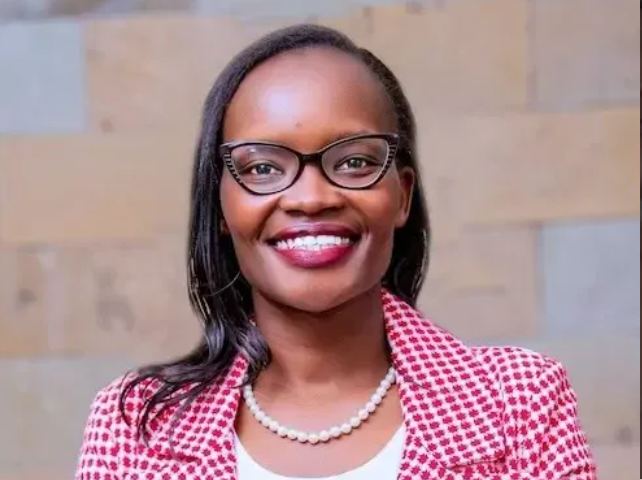
In a continent where over 330 million MSMEs struggle to access working capital, she chose to build the bridge.
From a School Project to Kenya's First Recorded Tech Exit
Moraa's entrepreneurial instincts surfaced at Strathmore Universityin Nairobi, where a campus printing business funded by her skeptical parents became her first lesson in spotting gaps and filling them.
Her industrial attachment at Coca-Cola Kenyadeepened this instinct. Placed in the distribution department, she witnessed the chaos of last-mile logistics firsthand and documented it all.
In 2011, that documentation became WezaTele, a fintech and supply chain startup using data analytics to help small businesses grow.

The road was not smooth. An early product called MyOrder never launched, and Moraa has spoken openly about learning to let go of failing ideas.
That discipline paid off. In 2015, WezaTele was acquired by AFB (now Jumo World)in what is widely recognised as Kenya's first recorded multi-million dollar tech exit. She was 26.
That same year, she delivered the closing keynote at the Global Entrepreneurship Summit 2015in Nairobi, addressing a room that included President Obama. It was also the moment she told her parents, live, that she had quietly dropped out of her Master's class to pursue the startup.
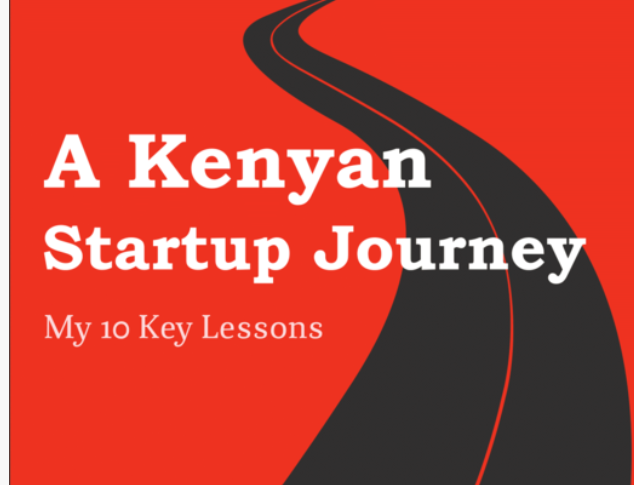
Her book, A Kenyan Startup Journey, published that same year, preserved those lessons for every founder who came after her.
Building Pezesha: Credit for the Overlooked
After the WezaTele exit, Moraa returned to the problem she kept bumping into: millions of small businesses locked out of formal credit. No collateral. No credit history. No access. Banks saw risk. She saw potential.
In 2016, she founded Pezesha, a digital financial infrastructure platform designed to power working capital and credit access for SMEs across sub-Saharan Africa.
Rather than lending directly, Pezesha built an embedded finance model, partnering with value chain players, telecoms, e-commerce platforms, and NGOs like Twiga Foodsand Jumiato channel credit through platforms small businesses already use.
The results speak clearly. Pezesha's proprietary credit scoring engine runs on over 300 million data points, assessing businesses traditional banks would never touch.
Today, 40% of Pezesha's borrowers are womenaccessing formal credit for the first time.
The company has disbursed over 500,000 SME loans, raised a pre-Series A round of $11 million in 2022, and operates across Kenya and Uganda with a team that is 50% women.
A Trophy Cabinet Built on Impact
In March 2024, Moraa was named the winner of the Forbes Woman Africa Tech and Innovation Award. That same year, she was named Best Woman Fintech CEO in Kenyaby the Women's Tabloid Awards and appointed a UN eTrade for Women Advocatefor 2024 to 2025.
In 2023, Bloombergprofiled her as one of its New Economy Catalysts. Earlier milestones include: Forbes Africa's 30 Most Promising Young African Entrepreneurs (2016), the Obama Foundation Leaders Program(2019), and board membership at Station F, the Paris-based startup campus, from 2017 to 2021.


Since 2022, she has served on the board of Konza Technopolis Development Authority, Kenya's national smart city project.
What Hilda Moraa Really Represents
There is a temptation to reduce Moraa to a series of highlights. First exit. Big raise. Global awards. But the thread running through everything she has built is simpler and more urgent: credit as a tool for job creation.
She has stated publicly that her goal is to help create five million jobs across Africa through Pezesha's lending ecosystem.
In a tech ecosystem still skewed toward consumer apps and urban users, Moraa has spent over 15 years solving for logistics, credit, and small business growth. Unglamorous spaces. Operationally complex spaces. But spaces that matter enormously to the most vulnerable people on the continent.
The story of Hilda Moraa is a reminder that Africa's most consequential innovations do not always make Silicon Valley headlines. Sometimes they are quiet, data-driven platforms putting working capital in the hands of a woman distributor in Kisumu who has been running her business on trust alone.
She did not wait for the system to include her. She built a new one and made sure it included everyone else. That is what SHE100is about.