Profit vs Purpose: Can Businesses Truly Do Both?
Can a business make money and still do good? This opinion piece breaks down the real tension between profit and purpose, and talks about honest questions many businesses face today.

For a long time, business was simple. You made a product, sold it, paid your bills, and hopefully made enough profit to stay alive. Nobody asked where your materials came from, how your workers were treated, or whether your success harmed the environment.
Today, that silence is gone. Customers, especially younger ones, now want answers. They want to know if a company is just chasing money or actually trying to do some good.
This is where the debate starts. Can a business truly balance profit and purpose, or is one always a lie wrapped around the other?
At its core, profit is not a bad thing. Without profit, businesses collapse, workers lose jobs, and ideas die. Even charities need surplus money to survive. The problem begins when profit becomes the only goal.
When businesses chase money at all costs, corners get cut. Wages are squeezed, quality drops, and long-term damage is ignored for short-term gain. This is why many people now look at big companies with deep suspicion.
Purpose, on the other hand, sounds good but can feel vague. It usually means a business stands for something beyond money like fair pay, environmental care, community impact, or ethical sourcing. Concepts likecorporate social responsibility, clearly explained by Investopedia, suggest companies can operate ethically while still making money.
The problem is that purpose often sounds good on paper but falls apart in practice, some believe it is often just a marketing story designed to sell more products.
Look at how many brands now talk about sustainability, inclusion, or social impact. Some mean it. Others don’t. This practice, sometimes called “purpose washing,” happens when companies say the right things publicly but behave differently behind closed doors.
A fast-fashion brand promoting body positivity while underpaying factory workers is a common example. The message looks nice, but the reality feels hollow.
Consumers are getting better at spotting this gap. Social media has made it easier for whistleblowers, employees, and customers to expose hypocrisy. Once trust is broken, it is hard to rebuild. In that sense, pretending to have purpose can actually hurt profits in the long run.
Harvard Business Review shows that purpose does not have to kill profit. But it does require sacrifice. Ethical materials cost more. Fair wages reduce margins. Long-term thinking slows rapid expansion. This is the part many businesses are not ready for. Purpose demands patience.
The catch is that purpose comes at a cost. Ethical materials are more expensive. Fair wages reduce margins. Growth becomes slower. Purpose demands real commitment, not slogans.
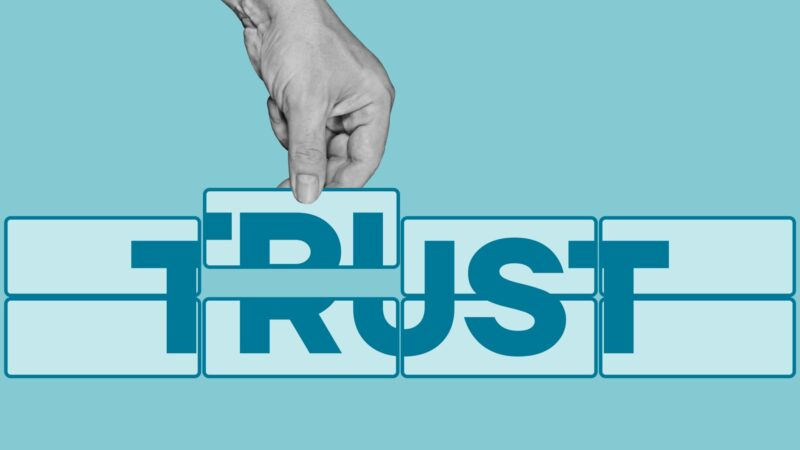
Another reason profit and purpose now sit in the same conversation is trust. People no longer buy products blindly; they buy behaviour.Studies like the Edelman Trust Barometershow that consumers increasingly expect businesses to take a stand on social and economic issues, not just sell to them. When a company stays silent during moments that matter, or speaks only when it is convenient, people notice. Trust is slow to build and quick to lose, and once it is gone, even a strong brand struggles to recover its credibility.

There is also growing evidence that purpose-driven businesses can perform better over time. People want to work for organisations that make them feel proud, not just paid. That emotional connection can improve productivity, reduce staff turnover, and strengthen long-term growth. In this sense, purpose stops being charity and starts becoming a practical strategy.
Small businesses face an even harder challenge. When you are struggling to pay rent, salaries, and taxes, purpose can feel like a luxury. Yet, even at a small scale, choices matter. Treating staff fairly, being honest with customers, and contributing positively to your community are forms of purpose that do not always require big budgets, just intention.
There is also a hard truth many people avoid: not every business can balance profit and purpose perfectly. Some industries are built on models that cause harm, no matter how they are packaged. In such cases, purpose becomes a constant battle rather than a selling point. The question then shifts from “Can we do both?” to “How much harm are we willing to accept for success?” That is an uncomfortable question, but an honest one.
Purpose does not mean perfection. Businesses will still make mistakes. The difference lies in how they respond. Do they listen? Do they change? Or do they deny, deflect, and move on? Customers notice these reactions more than polished mission statements.

So, can businesses truly do both, make a profit and serve a purpose? The answer is yes, but not easily, and not cheaply. It requires consistency, transparency, and a willingness to choose long-term trust over short-term gain. Profit keeps a business alive, but purpose gives it meaning. When one completely overshadows the other, something eventually breaks.
In the end, the most successful businesses may not be the loudest or the richest, but the ones people trust enough to stay with, even when cheaper options exist. And in today’s world, trust might just be the most valuable form of currency.