Nigeria Ranks World's Most Generous Country Despite High Poverty Rate
Nigeria topped CAF's 2025 World Giving Report, beating wealthier nations in donations despite 141 million people living below the poverty line. What does this prove?
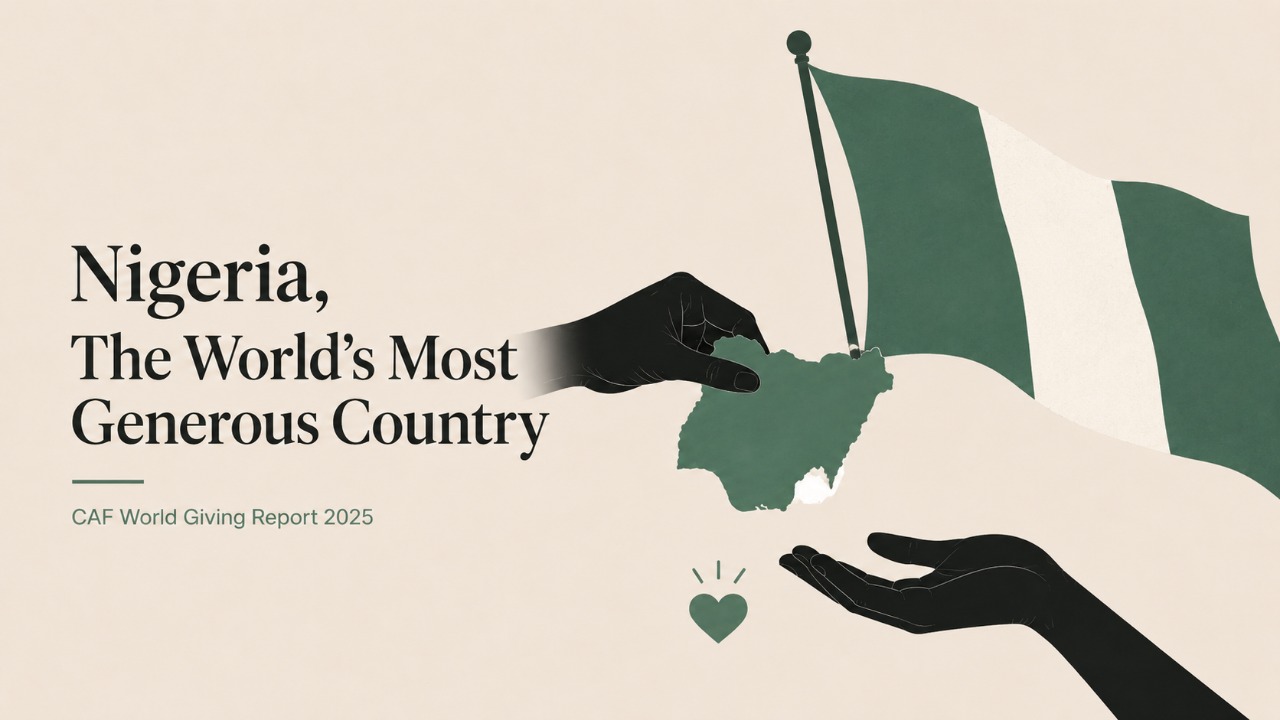
Nigeria has been ranked the most generous country in the world, according to the Charities Aid Foundation's World Giving Report for 2025.
The ranking places Nigeria above wealthier nations including the United Arab Emirates, Qatar, and China, despite the country's high poverty rate.
An estimated 141 million Nigerians currently live below the poverty line, making the ranking one of the more unexpected findings in this year's report.
The report is based on a survey of more than 60,000 people across over 100 countries. Researchers measured how much people donate to charity, how much time they spend volunteering, and how often they help strangers.
Nigeria's results stood out across nearly every category CAF tracked, particularly in the percentage of income donated and the overall share of the population that gave money at all.
Nigerians Donated More of Their Income Than Any Other Country Surveyed
According to CAF, 89% of Nigerians donated money in 2024. This is the highest percentage recorded among all countries surveyed, ahead of nations with significantly higher average incomes.
Nigerians also gave an average of 2.83% of their personal income to charity, religious causes, or people in need, ranking the country first in the world on that specific measure.
The report also found that Nigerians volunteer an average of 13.5 hours per year, a figure well above the global average.
On a continental level, CAF's data shows that Africans donate an average of 1.6% of their income, compared to 0.6% in Europe, a gap the report describes as consistent across multiple years of survey data.
Egypt placed second in the overall ranking, with residents donating 2.45% of their income. Ghana and China tied for third place at 2.19%. Kenya ranked fifth at 2.13%, followed by Uganda in sixth place at 2.04%.
The United Arab Emirates, Qatar, and India tied for seventh place at 1.92% each. Malawi completed the top ten at 1.80%. Seven of the ten countries on the list are African nations, a pattern CAF's report attributes partly to shared cultural and religious traditions across the continent.
CAF noted that its broader World Giving Index, which also factors in help given to strangers alongside donations and volunteering, has produced different country rankings in previous years.
This particular report focused on measurable giving behavior specifically, and on that basis, Nigeria's lead over other countries was clear and consistent across the categories measured.
What Are The Key Drivers Behind Nigeria's Giving Culture?
Researchers who study philanthropy across Africa point to religion as a central factor behind Nigeria's giving culture.
Social Insight
Navigate the Rhythms of African Communities
Bold Conversations. Real Impact. True Narratives.
Almsgiving is a core practice in both Christianity and Islam, the country's two dominant faiths, and religious leaders in both traditions regularly encourage congregations to support people in need as a matter of spiritual obligation rather than personal preference.
Community structure is also cited as a significant driver. Many Nigerian communities operate on a system of shared financial responsibility, in which family members, neighbors, and even strangers contribute toward school fees, medical bills, weddings, and funerals.
This practice is frequently linked to the philosophy of Ubuntu, a concept found across many African cultures that translates roughly as "I am because we are," and which frames individual wellbeing as inseparable from the wellbeing of the surrounding community.
This kind of giving often happens outside any formal donation system, through direct contributions between individuals rather than through registered charities. Weddings in many Nigerian communities are partly funded by guests who make cash contributions on the day.
Funerals frequently draw financial support from neighbors and extended family before formal fundraising begins. Medical expenses are commonly split across relatives living in different cities or countries, coordinated informally through phone calls and messaging groups rather than official channels.

Separately, the African Philanthropy Forum reported that Nigerians rank themselves 22nd in self-perceived generosity, a figure far below the country's actual global ranking.
Researchers at the organization describe this gap as evidence that Nigerians tend to view giving as an ordinary part of daily life rather than as something exceptional or worth drawing attention to, which may explain why the practice remains widespread even without external recognition.
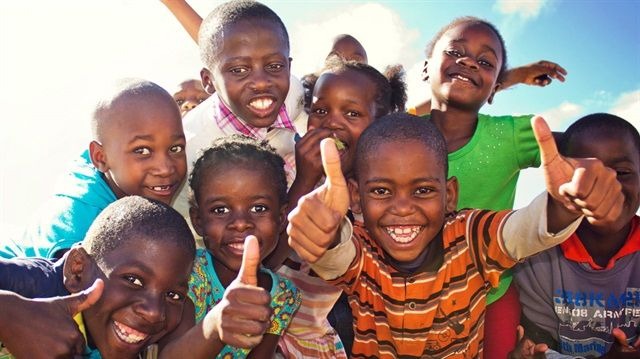
How Come Economic Hardship Has Not Reduced Giving in Nigeria?
The report arrives at a time when Nigeria continues to face significant economic pressure, including persistent inflation and currency devaluation that have reduced household purchasing power in recent years.
CAF's data suggests that this economic hardship has not reduced the country's giving culture, and researchers studying the trend say the two factors may in fact be connected rather than working against each other.
In many communities, family and neighborhood support networks function as an informal safety net where formal social services are limited or unavailable. When a person cannot access affordable healthcare, cover school fees, or absorb an unexpected expense through government assistance, that gap is frequently filled by relatives, neighbors, or community members instead.
This dynamic, researchers note, tends to sustain high levels of giving even during periods of economic difficulty, since the giving is tied to need within the immediate community rather than to disposable income at a national level.
CAF's report does not attempt to measure the full scale of this informal giving, since most of it takes place outside registered charities and goes unrecorded in financial systems.
The survey methodology relies on self-reported donations, volunteer hours, and instances of helping strangers, which means the actual scale of community-based giving in Nigeria could be considerably higher than the report's figures suggest.
What the Ranking Signals About Nigeria's Broader Giving Culture Going Forward
CAF has indicated it will continue tracking global giving patterns in future editions of the World Giving Report, and researchers within the organization say they expect Nigeria's position to remain strong given how deeply giving appears embedded in the country's religious and social structures.
Social Insight
Navigate the Rhythms of African Communities
Bold Conversations. Real Impact. True Narratives.
For now, the 2025 findings place Nigeria at the top of a global ranking it has not previously led, based on a measure CAF says reflects actual giving behavior rather than public perception or self-assessment.
The finding adds to a broader pattern the report identifies across Africa and parts of Asia, where countries with lower average incomes consistently report higher rates of personal giving than wealthier nations in Europe and North America.
Researchers say this pattern challenges a common assumption that generosity scales directly with income, suggesting instead that cultural and religious frameworks may play a larger role in shaping giving behavior than economic capacity alone.