Nigeria Is One of the World's Biggest AI Users. But Where Is the Economic Value?
Nigeria has one of the world's highest AI adoption rates, but widespread usage has yet to translate into enough local jobs, businesses, exports and economic value.

Nigerians use AI more than almost anyone else on the planet. A research from January 2026 puts adoption among Nigerian adults at 88% which stands as the highest rate recorded anywhere, with growth of 18% points in a single year.
The rate of enthusiasm is even higher. About 77% of online Nigerian adults say they are excited about AI, again the highest share globally, compared with roughly a third of Americans.
ChatGPT remains the most downloaded AI app in the country, and low income markets like Nigeria are adopting generative AI at more than four times the rate of wealthy nations.
On paper, this looks like a country positioned to ride the AI wave into economic growth. In practice, the numbers are complicated.

The Billions Nigeria Is Projected to Gain, and Hasn't Yet
Multiple projections put a price on what AI could do for Nigeria's economy. One estimate puts the added GDP contribution at 15 billion dollars by 2030.
Another, more recent projection stretches that timeline and raises the figure to 22 billion dollars by 2035. A separate calculation suggests that every dollar invested in digital technology in Nigeria, AI included, returns roughly eight dollars in economic value.
These are projections. They describe a revenue level Nigeria could reach, not one it has already secured.
Where the Value Is Actually Landing
Most of the documented economic value tied to AI and digital tools in Nigeria so far comes from foreign platforms and not Nigerian companies.
Google's products alone generated an estimated 1.8 billion dollars in economic activity in the country in a single recent year.
Meta platforms support around 14 million Nigerian small businesses, and businesses using those tools reportedly generated 820 million dollars in value in one year alone.
It is clear Nigerian entrepreneurs are extracting real value from AI powered tools built elsewhere. But it means the profit model looks familiar.
Nigerians supply the usage, the engagement, the daily habit that makes these platforms valuable, while the platforms, headquartered abroad, capture the infrastructure revenue, the advertising revenue and the data value.
Nigeria hosts roughly 50 tracked AI startups, more than any single African country, but a founder count is not the same as a funding count.
Getting the first 100,000 dollars in institutional capital remains one of the hardest steps for African AI founders, with accelerator operators reporting that only a small fraction of qualified applicants ever get selected.
Nigerian, Kenyan and South African AI startups together absorb the bulk of the continent's venture capital, but in fintech, not AI and this still eats the largest share of that capital pool.
Individual Use Isn't the Same as Institutional Value
The 88% adoption figure mostly describes individuals using ChatGPT, Gemini or Claude to write assignments, draft messages, edit photos or shortcut a task.

This rarely converts into anything that shows up in GDP data, tax revenue or export earnings, because most of that usage happens outside any structured business process.
Contrast that with firm level adoption. Around 74% of digitally enabled businesses across Nigeria are already using AI tools to automate operations.
That number matters more for the economy than the individual figure, because firm level adoption is what eventually shows up as productivity gains, cost savings and, in time, new jobs.
Yet even that adoption is largely tool use, plugging into someone else's AI product rather than building and selling one.
The Skills Gap Sitting Underneath the Usage Gap
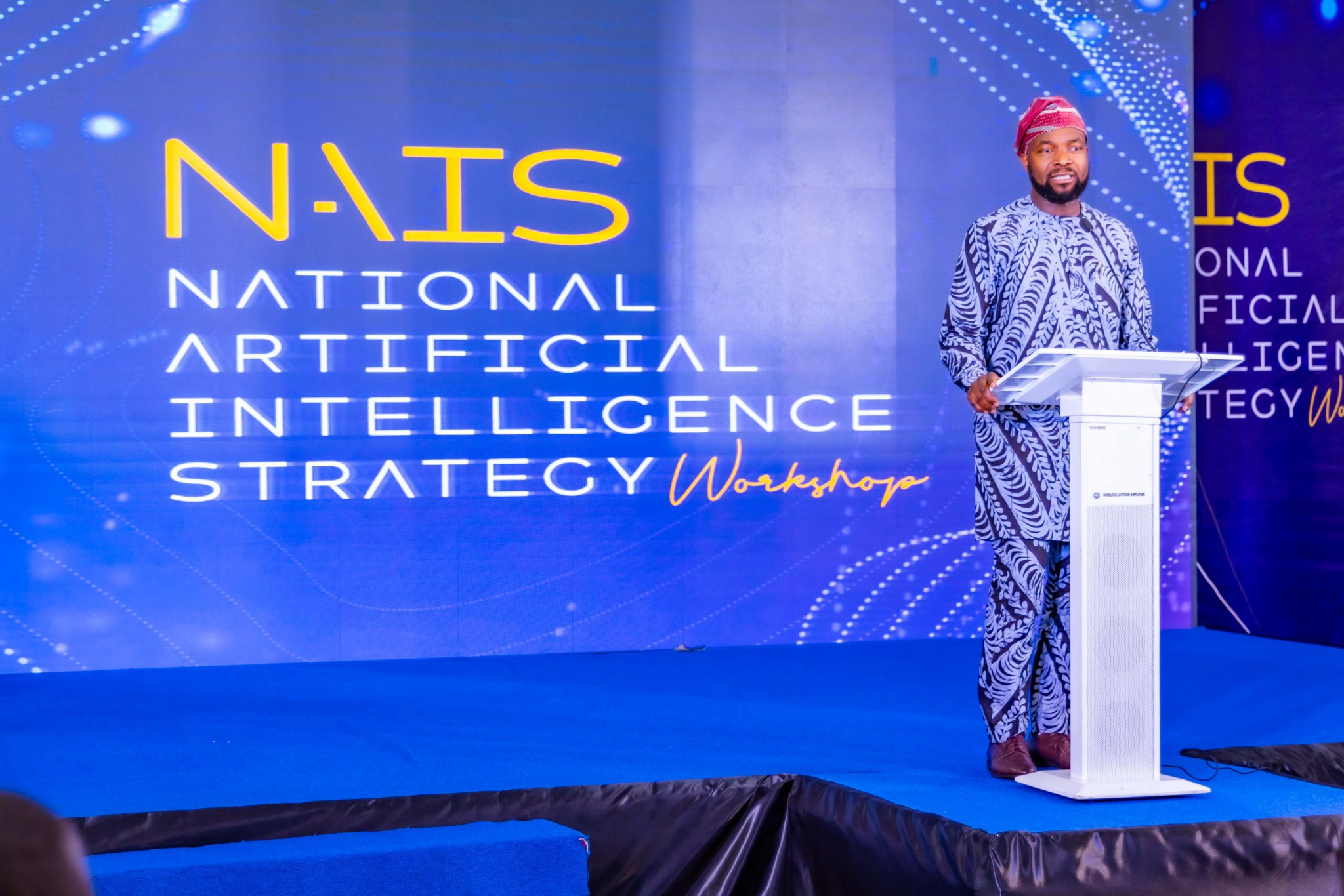
Nigeria's National AI Strategy has a target of equipping 70% of its workforce with AI skills by 2030.
That target exists precisely because the current skills base cannot support the kind of economy the adoption numbers imply.
Training programs exist and enrollment is growing, but the pace of skilled talent leaving the country for opportunities abroad continues to outstrip the pace of new talent development at home.
A country can post the highest AI usage rate on earth and still lack enough AI engineers, data scientists and product builders to turn that usage into exportable products.
What Economizing AI Would Actually Require
Closing the gap between usage and value means shifting from consumption to production.
It means more capital reaching Nigerian AI founders past the earliest and hardest funding stage, more locally built tools solving Nigerian problems in Nigerian languages, and a workforce trained to build AI systems, not just prompt them.
Nigeria has already proven the demand side of this equation and that adoption was never the problem. What is missing is the infrastructure, the capital and the skills pipeline that turns a nation of AI users into a nation of AI earners.
Until that shift happens, Nigeria will keep topping global usage charts while the economic value generated by that usage keeps flowing somewhere else, mostly to platforms far removed from the users doing the actual work of adoption.