Nigeria Has a Law That Could Fix Its Power Crisis. Why Have Most Nigerians Never Heard of It?
Nigeria's Electricity Act 2023 gave states the power to fix their own energy crisis, but most haven't used it. Here is what the law actually says, what full implementation would mean, and why the accountability conversation needs to move beyond Abuja.
Every time the lights go out in Nigeria, which happens often and it's quite exhausting to think about, the conversation usually follows a predictable trajectory.
The presidency always gets blamed. The national grid gets blamed. The minister of power gets summoned in public discourse.
Amidst all the blame distribution, generators roar to life across the country, fuel gets bought, money gets spent, and nothing structurally changes.
Nigeria generates barely 4,000 to 5,000 megawatts (MW) for over 230 million people, against an estimated demand of 40,000MW.
That gap, which is not the first time you are hearing this figure, has not meaningfully closed since 1999.
In this same period of almost 3 decades, over 70% of Nigerian firms have built their own power infrastructure, an unofficial parallel grid that costs businesses enormously and costs the economy more.
The Manufacturers Association of Nigeria has reported that industrial concerns now spend over 40% of their operating costs on energy alone.
That number, by itself, explains a significant portion of why Nigerian manufacturing is uncompetitive, why businesses close, why prices are skyrocketing and why jobs that should exist don't.
Holding the federal government accountable for this is not wrong. The presidency, the national grid, and the relevant ministries carry genuine responsibility which they must implement as their civic duties to their citizens.
But the conversation has been so relentlessly federal in its focus that a significant development, one that was supposed to redistribute that responsibility, has barely registered in public awareness.
That development is the Electricity Act 2023, and it deserves far more attention than it has received.
What the Electricity Act Actually Says and What It Was Supposed to Change
President Bola Ahmed Tinubu signed the Electricity Act into law in 2023, effectively dismantling the legal monopoly that had concentrated electricity authority in Abuja since the sector was first structured.
Before the Act, state governments had no formal legal basis to regulate generation, transmission, or distribution within their own territories.
Power generation and distribution was a federal matter, managed through the national grid, federal generation companies (GenCos), and distribution companies (DisCos), regardless of how badly those structures were performing.
The signed Act changed that architecture. It now empowers states to establish their own electricity regulatory frameworks, licence generation and distribute independently, with room to attract private investment into their local power markets, and tailor energy policy to their own realities.
In practical terms, it means a state government no longer needs to wait for Abuja to fix a problem that Abuja has demonstrably not fixed in close to three decades.
The Act also formalises what many firms and private institutions have been doing informally for years, self-generation.
Companies or private institutions that have invested in their own power infrastructure have legal standing under the Act to operate that infrastructure, expand it, and in some configurations, supply neighbouring businesses.
According to reports from The Punch, Dangote Industries alone generates approximately 1,500MW of the estimated 25,000MW privately generated across Nigeria.

That private generation capacity exists because the national system failed. The Act acknowledges that reality and builds a legal structure around it.
The reason the Act is not more publicly known is, in part, a failure of communication and in part a reflection of how accustomed Nigerians have become to policy announcements that produce no visible change.
When a law passes and the lights remain out, the law feels irrelevant. But the Electricity Act is not irrelevant. It is unenforced and not fully understood.
The States That Have Not Moved and What They Are Costing Their Own People
Nearly three years after the Act was signed, the majority of Nigerian states have not established their own electricity regulatory frameworks.
Adamawa, Akwa Ibom, Bauchi, Benue, Borno, Cross River, Delta, Ebonyi, Gombe, Jigawa, Kaduna, Kano, Katsina, Kebbi, Kwara, Osun, Rivers, Sokoto, Taraba, Yobe, and Zamfara are among the states that have not meaningfully moved.
These are not uniformly poor or resource-constrained states. Some of them are among the wealthiest in the country, and the inaction from these states appears to be a choice.
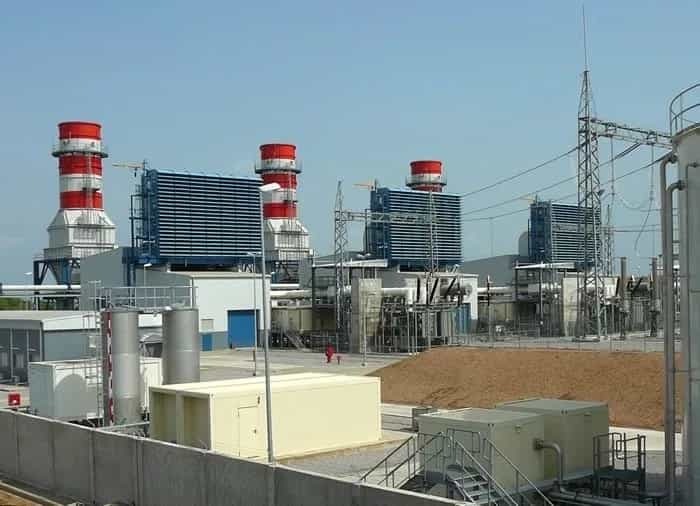
The cost of that choice is visible in the Aba example, just from the opposite direction. The $800 million, 141MW Geometric Power project in Aba, Abia State,supported by the African Export-Import Bank (Afreximbank), has demonstrated what a functioning integrated power model looks like at a local level.
It combines generation and distribution within a defined industrial cluster. At partial capacity, it supplies uninterrupted electricity to tens of thousands of users.
Afreximbank projects that the project will power over 25,000 small and medium enterprises (SMEs) and deliver up to 300,000 indirect jobs when fully operational.
Enugu State offers another data point. By adopting a transparent, data-driven pricing model through its own electricity regulatory commission, Enugu reduced tariffs to N160 per kilowatt-hour (kWh), nearly 23% below the federal average of N209 per kWh, while maintaining cost reflectivity.
The principle and psychology behind all of this is straightforward: Nigerians are not fundamentally opposed to paying for electricity.
They are just resisting paying high tariffs for poor service. Decentralisation allows states to enforce service standards that the national system has never been held to.
What Full Implementation Would Actually Mean and Who Needs to Move
If the Electricity Act were fully implemented across all states, the structural change would be significant.
States could license private generators, attract investment into mini-grids and renewable projects, and create competitive local electricity markets that bypass the inefficiencies of the national grid entirely.
Solar, wind, and small hydro projects could become viable alternatives, not just for urban industrial users, but for rural communities that the national grid has never meaningfully served.
The constraint that remains real is the gas supply. Nigeria's thermal plants depend heavily on gas, but the pipeline infrastructure for execution is inadequate, and commercial frameworks are weak.
The Aba project itself operates below capacity because gas deliveries fall short by as much as 80% at times.
States that move toward electricity independence will need to diversify their generation mix; solar and renewables are not just environmentally preferable; they are practically necessary given the gas supply problem.
The federal government still carries responsibility for gas pipeline expansion, for the national grid's transmission infrastructure, for the framework conditions that make private investment viable.
But the accountability conversation in Nigeria has been so narrowly federal for so long that state governments have largely escaped scrutiny for inaction on powers they already hold legally. That needs to change.
The legal framework for effective power generation in Nigeria exists on paper . Also, the economic case is not debatable, businesses are already spending fortunes generating their own power because the system doesn't work.
The technology is available and in several cases already deployed. The Electricity Act 2023 did not solve Nigeria's power crisis.
But it handed states the tools to begin solving it within their own borders. Nearly three years on, most of them haven't picked those tools up.
That is not just a federal failure. That is a combined failure of both the tiers of government and Nigerians in those states are paying for it daily.