Nigeria Finally Orders Telcos to Compensate Users When Their Networks Fail
The NCC has ordered Nigerian telcos to compensate subscribers with airtime credits when networks fall below quality standards. Here is what the directive means, why it matters, and whether it will actually fix Nigeria's chronic network failures.
Every Nigerian with a SIM card has lived that moment when you are in a mid-transfer on your bank app, mid-call, or mid-deadline, and the network simply vanishes.
There is no explanation or apology, just bars dropping to zero while your frustration rises to ten with no one to pour it directly on.
For years, the ritual response to this was to switch networks, buy a second SIM, turn an unauthorized pilot toggling the airplane mode on your phone or just quietly accepting that this was just the cost of living in Nigeria's telecoms landscape.
The Nigerian Communications Commission just decided that the cost should no longer fall on the subscriber.
On March 29, 2026, the NCC issued a directive ordering Mobile Network Operators, MTN, Airtel, Glo, and 9mobile, to compensate subscribers directly when poor service falls below the Commission's prescribed Quality of Service Key Performance Indicators.
The compensation will not come as refunds or cash. It will come as airtime credits, calculated based on each subscriber's average spending patterns and their presence in the Local Government Areas where the service failures occur.
Why This Directive Is Inevitable
The numbers have been building toward this moment for some time. Between January and May 2025 alone, Nigerian telecom operators recorded 89 major network outages across the country.
9mobile led the collapse with 31 incidents, MTN recorded 25, Globacom logged 20, and Airtel reported 13.
Approximately 70 percent of these failures were traced to fibre cuts caused by roadworks and vandalism, infrastructure vulnerabilities that operators have known about and, by the evidence of repeat incidents, done little to permanently resolve.
Some of these outages stretched beyond eight hours, and for millions of Nigerians, that is not just an inconvenience.
It is a lost business day, a failed bank transfer, a missed client call. A student locked out of an online examination or is entirely locked out from online research.
The economic damage of Nigeria's chronic network failures has never been properly quantified, but every subscriber, you and I, who has watched their mobile data spin uselessly while a time-sensitive task waits, knows the price intimately.
What makes the NCC's directive particularly significant is its departure from the traditional enforcement playbook.
For years, regulatory penalties in Nigeria's telecoms sector meant one thing: fines paid to the government. Operators were sanctioned, cheques were written, and subscribers received nothing.
Latest Tech News
Decode Africa's Digital Transformation
From Startups to Fintech Hubs - We Cover It All.
The new directive flips that logic. When a network fails to meet quality standards in your area, the airtime credit goes to you, not into a regulatory coffer.
That is a meaningful shift in whose interests the enforcement mechanism actually serves.
What Telcos Must Do Now and What Subscribers Should Expect
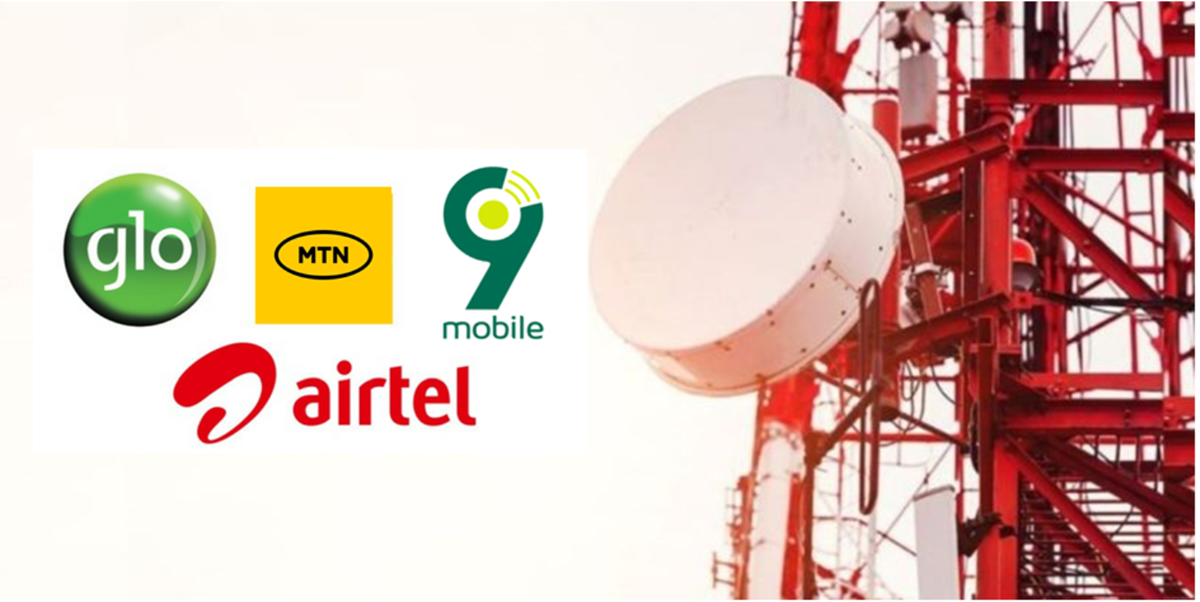
The directive does not stop at mobile operators. Tower companies, the firms that own and operate the physical infrastructure of masts and base stations on which all four networks depend, have also been brought into the accountability framework.
The NCC has mandated that these companies reinvest funds, including fines, into infrastructure improvements with measurable outcomes.
It is an acknowledgement that poor service quality is a chain problem, and fixing it requires pulling every link.

For operators, the financial implications are significant. Consistent service failures will now carry a double cost, regulatory fines and direct subscriber compensation running simultaneously.
The commercial incentive to improve network resilience has never been stronger. Whether that incentive is strong enough to drive the kind of infrastructure investment Nigeria actually needs, fibre protection, redundancy systems, and faster fault response, remains to be seen.
For subscribers, the immediate expectation should be tempered. Airtime credits are welcome, but they do not restore the hours lost to a dead network or the transactions that failed at the worst possible moment.
The real test of this directive is not whether telcos pay compensation when networks fail. It is whether the threat of paying compensation makes networks fail less often.
Nigeria has had enough policies that addressed symptoms. What the telecoms sector has always needed is a policy that removes the disease.
This one, at minimum, makes the disease expensive enough that operators might finally be motivated to cure it.