Judicial Showdown: Chief Justice's Vacation Hearings Spark Fiery Legal Battles and Political Outcry!
Ghana is grappling with a contentious debate over criminal trials conducted during the legal vacation, raising concerns about political impartiality and judicial discretion. While some question the unusual timing, especially for politically sensitive cases, others emphasize the Chief Justice's authority and the legal basis for courts to operate during this period, set against the backdrop of Ghana's anti-corruption drive.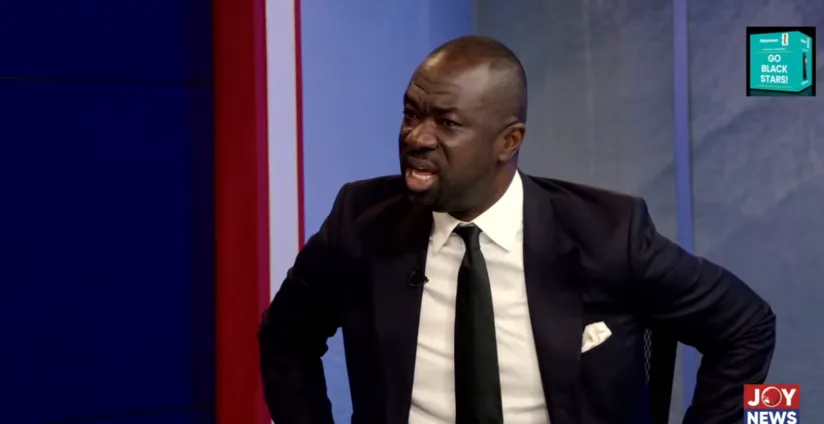
Ghana's legal system is currently embroiled in a significant debate concerning the scheduling of criminal trials during the traditional legal vacation. This controversy, which has garnered attention from politicians, legal experts, and the public, revolves around questions of judicial discretion, political impartiality, and the integrity of democratic institutions.
Nana Agyei Baffour Awuah, the New Patriotic Party (NPP) Member of Parliament for Manhyia South, has vocally questioned the decision to proceed with criminal trials during this period. He argues that the primary concern is not merely the constitutional authority of courts to sit during the vacation, but rather the unusual practice of holding trials when they are generally not undertaken. According to Mr. Baffour Awuah, this issue is exacerbated when the cases involve individuals associated with a particular political party, creating a perception of political targeting. He warns that such practices, if not adequately explained, could undermine public confidence in Ghana's democratic institutions. He emphasized that departing from normal judicial practice without compelling, transparent reasons can lead to suspicions of “vindictiveness” and a system where political considerations influence justice administration, threatening the development of robust democratic institutions.
Conversely, international corporate lawyer Victoria Bright has rejected claims that the warrants issued by Chief Justice Paul Baffoe Bonnie, authorizing judges to sit during the legal vacation, were specifically intended to facilitate hearings for a few high-profile or politically sensitive cases. Speaking on JoyNews’ Newsfile, Ms. Bright clarified that the impression of selective targeting is inaccurate. She noted that 26 vacation judges have been appointed nationally, covering courts across various regions in Ghana, and that the warrants are not confined to individual named cases. Ms. Bright further asserted that the legal vacation does not signify an “absolute jurisdictional shutdown,” citing Order 79, Rule 1.1 of C.I. 47. This rule, subject to the Courts Act, empowers the Chief Justice to appoint any day for case hearings, including during the vacation, as circumstances require, reinforcing that courts retain jurisdiction during this period.
The broader context of this debate is Ghana's intensified efforts to combat corruption and reshape its economy, epitomized by initiatives like the government's “Operation Recover All Loot (ORAL).” This drive sees prosecutors preparing dozens of cases for trial, raising questions about whether the two-month court vacation could impede the momentum of these anti-corruption efforts. The discussion is set against a backdrop of several high-profile controversies, including disputed losses of US$1.7 billion in the Domestic Gold Purchase Programme involving GoldBod, allegations of bribery surrounding the AKSA power deal and a former Goldman Sachs banker, and a due-process dispute over the government’s revocation of Adamus Resources’ mining leases. These cases highlight ongoing battles over money, power, accountability, and the law, prompting critical questions about who scrutinizes the state when it exercises significant power.
Adding another dimension to the discourse, Majority Chief Whip Rockson-Nelson Dafeamekpor suggested that the dispute between lawyers and the Chief Justice could have been resolved through negotiation. He noted that it is not uncommon for cases to extend into the legal vacation, and lawyers often negotiate with judges for limited hearings before adjourning to the new legal year in October. Dafeamekpor implied that such an approach, if adopted, could have defused the current contention. He also pointed out that expeditious hearings during vacation could benefit clients by shortening litigation times. However, this perspective contrasts with the Chief Justice Paul Baffoe-Bonnie's stance, who has rejected the notion that lawyers can decline to proceed with cases simply because they are scheduled during the legal vacation. This has led the Ghana Bar Association (GBA) to appeal to the Chief Justice to ensure judges uphold established rules and traditions governing Ghana’s legal vacation, particularly when lawyers indicate unavailability.
Ultimately, the controversy underscores the delicate balance between judicial efficiency, procedural fairness, and public perception in a democratic state. While legal frameworks allow for judicial activity during vacations, the public's confidence in the justice system relies heavily on the transparent, consistent, and seemingly impartial application of legal processes, especially in cases with political implications.