Is Your Parenting Protecting Your Child or Programming Classism?
A reflective parenting commentary on how classism is subtly taught at home, shaping children’s values, relationships, and society at large in Africa.

In many African homes, the language of equality is always loud. You would always hear respect for your elders and to one another, treat everyone equally. Many parents spend time with their children teaching them to greet elders, to be humble and to always remember that “we are all the same.” Yet beneath all these lessons, another message has circulated for ages and often slips through unnoticed. It shows up in which friends are encouraged and which are discouraged. It appears in subtle warnings about “that kind of family should not be associated with,” in pride about proximity to power, and in anxiety about status. Ironically, this happens in societies where the average parent is not part of the high-earning class. Across Africa, a large proportion of households live with very modest savings, sometimes less than a few hundred dollars in their bank accounts, navigating rising costs and fragile economic security. Still, classism persists so quietly, not because people are wealthy, but because social hierarchy has become deeply embedded in the daily lives of these individuals measuring how success, dignity, and worth are imagined and perceived.
This is where parenting becomes complicated. Many parents believe they are protecting their children, positioning them for a better future, or shielding them from hardship and bad influence. But in the process, they may be quietly passing down ideas that rank human value by background, connections, behavior or perceived class. What begins as concern can easily turn into conditioning, shaping how children see others and, eventually, how they see themselves.
How Classism Is Learned at Home Before It Is Understood
Children do not wake up one day and decide that some people matter more than others. These ideas are learned long before they can articulate them. In African households, classism often enters through everyday conversations and decisions. A parent discourages a friendship because the other child or their parents are “not serious or the child is not smart enough to be associated with” A relative’s success is praised not for character or effort, but for who they know. A school is chosen less for values and more for the social opportunities and network it offers. Over time, children absorb the message that background determines destiny.
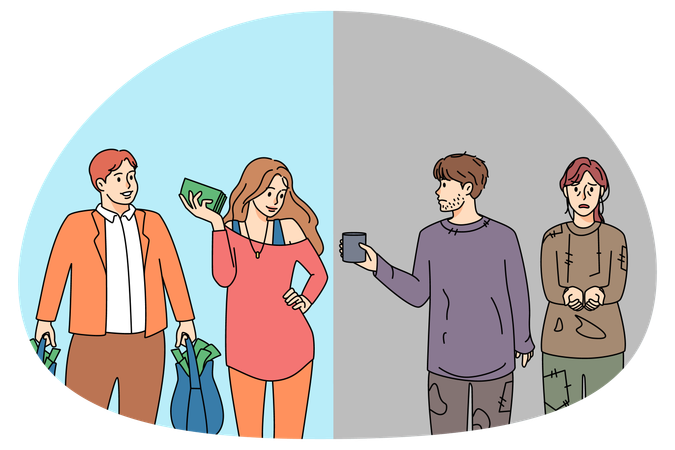
What makes this particularly striking and interesting to read is that many parents who reinforce these ideas have themselves experienced exclusion. They know what it feels like to be denied access because of tribe, accent, school, surname, or lack of connections. So many of these parents have vowed to give their own children better and so once they gain a sense of upward mobility or financial growth, the instinct to separate their children from “lesser” backgrounds becomes strong. It becomes a way of saying, “My child will not suffer what I suffered.” Unfortunately, this protective instinct can slide into superiority, teaching children to measure people by status rather than humanity.
Classism in African parenting is also deeply tied to social performance. Parents worry about what others will say, who their child associates with, what their child can do or has done and how that reflects on the family overall image. Respectability becomes currency. Children learn that being seen with the “right” people opens doors, while being associated with the “wrong” ones can close them. These lessons shape how children approach relationships, often making them transactional long before they are conscious of it.
The Cycle of Aspiration, Envy, and Contradiction
One of the most revealing aspects of classist parenting is its contradiction across generations. Many young adults carry grand dreams for their future children. They promise themselves that their children will attend the best schools, move in elite circles, and have access they never had. There is nothing wrong with aspiration. The problem emerges when aspiration turns into entitlement and exclusion.

Interestingly, some of these same young adults feel resentment when they see their peers enjoying the very access they dream of providing for their own children. They question how others “got there,” attributing it to luck and nepotism, sometimes dismissing it as privilege or unfair advantage. What is often forgotten is that those peers are someone else’s children, children whose parents likely made similar vows like them years earlier. The envy exposes two uncomfortable truths: classism hurts not only those excluded, but also those who internalize the idea that worth is a competition and classism isn't bad when it favors you, it is only painful when you're excluded.
This contradiction reveals how deeply class narratives distort relationships. Friendships become strained by comparison. Respect becomes conditional. Empathy weakens. When children are raised in environments where status is emphasized over character, they grow into adults who struggle to relate across differences. They may succeed materially but remain insecure, constantly measuring themselves against others and fearing loss of position or power.
Over time, this mindset reproduces itself. Children raised with classist values grow up to be parents who repeat them, often unconsciously. What was meant to be “giving my child the best” becomes “teaching my child that others are less.” Society absorbs these lessons quietly, until inequality feels normal and exclusion feels justified.
Parenting Without Hierarchy: Raising Humans Before Status
Healthy parenting does not ignore reality. It does not pretend that class, privilege, and access do not exist. Instead, it teaches children how to navigate these realities without dehumanizing others or inflating themselves. This requires intention. Parents must recognize that children are always watching, always listening, and always learning from how adults speak about others.

When parents model respect across social lines, children learn that dignity is not earned by status. When curiosity replaces judgment, children learn to value difference rather than fear it. When parents correct themselves after making dismissive comments, they show that growth is possible. These moments matter more than grand lectures about equality.
At the very basis, parenting shapes society because the family is its smallest unit. A society where children are raised to look down on others cannot sustain trust, cooperation, or justice. Arrogance and dismissal fracture communities just as much as poverty does. Conversely, a society that raises children to recognize shared humanity, even amid inequality, lays the groundwork for healthier institutions and relationships.


This does not mean denying children opportunities or discouraging ambition. It means grounding ambition in humility. It means teaching children that access is a responsibility, not a badge of superiority. It means reminding them that their value is not threatened by someone else’s background, and that respect should never be conditional.
Classism is not only a social problem; it is a parenting problem. And like most parenting issues, it is inherited more often than it is questioned. Breaking the cycle requires parents and future parents to pause and ask difficult questions about what they are really teaching their children. In doing so, they do more than raise kinder individuals and at the very needed level, they help shape a society where success does not require the erasure of empathy.