Global Tensions Ignite: Trump Deploys Marines to Hormuz as Iran War Casualties Mount
The United States has deployed thousands of Marines to the Strait of Hormuz amid escalating tensions with Iran, raising fears about global oil supply and ground troop involvement. As the US death toll climbs and gas prices soar, international criticism mounts regarding the war's objectives and leadership, even as evacuation efforts are underway for stranded American citizens.
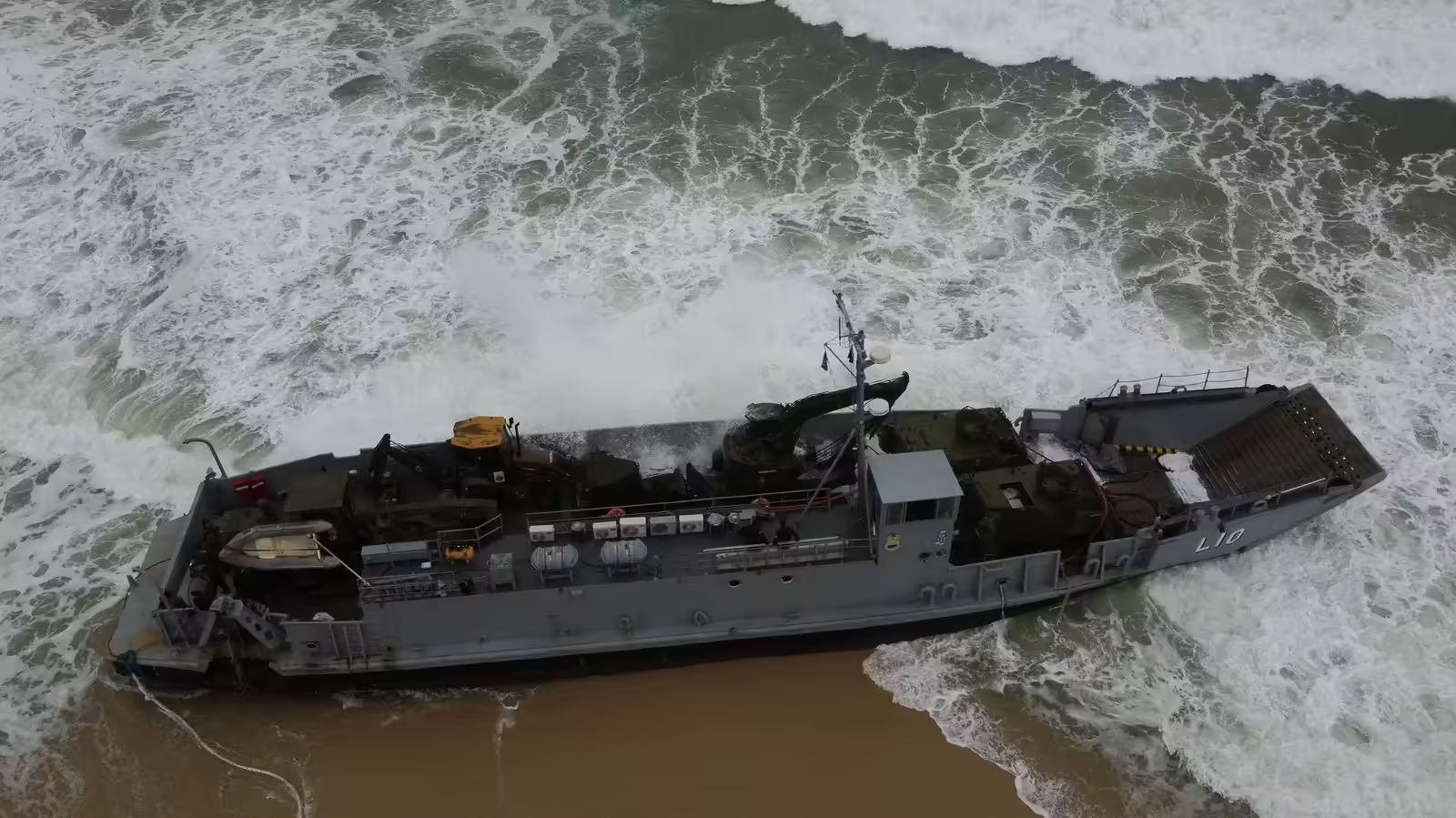
The United States has deployed thousands of Marines to the Strait of Hormuz, with Secretary of War Pete Hegseth approving a request for a Marine expeditionary unit comprising several warships and 5,000 troops, as the Trump administration reportedly considers seizing Iran's Kharg Island, which handles 90 percent of the Islamic regime's fuel exports.
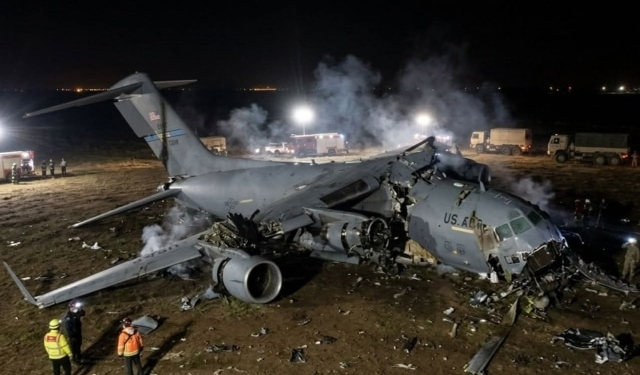
The conflict has intensified with the US death toll climbing to 13 troops, including six Army reservists killed in a KC-135 crash identified as Nicole Amor, Cody Khork, Declan Coady, Robert Marzan, Jeffrey O'Brien, and Noah Tietjens, while domestic gas prices have soared to $3.60 per gallon, up from $2.90 before the war.
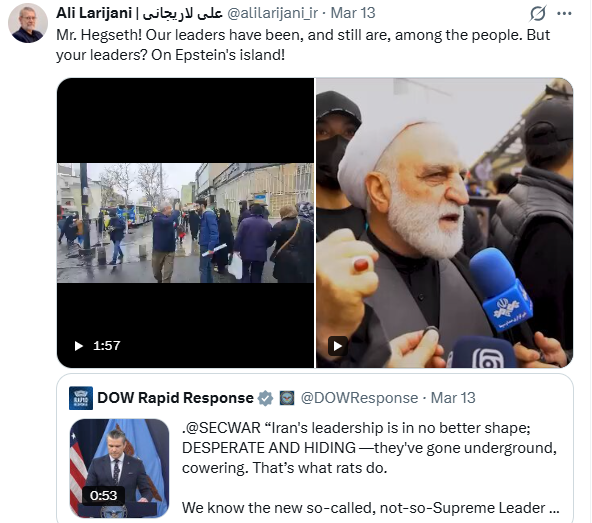
Iran's security chief Ali Larijani defiantly taunted Trump on the streets of Tehran, while Iranian missiles hit the Thai-flagged cargo ship Mayuree Naree in the Strait of Hormuz and explosions rocked Dubai's International Finance Center, with the Strait of Hormuz — through which a fifth of the world's oil flows — remaining under siege.
Amidst escalating conflict and widespread flight cancellations, El Al Israel Airlines is operating six special flights from Tel Aviv to New York to evacuate stranded Americans, while the U.S. State Department has authorized up to $40 million in emergency funds and evacuated over 50,000 Americans on more than four dozen charter flights.

Proponents of the conflict argue for two legitimate aims: weakening a regime accused of terrible evil against its own people, and reducing its ability to threaten neighbors, particularly citing Israel's desire to "defang" an enemy that explicitly seeks its elimination after the October 7, 2023, attack.
Critics contend the war is unlikely to achieve its goals, warning that Iran's deeply entrenched apparatus means removing leaders would likely result in replacement rather than fundamental change, while the conflict has inadvertently benefited Vladimir Putin, whose fossil fuel revenues have increased partly due to the US temporarily lifting sanctions on Russian oil.
Critically, if the regime survives, it may double down on its nuclear ambitions, reasoning that a nuclear deterrent is the best guarantee against US attack, akin to the "North Korea principle," while the war has also seen Iran directly attack its neighbors, potentially prompting Gulf states to reconsider their alliances with the US and Israel.
The leadership guiding this war has faced severe criticism, with Benjamin Netanyahu described as obsessed with the Iranian threat and heedless of consequences, Donald Trump criticized for entering the war with no clear aims or plans, and Secretary Hegseth characterized as a "cable TV nonentity high on the smell of death" who confuses it for testosterone.