Ghana's Mining Tug-of-War: Nationalization vs. Revenue, Who Wins?
The JoyBusiness Roundtable discussion on Ghana's extractive sector highlighted the need for strategic transformation over nationalization. Experts called for robust policy frameworks, innovative hybrid financing models, and equitable royalty distribution to maximize national benefits and enhance local participation in the gold, oil, and critical minerals industries.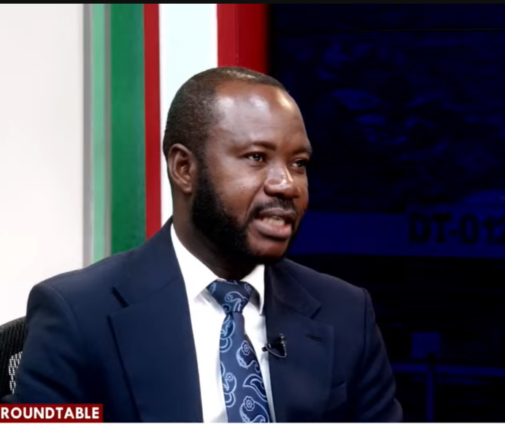
Ghana, a nation historically rich in gold and other minerals for over a century, and more recently an emerging player in commercial petroleum production and critical minerals like lithium, is currently grappling with a fundamental question: how to ensure its vast extractive wealth genuinely benefits its citizens.
This pressing issue was the central themeof the JoyBusiness Roundtable discussion, "To Nationalise or Transform: Rethinking Ghana’s Approach to Gold Mining, Oil and Critical Minerals," held on Tuesday, May 26, bringing together a diverse array of industry experts, policymakers, academics, and governance leaders.
Economist Dr. Adu Owusu Sarkodie, Executive Director of the Centre for Policy Scrutiny, highlighted a critical concern: Ghana is not receiving sufficient public finance returns from its mining sector.
Despite gold production alone generating an estimated US$21 billion (approximately GH¢264 billion) in 2024, significantly exceeding government revenue and grants, the contribution to public finance remains relatively low.
Dr. Sarkodie cited research by the Institute for Fiscal Studies, indicating that between 2011 and 2018, Ghana's economic rent from mining was estimated at US$43 billion, yet the government only captured about US$4.5 billion, representing a mere 10.4 percent.
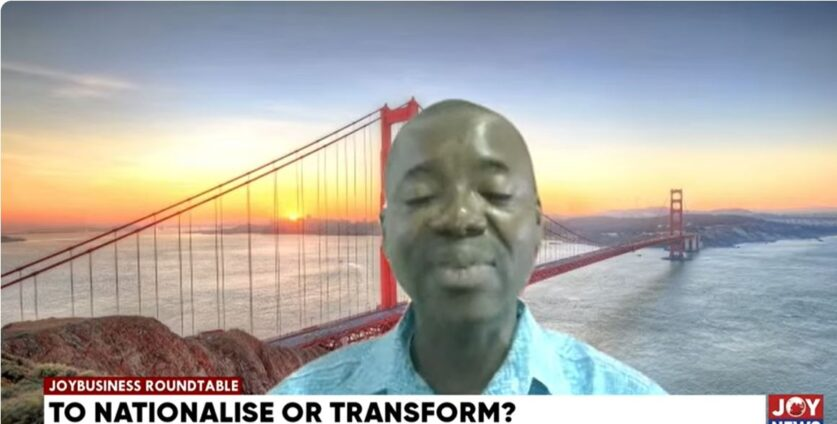
He stressed the need for a tactical approach to increase the mining sector's contribution to public finance, advocating for deliberate policy choices to strengthen revenue mobilization and deepen value retention.
Adding to the concerns regarding revenue structure, Ken Ashigbey, CEO of the Ghana Chamber of Mines, revealed an imbalance in royalty contributions.
He pointed out that multinational mining companies, despite accounting for a smaller portion of Ghana’s total gold production, contribute a disproportionately higher share of royalties.
For instance, US-owned firms contributed 12 percent of production but paid 23 percent in royalties, and South African firms, with 18 percent production, paid 37 percent.
In stark contrast, the small-scale mining sector, responsible for 52 percent of production, paid "virtually nothing" in royalties.
Mr. Ashigbey also lamented that only 8 percent of mineral royalties are disbursed into mining areas, with the majority (78 percent) flowing into the Consolidated Fund, leaving local communities with limited direct benefits for development projects.
He called for a national conversation to reform this distribution system.
Amidst calls for greater national control, a consensus emerged among experts cautioning against an abrupt move towards full nationalization.
Wisdom Puplampu, a mineral economist at the Minerals Commission, argued that nationalization alone would not automatically guarantee greater financial benefits for the state.
He warned that such a move could create uncertainty and send negative signals to potential investors, potentially jeopardizing corporate income tax revenues that efficient private operators currently provide.
Similarly, Dr. Frank Boateng, a lecturer at the University of Mines and Technology (UMaT), recalled Ghana’s past unsuccessful experiments with state ownership due to the immense capital requirements of the industry, which led to the sector's eventual privatization.
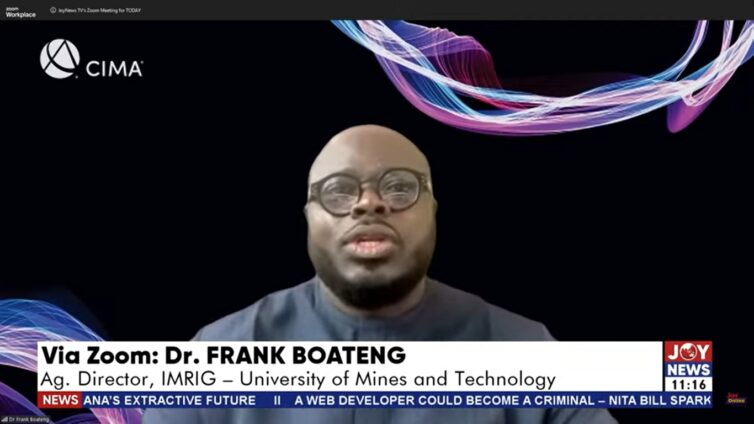
Both experts emphasized that "it takes so much to build a gold mine," a financial demand often beyond the reach of local investors.
Dr. Owusu Sarkodie also advised a gradual, tactical transition towards increased state participation, highlighting the risks of radical policy shifts and referencing international models adopted by other resource-rich nations that pursue stronger state involvement.
Instead of nationalization, experts at the JoyBusiness Roundtable advocated for strategic reforms supported by strong policies and innovative financing.

Gideon Ayi-Owoo called for clear and forward-looking mining policies to reduce uncertainty and encourage reinvestment.
He also emphasized that industrialization goals should be included in mining agreements and lease conditions to ensure Ghana gains long-term benefits from its mineral resources.
Wisdom Puplampu proposed a hybrid financing model that combines equity financing through the Ghana Stock Exchange with loans from local banks to strengthen indigenous mining companies.
He also urged the National Pensions Regulatory Authority to allow part of pension funds to support long-term mining investments.
Both Puplampu and Dr. Boateng emphasized the need for foreign direct investment (FDI) and public-private partnerships (PPPs) to provide capital, expertise, and efficiency for sustainable mining growth.
In conclusion, the JoyBusiness Roundtable highlighted the need for strategic reforms instead of full nationalization.
Key priorities include clear policies, innovative financing, fair royalty distribution, and stronger state and local participation to maximize benefits from Ghana’s mineral resources while still attracting investment.