Ghana Mourns as Trailblazing Former First Lady Nana Konadu Agyeman-Rawlings Passes Away
Ghana mourns the passing of Nana Konadu Agyeman-Rawlings, former First Lady and a pivotal figure in the nation's political and social history, who died at 76. Renowned as the 'Iron Lady' and founder of the 31st December Women's Movement, she was a relentless advocate for women's empowerment and the first woman to contest the presidency in Ghana.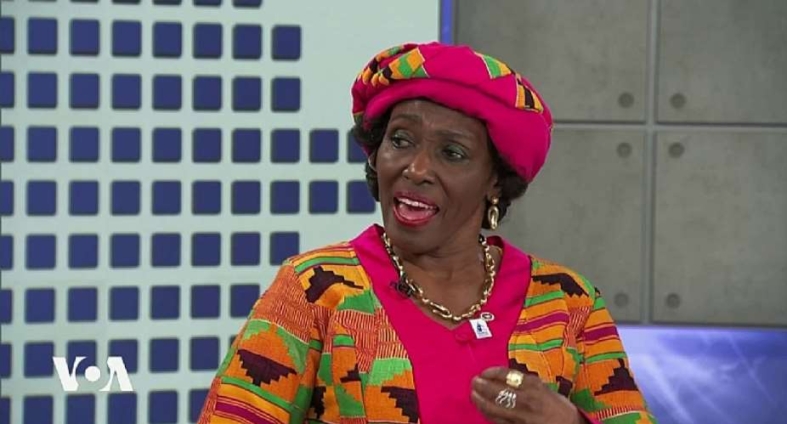
Ghana mourns the passing of a titan, Nana Konadu Agyeman-Rawlings, who died on Thursday, October 23, 2025, at the age of 76. Often referred to as the ‘Iron Lady’ of Ghanaian politics, she closed an extraordinary chapter in the nation's history, leaving an indelible mark as a formidable advocate for women's rights, an uncompromising political force, and a trailblazer who shattered political glass ceilings, becoming the first woman to run for president in Ghana.
Born Nana Konadu Agyeman on November 17, 1948, in Cape Coast, Central Region, her intellectual journey began at the prestigious Achimota School, where she met her future husband, Flt. Lt. Jerry John Rawlings. She pursued Art and Textiles at the Kwame Nkrumah University of Science and Technology (KNUST) and further honed her skills with an Interior Design Diploma from the London College of Arts in 1975. Her thirst for knowledge continued with a diploma in Advanced Personnel Management and a certificate in Development from GIMPA, reflecting a lifelong commitment to learning and societal progress.
Her life became inextricably linked with Ghana’s political trajectory upon her marriage to Rawlings in 1977. She served as First Lady during two pivotal periods: briefly in 1979 during the Armed Forces Revolutionary Council (AFRC) era, and then for nearly two continuous decades, from December 31, 1981, to January 7, 2001. This spanned the Provisional National Defence Council (PNDC) military rule and the two civilian terms of the Fourth Republic, marking her as the longest-serving First Lady in Ghana's history. This unparalleled longevity provided her with an unprecedented and powerful platform to initiate profound social change.
Nana Konadu Agyeman-Rawlings is perhaps best remembered as the visionary founder and president of the 31st December Women's Movement (31st DWM), established in 1982. Far from a mere ceremonial entity, the movement was a dynamic, grassroots machine dedicated to mobilizing and empowering women, especially in rural Ghana. Driven by her conviction that women held the key to breaking the cycle of poverty, the 31st DWM achieved concrete and widespread transformations, evolving women's roles from passive aid recipients to active political and economic participants.
The movement's accomplishments were vast: it mobilized an estimated two million women nationwide, encouraging their active participation in community and national decision-making. Over 870 pre-schools were established across the regions, freeing women to engage in vital economic activities. The 31st DWM also championed numerous income-generating and small-scale, village-level economic projects, alongside promoting savings for community development. Educational and health initiatives included extensive functional adult literacy programs to combat high illiteracy among rural women, and public health campaigns focused on nutrition and immunization.
Crucially, Nana Konadu Agyeman-Rawlings was instrumental in advocating for significant legal reforms. She played a pivotal role in the adoption of the Intestate Succession Law (PNDCL 111), which drastically improved the inheritance rights of widows and children, dismantling traditional barriers that often left women with no rights upon the death of their husbands. Furthermore, through her tireless efforts, Ghana became the first nation in the world to approve the United Nations Convention on the Rights of the Child (UNCRC) in 1991. She often articulated the movement's political necessity: "Before December 31, 1981, they had no power of influence in law or politics... I can see from the self-esteem and near arrogance of the women that now we've actually been able to break through this thick wall," she once noted, encapsulating the movement's empowering mission.
Even after her tenure as First Lady, Nana Konadu remained an unyielding and potent force within the political arena. Her significant influence led some analysts to characterize her political style as 'femocracy' – a blend of feminist advocacy and political dominance. Her independent political ambition fully blossomed when she served as First Vice Chairperson of the National Democratic Congress (NDC) in 2009. However, her relationship with the party, co-founded by her husband, fractured when she unsuccessfully challenged the late President John Atta Mills for the NDC flagbearership in 2011, a bold move that sent shockwaves through the Ghanaian political establishment.
Her defining act of political courage came when she broke away from the NDC to found the National Democratic Party (NDP). In 2016, she made history as the first woman in Ghana's history to contest the presidency, a monumental step that definitively shattered a major political glass ceiling and inspired a generation. Though securing a small percentage (0.16%) of the votes cast, her candidacy cemented her legacy as an enduring and fearless proponent for women’s leadership at the highest office.
In her final years, Nana Konadu Agyeman-Rawlings remained active in national affairs following the passing of her husband in November 2020. Her recent public appearances included laying a wreath in August 2025 to honor victims of a military helicopter crash, and participating in the Dote Yie funeral rites for the late Asantehemaa, Nana Konadu Yiadom III, accompanied by her adult children, Amina and Kimathi. She is survived by her four children: Zanetor, Yaa Asantewaa, Amina, and Kimathi Rawlings.
The news of her death prompted an outpouring of grief and tributes across Ghana, with social media platforms like X (formerly Twitter) filled with messages describing her as a bold, visionary, and inspirational figure. Many hailed her as "the best First Lady Ghana has ever had" and an "assertive woman." The Government of Ghana, through the Ministry of Government Communications, announced her passing with deep regret and extended its deepest condolences to her family. Parliament adjourned its sitting in her honor, with further official tributes anticipated.
Politicians from across the political spectrum, including Takoradi MP Mr. Kwabena Okyere Darko-Mensah, paid glowing tribute, recognizing her as "a force in the politics of Ghana" whose impact on women’s empowerment and national development can never be erased. He specifically highlighted her instrumental role in mobilizing women through the 31st December Women’s Movement and her championship of the Intestate Succession Law. Nana Konadu Agyeman-Rawlings's life was a testament to grit, conviction, and an unyielding belief in the political and economic potential of Ghanaian women. She leaves behind a nation deeply marked by her tireless activism, her bold political challenges, and the enduring legacy of empowerment she gifted to millions of women across Ghana and the African continent. She was, in the truest sense, a pioneer who carved her own path through the complex and often unforgiving landscape of Ghanaian politics.