Africa Erupts: Zambia Condemns, South Africa Denies Xenophobia Amidst Growing Tensions
South Africa refutes xenophobia accusations, describing recent incidents as isolated, while affirming commitment to dialogue on migration amidst Ghana's call for an AU discussion. Meanwhile, a Zambian Civil Society Organisation condemns the attacks by the Dudula movement, citing constitutional breaches and urging urgent regional intervention to protect African migrants.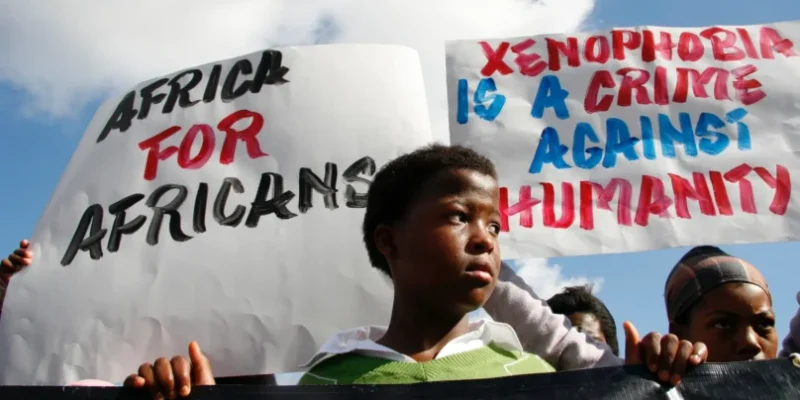
South Africa has officially rejected accusations of xenophobia, characterizing recent incidents involving foreign nationals as isolated cases. The government reaffirmed its dedication to dialogue with other African countries concerning migration challenges, a response prompted by Ghana's request for the African Union (AU) to discuss what it termed “xenophobic attacks” at the upcoming AU Mid-Year Coordination Summit.
Reports of protests against illegal migration, some escalating into violence, have emerged from major South African cities like Johannesburg, Pretoria, and Durban. Demonstrators involved in these incidents have accused foreign nationals of usurping local jobs and business opportunities. In response, the Department of International Relations and Cooperation (DIRCO) stated that law enforcement agencies have been instructed to guarantee the safety of all citizens, residents, and visitors, and to ensure that perpetrators are brought to justice. Foreign Affairs Minister Ronald Lamola has engaged his counterparts in Ghana and Nigeria to reiterate South Africa's commitment to protecting all individuals residing within its borders. DIRCO also refuted social media allegations claiming that Ghanaian and Nigerian nationals had been killed during these protests, stating there was no credible evidence to support such assertions. According to the department, approximately three million migrants reside in South Africa, with around 90 percent originating from other African nations. The South African government acknowledged that issues such as unemployment, irregular migration, and economic pressures have, at times, fueled tensions between local communities and foreign nationals. Pretoria reiterated its commitment to regional migration frameworks and is currently reviewing its immigration policies to enhance the management of migration challenges through cooperation and constructive dialogue.
However, the Consortium of Civil Society Organisations for Good Governance and Constitutionalism has expressed significant concern over the reported xenophobic attacks, particularly those linked to the Dudula movement, which target fellow Africans living, working, and conducting business in South Africa. Clifton Chifuwe, Acting Consortium Spokesperson, condemned the scenes of intimidation, harassment, and public humiliation directed at black Africans, describing them as deeply troubling and offensive to the fundamental principles of African solidarity, Pan-Africanism, and human dignity. In a statement released from Lusaka, Chifuwe highlighted a critical concern: the apparent inadequacy of the South African authorities' response in decisively addressing these acts and ensuring the safety of all persons within their borders.
Chifuwe reminded the South African government and its populace that their own Constitution explicitly upholds the protection of human dignity and freedom from degrading treatment. He cited Section 10, which states that “Everyone has inherent dignity and the right to have their dignity respected and protected,” and Section 12(1)(e), which guarantees everyone the right to freedom and security of the person, including protection from cruel, inhuman, or degrading treatment. Chifuwe underscored that these constitutional guarantees apply universally to all persons within South Africa’s borders, irrespective of their nationality, race, immigration status, or economic standing. He firmly asserted that no group of private citizens, regardless of their grievances, possesses any legal or moral authority to subject fellow human beings to humiliation, intimidation, mob justice, or degrading treatment under the pretext of protecting jobs or communities.
Recalling the historical context, Chifuwe emphasized that South Africa's liberation was not an isolated achievement, but was supported by numerous African nations, including Zambia and Zimbabwe, who stood firmly with the people of South Africa during the apartheid era. He expressed profound sadness at witnessing fellow Africans, whose nations once championed South Africa's cause, now becoming targets of hostility, discrimination, and violence. Concerns were also raised regarding the apparent selective targeting of vulnerable black African migrants while other groups remain unaffected. Chifuwe stressed that any foreign national suspected of violating South African laws, be it immigration, labour, or any other statute, must be handled strictly in accordance with the law by competent state institutions, including the police, immigration authorities, labour inspectors, and the courts. He explicitly stated that the enforcement of law cannot be outsourced to angry mobs, vigilante groups, or xenophobic citizens, whose complaints often stem from a perception that foreign nationals are simply willing to work harder, longer, and under more difficult conditions to earn a living.
Chifuwe further linked the issue to broader continental aspirations, noting that the African Continental Free Trade Area (AfCFTA) represents a vision of an Africa where citizens can trade, work, invest, and interact freely across borders in a spirit of shared prosperity. He warned that actions promoting xenophobia, intimidation, and exclusion not only undermine South Africa’s standing within Africa but also jeopardize the broader continental vision of integration and economic cooperation. Affirming that no African should live in fear merely due to their nationality, Chifuwe announced that Zambian civil society would formally deliver a protest letter to the South African Embassy in Lusaka, demanding urgent diplomatic engagement and concrete assurances regarding the protection of African migrants in South Africa. He also urged the Southern African Development Community (SADC), the African Union (AU), and regional governments to address this matter urgently before it escalates. Chifuwe cautioned that should the hostility and failure of state protection persist, South Africa must recognize that public anger across the continent could inevitably trigger lawful retaliatory civic actions in other countries against South African commercial and diplomatic interests. He declared that civil society in Zambia is prepared to organize peaceful and lawful protests against South African business interests and investments, and to collaborate with like-minded organizations across the region to mount coordinated, lawful pressure until African nationals in South Africa are treated with dignity, equality, and security. Chifuwe concluded by stating that the future of African unity hinges not merely on treaties and speeches, but on how Africans treat one another in such critical moments.