Europe's Scorching Summer Ignites Fierce 'AC Climate War' Debate
Europe is grappling with a severe heatwave, reigniting a contentious debate over air conditioning as a societal necessity versus an environmental burden. While political factions clash and the European Commission treads carefully, the crisis exposes a widening class divide in adapting to extreme temperatures, pushing for solutions like heat pumps and district cooling alongside a rethink of the Green Deal.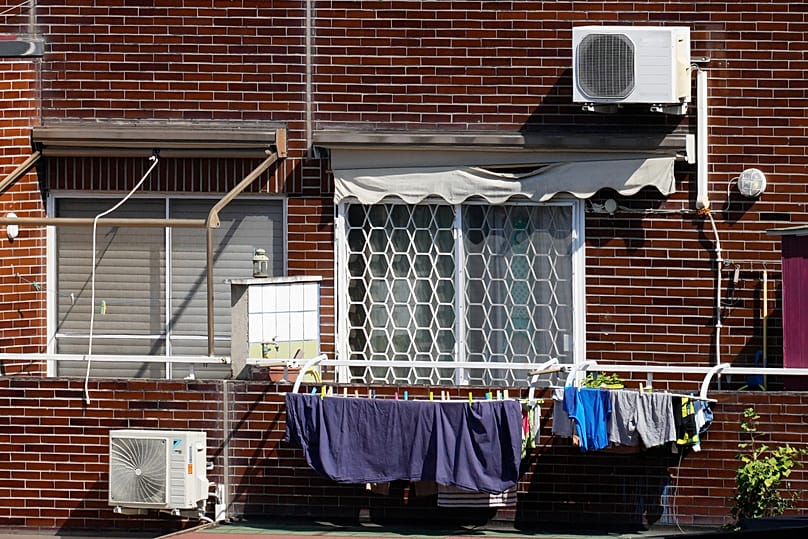
Brussels, Belgium, is slowly seeing temperatures ease after a significant heatwave gripped Europe, leaving behind a sizzling debate on how the continent should respond to increasingly common extreme temperatures. Mared Gwyn's report highlights the ongoing discussion surrounding the widespread adoption of air conditioning (AC) as a critical response to climbing temperatures, alongside other pressing European and international developments.
Amidst these crucial discussions, a glimpse into lighter affairs included the United States’ independence day bash hosted by the US embassy in Brussels’ Cinquantenaire Park. The event drew thousands of VIPs, including Belgian Prime Minister Bart De Wever, NATO Secretary General Mark Rutte, and European Parliament President Roberta Metsola. Guests enjoyed activities like baseball, mechanical bull rides, and line dancing, culminating in music, performances, and a ceremonial drone and firework show.
However, the underlying issue of Europe's brutal heat remains paramount. Record-breaking temperatures, from Denmark to the Czech Republic, have shattered previous highs, exposing deep political divisions on how to tackle future heatwaves. Historically, Europe has relied on architectural solutions like thick masonry, shutters, and tree-lined streets, leading to relatively low AC penetration—only 20% of European households compared to over 90% in the United States, Japan, and South Korea. This glaring lack of cooling systems has become a political lightning rod, especially after recent heatwaves caused thousands of excess deaths across the continent.
The debate has been particularly intense in France, where the far-right Rassemblement National, led by Marine Le Pen, has leveraged the crisis to push for a mass national rollout of air conditioning, dubbed “plan clim.” This €40 billion plan, expected to be presented in the National Assembly, faces criticism for lacking substance, transparency, and clear cost estimates. Even the pro-climate Ecologist party, led by presidential candidate Marine Tondelier, has acknowledged a shifting stance, recognizing the need for AC in essential facilities like hospitals and schools, following incidents such as school closures and damaged infrastructure.
Coincidentally, the extreme heat in Brussels also led to the shutdown of AC systems in most parts of the European Commission’s headquarters, the Berlaymont, on a Friday. Notably, the top floors, where Commission President Ursula von der Leyen and her senior team work, were spared the outage, inadvertently highlighting a potential class divide in access to cooling.
The European Commission itself has adopted a cautious, neutral stance on the individual use of air conditioning, stating it is not the role of the EU executive to dictate consumer choices. Commission spokesperson Anna-Kaisa Itkonen clarified that the executive's priority is an "efficient and effective" transition to climate neutrality, focusing instead on renovation, energy efficiency of buildings, and housing strategy. While leaving the door open for a policy review if the political context evolves, the Commission emphasizes member states' competencies in such matters, acknowledging that the heatwave may prompt further political discussions.
The "AC politics" also involve complex arguments: critics highlight AC's contribution to increased electricity demand, strained power grids, release of hot air, and reliance on climate-damaging F-gases, arguing it diverts attention from the root causes of climate change. Conversely, advocates argue that AC is an appropriate and, increasingly, necessary instrument to ensure liveable conditions and maintain labor productivity amidst soaring temperatures, especially for vulnerable populations, the elderly, and children.
This climate emergency is rapidly transforming into a "class war." Wealthier Europeans can adapt by installing efficient heat pumps, upgrading insulation, or escaping to second homes. However, lower-income citizens often reside in poorly insulated apartments, top-floor flats, or dense urban areas lacking green space. Renters frequently face restrictions on installing permanent cooling systems, and rising electricity prices make operating even portable units financially burdensome. The left-wing European political alliance DIEM25 critically stated that "The rich burn the planet, then buy air conditioning, private pools and second homes while workers are left in overheated flats, unsafe jobs, failed public services and burning cities."
Public health experts confirm that heatwaves are deadly. France reported approximately 1,000 excess deaths associated with a recent intense heatwave, and Spain recorded 327. Professor Andreas Flouris from the University of Thessaly notes increasing accident rates in central and northern Europe, indicating these regions are "catching up" in terms of heat-related dangers. A European Trade Union Institute report estimates 130 million workers across Europe are exposed to workplace heat stress, resulting in 277,000 injuries and 230 deaths annually. EU lawmakers like Lena Schiling (Greens/Germany) and Ondrej Knotek (Czech Republic/Patriots for Europe) stress the need for protection, adaptation measures, and the essential role AC can play for vulnerable groups, while advocating for highly efficient, renewable-powered systems.
The "American Model" of high AC ownership (90% of homes) is frequently contrasted with Europe's approach. Some environmental voices advocate against following the American model, urging prioritization of better insulation, reflective roofs, trees, ventilation, and architectural design to minimize heat gain. However, critics argue these long-term solutions do little for residents suffering in current record temperatures, fueling accusations that climate policies disproportionately burden ordinary citizens while sparing the wealthy. Belgian Defense Minister Theo Francken's ironic social media post about enjoying the heatwave while promising pool pictures further ignited this controversy.
While the technologies to reconcile climate goals with cooling exist, their high investment costs remain a political challenge. Modern electric heat pumps offer efficient cooling and heating, replacing fossil fuels when combined with renewable electricity. Improved building standards, district cooling systems—like those EDF plans to invest €80 million in for schools—and urban greening are also crucial. District cooling, which centrally produces chilled water and distributes it through underground pipes, offers an efficient and sustainable collective solution, cutting emissions and reducing peak electricity demand. However, deploying these solutions requires substantial investment and equitable distribution of costs.
The debate around AC also unfolds amid a broader rethink of the EU's Green Deal. While the 2050 climate neutrality deadline remains, many foundational pieces of the transformation have been simplified under governmental and industrial pressure. The Commission now often refers to "net zero" and "decarbonisation" instead of the original "Green Deal." Ultimately, the success of Europe's green transition will hinge not only on carbon emission reductions but also on ensuring that comfort, health, and protection from extreme heat are not privileges reserved for the wealthy.
Beyond the heatwave, Europe is grappling with other significant issues. European Commissioner for Trade, Maroš Šefčovič, is meeting his Chinese counterpart Wang Wentao in Brussels, against a backdrop of rising EU-China trade tensions. Despite threats from Beijing, the EU seeks to maintain dialogue while assessing trade defence instruments, facing a €1 billion-a-day trade deficit. Experts note China's dependencies on Europe in sectors like semiconductors and aerospace, but also its rapid technological self-reliance drive and the powerful leverage of its rare earths monopoly.
Concurrently, the Sintra Central Banking Forum is underway in Portugal, featuring financial leaders like Federal Reserve Chair Kevin Warsh and European Central Bank President Christine Lagarde. Discussions will center on monetary policy outlooks, inflation, and the impact of geopolitical events like the war in Iran, which has driven energy prices higher. Warsh's first public speech outside the US financial markets will be closely watched for signals on the Fed's independence amid calls for lower interest rates.
In other news from various newsrooms: Russian President Vladimir Putin admitted a “certain deficit” of fuel amidst Ukrainian strikes on refineries. Venezuela is reporting over 68,000 people still missing after devastating earthquakes, with damage estimates at $6.7 billion. Preparations are also underway for the FIFA World Cup knockout stage. Diplomatically, EU foreign policy chief Kaja Kallas and Commissioners Marta Kos and Magnus Brunner are on a two-week visit to Turkey for talks. European Investment Bank President Nadia Calviño is in Brussels, as are Employment, Social Policy, and Health ministers for their respective gatherings.