AGI Leaders Warn: Ghana's 24-Hour Economy Needs Real Action, Not Just Empty Promises
Ghana’s 24-Hour Economy policy must move beyond slogans, with AGI President Seth Twum Akwaboah urging concrete policies, programmes and effective implementation.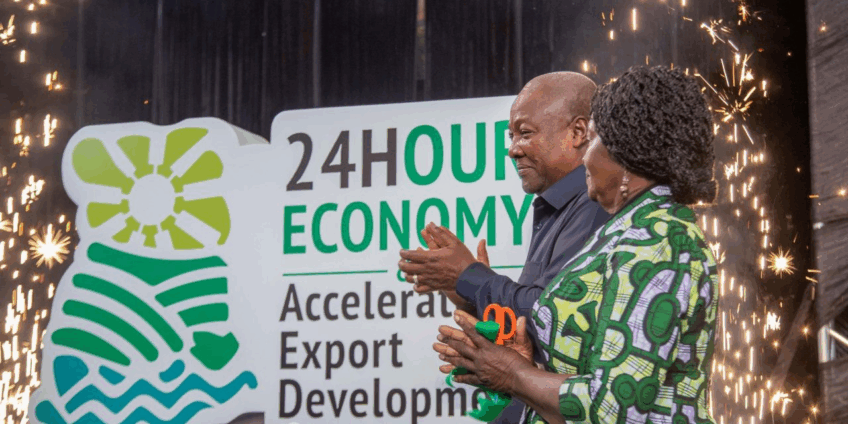
Seth Twum Akwaboah, President of the Association of Ghana Industries (AGI), has strongly urged the Ghanaian government to prioritize concrete policies and programmes over mere slogans in its efforts to operationalize the 24-Hour Economy policy.
Speaking on Joy News’ PM Express Business Edition, Mr Akwaboah emphasized that the true measure of the policy's success would not be its popular name, but rather the practical steps undertaken to effect a meaningful change in the economic landscape.
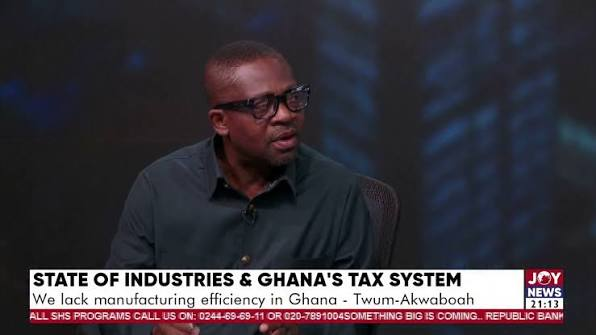
He clarified his stance, stating, “For me, I don’t bother so much about the clichés you create, whether it is 24-Hour Economy or 1D1F; that’s not really the issue for me. It is more of what you do within those policies.”
The AGI President underscored the critical importance of meticulous policy development and implementation. He questioned the depth of consultation involved in policy formulation and the specificity of the activities planned to achieve desired outcomes.
According to Mr Akwaboah, the effectiveness of any government initiative hinges significantly on these foundational processes, ensuring that key policies and activities are clearly defined to transform the status quo.
While acknowledging that the 24-Hour Economy concept was initially unclear to businesses and stakeholders, Mr Akwaboah noted that ongoing consultations with the government have brought greater clarity to the initiative. He expressed optimism about this progress, stating, “I think we are making good progress because now it’s coming clearer. Government is defining.”
However, Mr Akwaboah cautioned against fostering unrealistic expectations of an immediate economic transformation. He stressed that a policy’s announcement, or a catchy phrase, does not equate to overnight change.
Drawing a parallel to the former government’s One District, One Factory (1D1F) initiative, he explained that such policies represent intentions and visions that require diligent work to realize.
He articulated this by saying, “When you hear a cliché, when you hear a mention of something like that, sometimes the expectation is that overnight things will change and everything will be a 24-hour economy. It doesn’t happen like that.”
He added, “The same thing I said is that when we had the 1D1F. All of a sudden, you think that every district is going to have an industry? Government has mentioned it. It’s an intention. It’s a vision. How do we work towards it?”
Therefore, the focus must now shift to identifying the specific interventions, policies, and programmes necessary to transition the 24-hour economy from a vision to a tangible reality.
Mr Akwaboah expressed encouragement over the government’s recent launch of a blueprint for the initiative, which he believes contains promising ideas capable of transforming economic activity if rigorously implemented.
He stated, “And gradually they are coming to that point where now they’ve launched a blueprint, and then in it there are a lot of interesting ideas. If we’re able to implement it to the letter, I’m sure it will help change a lot of things.”
Reaffirming AGI’s unwavering support for the policy, Mr Akwaboah revealed that the association is actively collaborating with the 24-hour economy secretariat on its implementation. He concluded by reiterating his belief that successful execution of the policy's outlined measures would be a