Ebenezer Obey: The Juju Music Icon Who Turned Life’s Lessons Into Music
For more than six decades, Ebenezer Obey’s grounded lyrics, disciplined musicianship, and unmistakable warmth shaped juju music and became a soundtrack for families across generations.
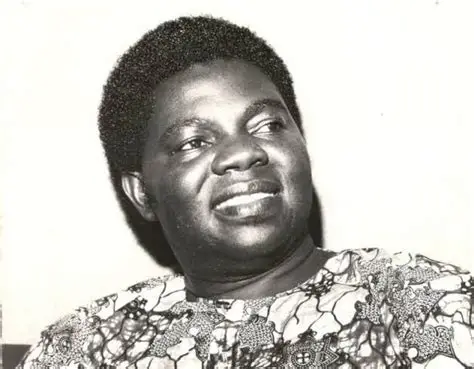
There are artists who entertain, and there are artists who leave something behind when the music stops. Ebenezer Obey known across Nigeria simply as “Chief Commander”, belongs to the latter group.
For more than sixty years, his voice has carried advice, humour, comfort, and the kind of grounded wisdom that made his songs part of daily life. From roadside shops to family gatherings, his sound became interwoven with memory. In a career defined by restraint, purpose and consistency, one word remains constant: legacy.
Obey’s journey began far from the spotlight. Born Ebenezer Remilekun Aremu Olasupo Fabiyi in 1942 in Idogo, Ogun State, he came from a modest background where music was valued but not considered a profession. His early exposure to Christian choruses and Yoruba folk melodies laid the foundation for his sound, long before he learned to command a band.
His upbringing has been documented in biographies and short profiles like the one onBritannica, which outlines his formative years. What stands out from this period is how seriously he approached improvement even as a child. While many saw music as a pastime, he treated it as work. This quiet discipline became his lifelong anchor.
By the time Obey moved to Lagos as a young man, he had one goal: to deepen his understanding of juju music. Lagos in the 1950s and early 1960s was a bustling, competitive environment, alive with palm-wine guitarists, travelling entertainers and the early pioneers of modern juju.
Obey joined the Fatai Rolling Dollar Band, sharpening his guitar lines and learning how to maintain an audience. What truly set him apart at this stage was his attention to small details: how a rhythm settled, how a voice entered, how a guitar phrase could be softened to create warmth. These were not things one could learn casually. They required patience, reflection, and a willingness to listen deeply. His early Lagos years were his foundation.
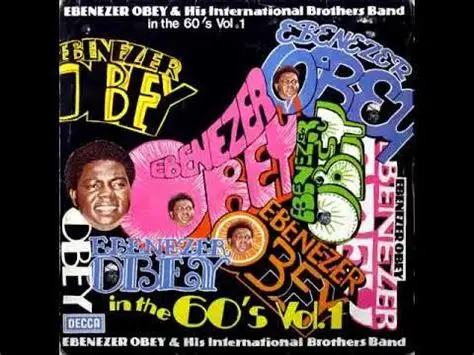
In 1964, Obey formed his own group,the International Brothers, a name that captured his belief in unity and shared purpose. What began as a modest ensemble quickly evolved into a disciplined musical institution. Over time the band became known as the Inter-Reformers Band, a name that reflected Obey’s conviction that musicians must constantly refine their craft.
He introduced layered guitar sections, steady percussions, and expansive call-and-response sequences that gave his music its unmistakable shape. His sound was calm but never dull, steady but never static. In an industry crowded with experimentation, Obey built a style rooted in clarity.
One of the distinct qualities that separated Obey from his contemporaries was his lyrical tone. Rather than chase trends or force complicated metaphors, he wrote with a directness that mirrored the Yoruba oral tradition. Everyday experiences became lessons; life’s frustrations became humour; celebrations became prayers. His songs spoke to traders, civil servants, farmers, and the average household struggling with the realities of life.
A detailed timeline of his long career appears on AllMusic, which also traces his first major commercial successes. What listeners found refreshing was that his advice never felt imposed. It came like a familiar voice offering steady guidance.
During the 1970s and 1980s, Obey’s reach expanded across West Africa. What kept his music resonant was his ability to speak to multiple generations at once. Older listeners appreciated his moral clarity, while younger listeners enjoyed the smooth guitar lines and relaxed tempo. Many families played his records during holidays, journeys, and important celebrations. In this period, he produced classics that reflected the values of responsibility, patience, gratitude, and love. He understood that music had a duty beyond entertainment, it could be a form of reflection.
Another defining element of Obey’s artistry is his relationship with spirituality. Long before he became known for Christian records in the 1990s and 2000s, traces of his faith appeared gently in his juju classics. He approached spirituality not as a tool for branding but as a sincere part of his worldview. As he matured, he transitioned smoothly into gospel-themed work, producing albums that blended juju instrumentation with prayerful messages. His discography, outlined on Discogs, shows the evolution of his musical direction This spiritual layer never overshadowed his artistry; instead, it gave his work a sense of depth.

What many consider Obey’s greatest contribution to juju music is not just his sound but his structure. He expanded the traditional juju format with long-form storytelling passages embedded within his songs. These passages sometimes ran for several minutes, weaving wisdom, humour, and gentle admonition into the melody. This approach made his performances feel like conversations rather than concerts. It also allowed his music to travel effortlessly, from small gatherings in Abeokuta to large celebrations across Lagos and beyond. His approach to musical pacing remains one of his most studied signatures.
Obey’s work also became an archive of Nigerian social life. He sang about everyday encounters, contemporary events, community values, and personal gratitude. His music documented the changing rhythms of society: shifts in politics, the rise of new professions, and the evolving attitudes of families. Without intending to, he became a chronicler of collective memory. Songs that began as casual reflections are now referenced by scholars exploring Yoruba music and cultural identity. His ability to create songs that carried both meaning and melody is widely regarded as a rare gift.
Though Obey never positioned himself as a public intellectual, his music introduced many listeners to philosophical fragments grounded in Yoruba wisdom. He spoke often about patience, contentment, loyalty, and the unpredictability of life. These themes resonated because he expressed them without pretence. His songs sound like advice from a trusted elder, not lofty, not distant, but familiar and steady. This is one reason his music remains deeply respected. It echoes the emotional rhythms of everyday experience.
Even in later years, Obey remained active in music and mentorship. He offered guidance to younger artists navigating the changing landscape of the industry. He believed in preserving cultural traditions while supporting innovation. Today, his influence can be seen in various strands of Nigerian music, from juju to gospel to contemporary fusion sounds. Younger musicians often cite his steadiness and longevity as sources of inspiration. His commitment to craft became a model.
Ebenezer Obey is more than a veteran musician; he is a custodian of memory, a storyteller, and a bridge between generations. His songs continue to move across time because they carry something deeper than rhythm. They carry the lived realities of the people who listen. They carry the humour, truth, and quiet resilience of everyday life. And they carry the unmistakable imprint of a man who understood that music, at its best, is a companion. His work endures not through force, but through presence.

As he stands today among Nigeria’s most respected figures, what remains most striking is his consistency. In an industry defined by change, he stayed steady. In a world obsessed with speed, he moved at his own pace. And in a culture that often celebrates the loudest voices, he showed the power of thoughtful silence. Ebenezer Obey’s story is not just one of musical achievement; it is a portrait of a life lived with intention. His legacy continues to grow because it is built on something timeless: truth.