Curtain Wall: Celebrating the Immortal Legacy of Olu Jacobs
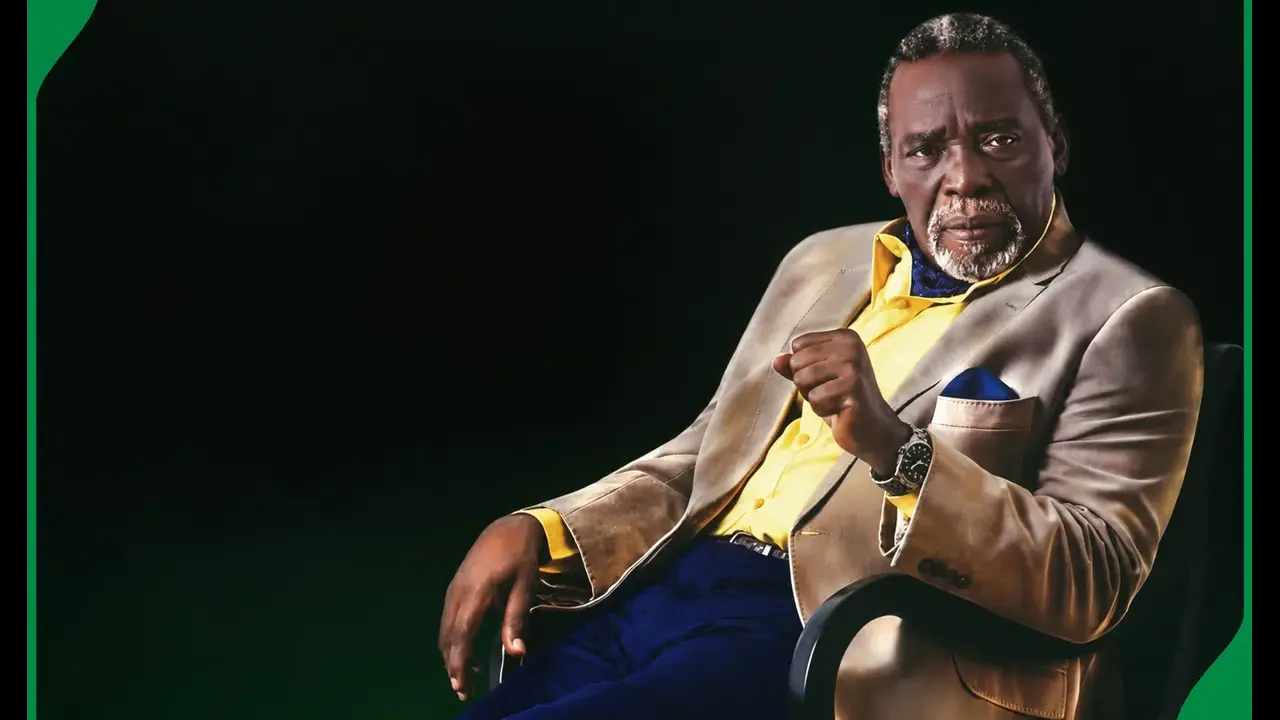
Olu Jacobs leaves behind a remarkable acting career that connected British theatre and television with the growth of Nigeria’s film industry, while creating opportunities through Lufodo.
Curtain Wall: Celebrating the Immortal Legacy of Olu Jacobs

There are actors whose faces you remember, actors whose voices you remember, and then there are actors who become part of the way a country remembers itself.
Olu Jacobs belonged to the third group.
If you grew up watching Nigerian television or Nollywood films, you probably did not need his name to know who was speaking. That deep voice, the slow delivery and the way he carried himself could turn a scene into his own territory. He could be a king, a father, a chief or a businessman and still make the character feel familiar.
On September 16, 2026, Oludotun Baiyewu Jacobs died at 84. His family announced his death through his son, Olusoji Jacobs, describing him as "The Lion of Lufodo" and asking the public to give the family privacy.
Tributes followed from President Bola Ahmed Tinubu, the National Film and Video Censors Board and colleagues across Nigeria's film industry. Tinubu described Jacobs as a giant of Nigeria's creative industry and recognised his contribution to the country's cultural identity.
From Kano to the British Stage
Jacobs was born to parents from the Egba Alake community of Abeokuta, Ogun State, and spent his early childhood in Kano. He attended Holy Trinity School, where he took part in debating and drama.
A performance by theatre pioneer Hubert Ogunde at the Colonial Hotel in Kano left a strong impression on him. It helped turn acting from an interest into something he could imagine pursuing professionally.
In 1964, Jacobs travelled to Britain and trained at the Royal Academy of Dramatic Art in London. He went on to work in British repertory theatre and television, appearing in productions including The Goodies, Till Death Us Do Part, Barlow at Large, The Tomorrow People and The Professionals.

His international film credits included The Dogs of War, Baby: Secret of the Lost Legend and Roman Polanski's Pirates.
When Jacobs returned to Nigeria, he brought professional training and years of experience in theatre and television into an entertainment industry that was still taking shape. He eventually became one of the established faces of Nigerian cinema as Nollywood grew.
His Nigerian career stretched across hundreds of productions, alongside his work in theatre and television.
The Power of Restraint
Jacobs became particularly associated with characters who carried authority: traditional rulers, chiefs, fathers and patriarchs. But simply listing those roles misses what made his performances work.

Jacobs had a way of holding a scene without rushing through it. He did not need to shout to make a character commanding, and he rarely seemed to be fighting for the audience's attention. A pause, a look or a few carefully delivered words could establish who had control of a room.
You could see the discipline behind it. He knew when to hold a moment and when to let a line breathe. Even when the character was powerful, the performance did not always have to announce that power.
It also allowed him to move between very different characters without losing the quality people recognised in his performances. The king could feel different from the father; the businessman could feel different from the chief. Yet there was usually a certain composure underneath the performance.
That was part of what made Jacobs so recognisable to Nigerian audiences. His performances had weight without constantly announcing that they were important.


His work also moved beyond acting. With his wife, veteran actress Joke Silva, he co-founded the Lufodo Group, which grew to include Lufodo Academy of Performing Arts, Lufodo Productions, Lufodo Distributions and Lufodo Consult. The group gave him another way to contribute to the profession through production and training.
What His Career Changed
Jacobs won the Africa Movie Academy Award for Best Actor in a Leading Role in 2007 and received the national honour of Member of the Order of the Federal Republic.

His career crossed several worlds. He trained in Britain, worked on British stages and television, appeared in international films, then returned home and became one of the established actors of Nigerian cinema. He brought a level of professional experience from those earlier stages into an industry that was finding its own identity.
Through Lufodo, that contribution extended beyond his own performances. The academy created a space for training, while the wider group moved into production and distribution.
That is one reason his career cannot be measured only by the number of films he appeared in or the awards attached to his name. He became part of the profession's infrastructure as well as its screen history.
His death marks the end of a career that stretched from school drama in Kano to the British stage and eventually into the history of Nollywood.
Olu Jacobs spent more than five decades showing what a trained actor could bring to a Nigerian screen. He also helped leave behind a professional space in which acting, production and training could continue beyond him.
That may be the clearest measure of what he leaves behind: not simply roles people remember, but a profession he helped strengthen.
Meta description: Olu Jacobs leaves behind a remarkable acting career that connected British theatre and television with the growth of Nigeria’s film industry, while creating opportunities through Lufodo.