Can We Ever Truly Know History?
Can we ever truly know history, or is it always filtered through memory, power, and perspective? A reflective opinion on bias, erased voices, and the limits of historical truth.
History often presents itself as settled fact—dated and printed.
But at its core, history is a collection of human memories, documents, interpretations, and decisions about what was important enough to preserve.
And humans, as we know, are not neutral creatures.
One Event, Two Stories
We like to believe that history explains itself. But sometimes history hides its reasons behind layers of perspective. Let’s take the story of the Mfecane, for example.
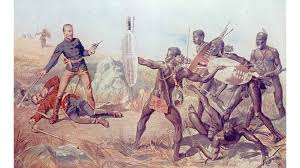
Source: Google
TheMfecane, also called the Difaqane, was a period of upheaval in southern Africa in the early 19th century. Conflicts, migrations, and state formations swept across the region, reshaping communities and borders. Everyone agrees the events happened, but why they happened is less certain.
Some accounts, written down by early historians, focus on Shaka Zulu. They describe a brilliant, ambitious leader whose military innovations and expansionist campaigns set off a chain reaction. Neighbouring groups were displaced, wars erupted, and new polities emerged. In this story, Shaka is the catalyst.
Other accounts, especially those examined by modern scholars like Julian Cobbing, emphasize different pressures. European colonial expansion, slave trading, and economic disruptions also destabilized the region. In this telling, the chaos of the Mfecane was not caused by one man alone, but by a complex web of forces, both internal and external.
The fact is simple: the Mfecane happened. But the story of its cause, like many moments in history, depends on who is doing the telling
What Textbooks Don’t Tell Us
Textbooks feel authoritative because they are structured, referenced, stamped with approval. But textbooks are curated narratives, someone decides what makes the cut.
Entire chapters can be framed in language that shifts perception: “discovery” instead of “invasion,” “expansion” instead of “occupation,” “conflict” instead of “oppression.”
This does not mean textbooks are lies, but it means they could be selective.
They are products of committees, political climates, and cultural values of their time.
The Voices That Never Made It to the Page
Perhaps the more unsettling question is not whether history is biased, but whose voices never entered the archive at all.

For centuries, entire communities relied on oral tradition. Stories were spoken, sung, remembered, not written.
People’s experiences survived in fragments, folklore, private letters, or not at all.
When future historians look back, they depend on what exists, and most times what exists often reflects power structures.
If only certain groups had access to printing presses, legal documentation, or political authority, then naturally their perspectives dominate the record.
So when we ask whether we know history, we might also ask: whose history are we reading?
Between Skepticism and Trust
It would be easy to fall into complete cynicism and say history is unknowable, that everything is propaganda and nothing is reliable.
But that ignores the discipline of historians who check facts, compare sources, and study carefully.
Even so, historians are human. They interpret through their own lens, choosing what to study, what to include, and what to leave out all shows perspective.
So What Are We Really Reading?
Maybe the real issue is not whether history is true, but whether we are comfortable admitting it is constructed.
Not fabricated, but constructed.
History is not a lie, but it is not a perfect record either. It is a mosaic, pieces arranged to make sense to the people who preserved them.
This is why debates about statues, memorials, and anniversaries matter. They are about which version of history survives.
So can we truly know history? Maybe not. But we can read it carefully and ask questions.
If history passes through human hands, can it ever be completely pure?
And if it isn’t, does that make it useless or does it make us responsible to understand it better?
And if it cannot, does that weaken history, or simply make us responsible for reading it more thoughtfully?